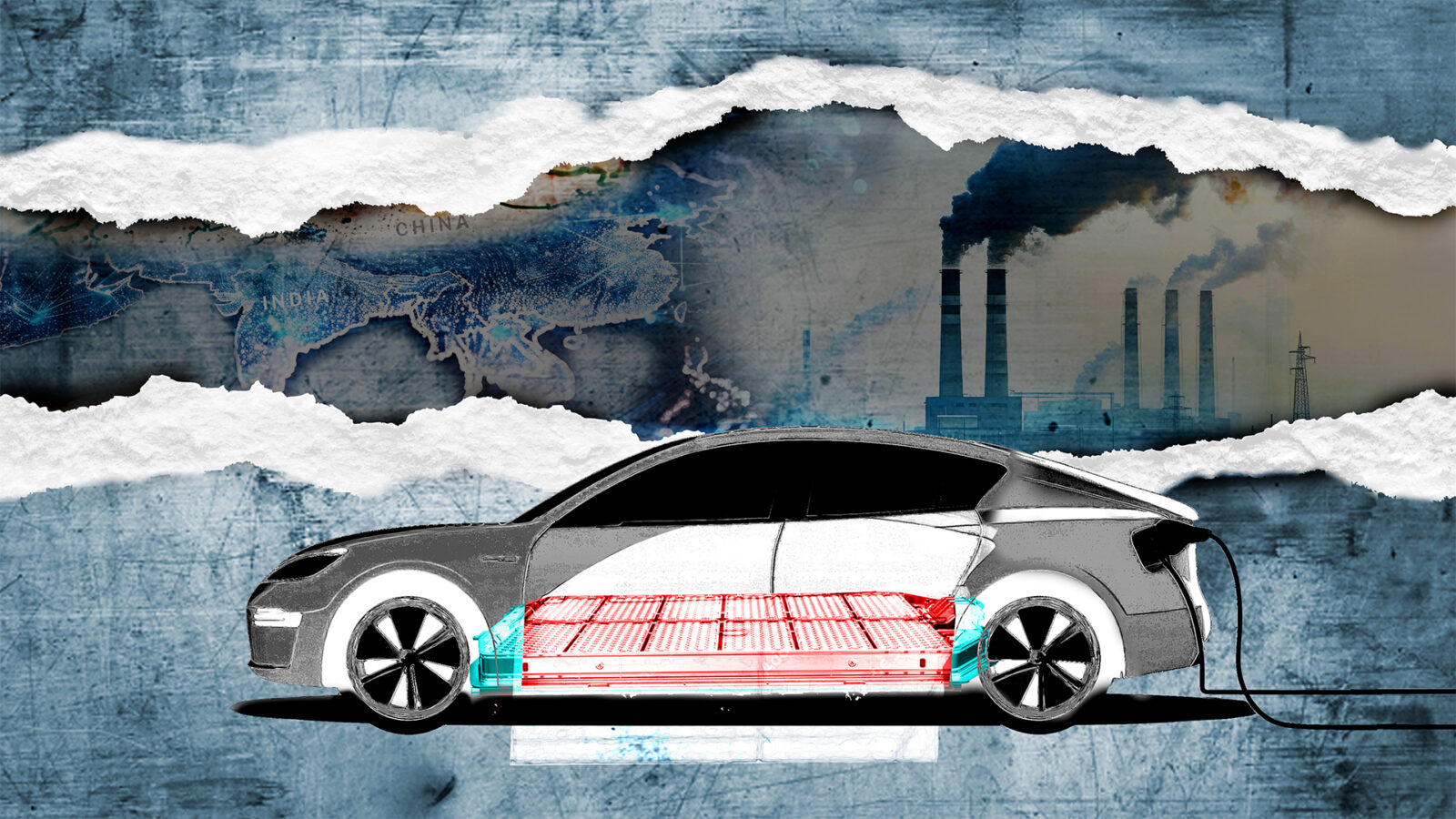
Driven by advances in AI, manufacturers are poised to roll out autonomous technologies from self-driving taxis and delivery drones to robotic butlers and wearable medical monitors. But those technologies demand batteries that are lighter, longer lasting, safer and more powerful.
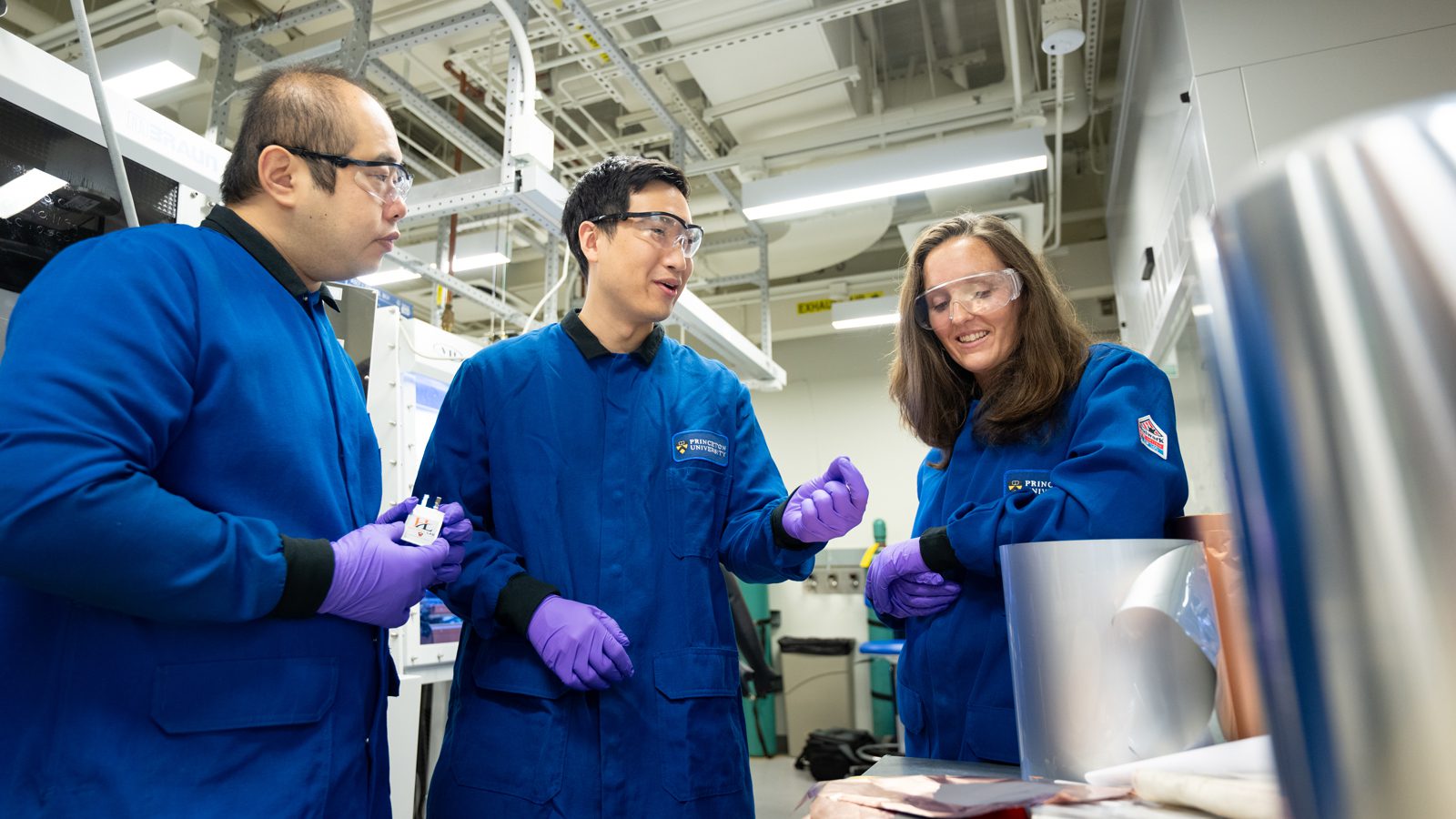
At Princeton, a research group led by Kelsey Hatzell is working to understand a range of questions from basic science to battery development and the manufacturing of new battery systems, including promising advances in solid state batteries.
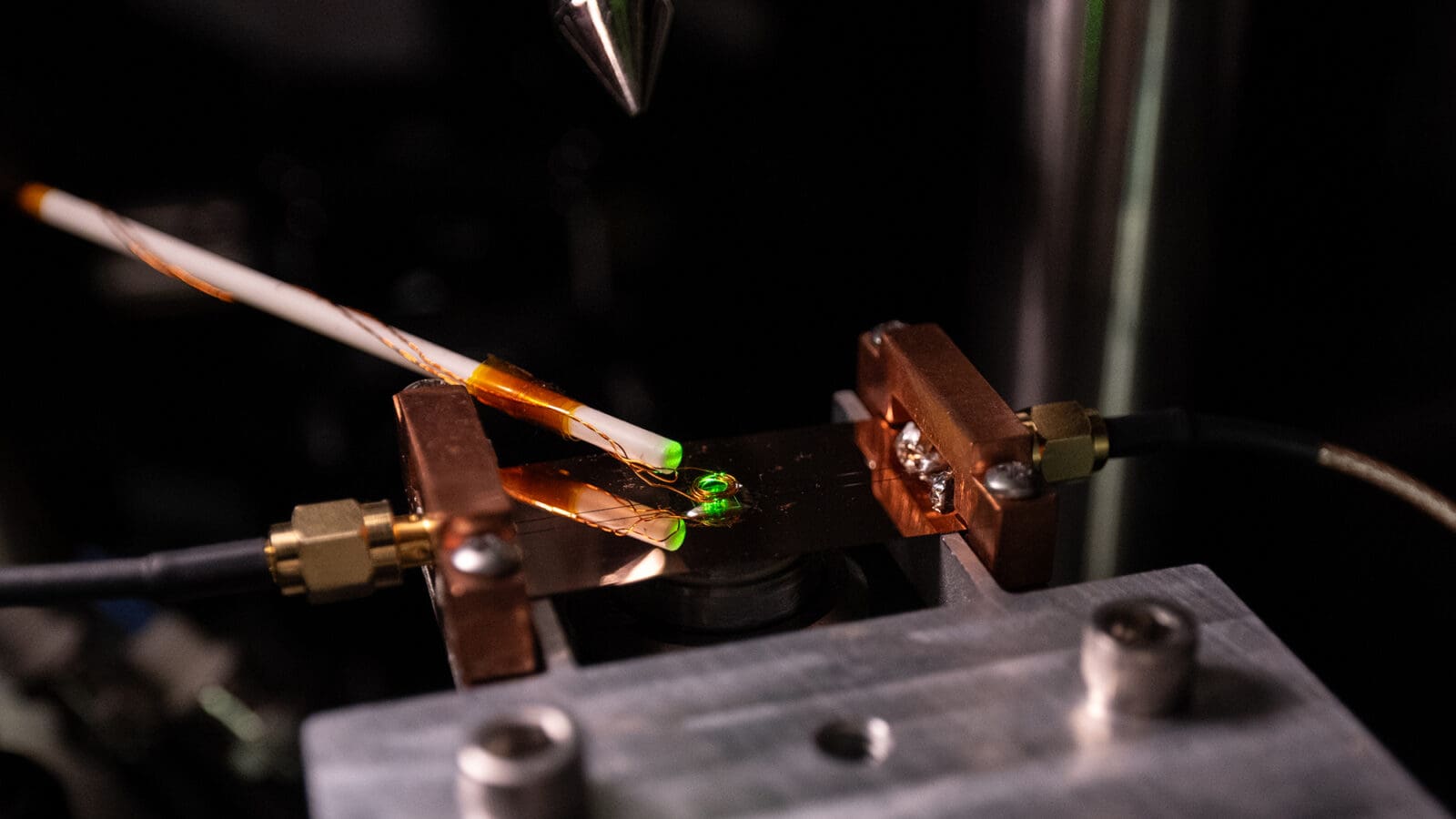
Solid-state batteries promise to transform energy storage by improving battery performance and mitigating the risk of fire and other hazards. But engineers must overcome technical challenges before the new batteries can move into mass production. Recently, Hatzell’s group teamed up with scientists at Brookhaven National Labs to provide to look inside solid-state batteries under operating conditions.
The goal: to build safe batteries with enough energy density to last all day and enough power density that users can get a full charge in minutes rather than hours. The strategy: combine two types of cathode materials into a new type of solid-state device.
The results, in a July 12 article in the journal Advanced Energy Materials, demonstrate that a blend of two leading cathode materials integrates both materials’ advantages while mitigating thermal risk. The research also offers detailed guidance on the development of a blended cathode for solid-state batteries.
The cathode, a battery’s positive electrode, is usually the most expensive part of the battery and often determines whether a battery is commercially viable. Because it typically contains most of the battery’s active material, the cathode drives performance including capacity, power, safety and stability.
A research team led by Hatzell, an associate professor of mechanical and aerospace engineering, wanted to provide a detailed understanding of a class of cathodes that blend two common materials, lithium iron phosphate (LFP) and nickel manganese cobalt (NMC). LFP, commonly used in vehicles and storage for solar electricity systems, can absorb and deliver high amounts of power. NMC, used for consumer electronics and vehicles, can store a lot of power in a small mass, although NMC cathodes can generate excessive heat.
Hatzell said the goal is to provide a clear path to a manufactured device, not to hit laboratory benchmarks.
“We are past the point where a new battery can be judged on its energy density alone. If it cannot be made in the formats the industry already produces at the terawatt-hour scale, the work is just a paper,” she said. To develop workable batteries, researchers need to address the full spectrum of manufacturing challenges. “Our laboratory has been looking at the synergy between new materials, packaging, and external/internal effects related to heat generation.”
The researchers wanted to understand how blending these two materials could create a new type of cathode with advantages of both materials while minimizing the heat-related drawbacks of NMC cathodes. Particularly, they wanted to understand the factors behind the electrochemical performance of the blended cathode, its thermal performance and stability.
But the researchers faced a problem — it is hard to look inside a solid-state battery, and even harder to track the small changes that occur during charging and discharging. That’s because the battery components are dense, opaque and packed under high pressure to keep charge flowing between the electrodes. To overcome this challenge, the Princeton engineers traveled to Brookhaven to use a synchrotron, a machine that accelerates electrons close to the speed of light to generate focused, incredibly powerful X-rays.
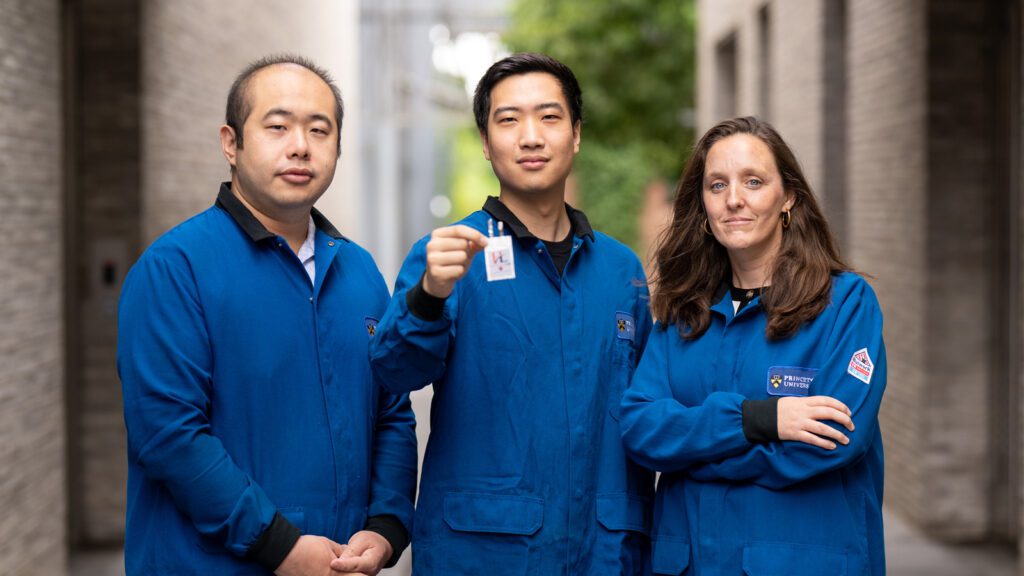
One of the researchers, Simon Si Ming Ji, was familiar with the instrument because he had recently completed a fellowship at Brookhaven. Ji, a graduate student in Hatzell’s lab and the paper’s lead author, said he initially hoped the scans would show an orderly transition between the LFP section of the cathode and the NMC during power discharge.
“But instead of seeing a clear transition, there was an intermixing of the reaction. I did not expect that,” he said. “That’s when I had to think deeper. What is the origin of the intermixing? Is it physical or chemical? It was more interesting, but I wasn’t sure how to explain it.”
It was not enough to look at a cross section of the battery. Ji knew he had to scan changes occurring across the battery’s interior to find the reason for the mixing. Scanning across space is a far trickier procedure. Because the synchrotron’s beam is fixed, the operators must constantly realign the battery sample during the operation. Ji’s colleague Zhou Li, a post-doctoral researcher in Hatzell’s lab, was also working at Brookhaven on a different project. Li not only explained the procedure to Ji, he donated part of his scheduled time on the synchrotron — researchers call it beam time — for Ji’s project.
“He had done it before in his doctoral work, so he was able to help,” Ji said. “I was lucky he was there.”
It was exacting work.
“It was a cool process, but it was a pain. Two to three hours per alignment. Six total alignments. It took a whole day to get them to work,” Ji said. “My eyes were tired.”
Scanning across the battery answered the question. When the researchers analyzed the X-ray data, they saw that the amount of charge coming off the cathode differed depending on the location. Called lithiation gradient, that variance was causing the mixing Ji had seen in the initial scans. This gradient can cause problems in battery performance and is something engineers need to be aware of during design and manufacturing.
“Certain areas were getting more charged than others,” Ji said. “It was getting more charged closer to the electrode and less further away. That caused the reaction behavior, the mixing, that I saw.”
The journal article provides details about the data, and Hatzell’s team also used the information to perform thermal modeling to demonstrate the thermal stability of the blended cathode. Hatzell said the experiment demonstrates the strong potential LFP-NMC cathodes show for use in solid-state batteries. She recommended further research focusing on the optimal blend ratio between the materials, particle morphologies and cycling protocols.
“This work gives us insight about how we can engineer materials for multiple performance metrics such as charge rate, energy density and safety,” she said. “The next step is exploring manufacturing and packaging implications.”
The article, Electrochemical and Thermal Interplay in Blended Cathodes All Solid State Batteries, was published July 12 in Advanced Energy Materials. Besides Hatzell, Ji and Li, authors included Ana G. Claus, and Dayoung Jun of Princeton; Abhinand Ayyaswamy, Moonseong Kim, Bairav S. Vishnugopi and Partha P. Mukherjee of Purdue University; Sascha Kremer and Jürgen Janek, of Justus-Liebig-University Giessen; Shintaro Inaba of Swathmore University; Se Hwan Park, of Kookmin University; Hui Zhong, Sanjit Ghose, Michael Drakopoulos, Nghia T. Vo, and Zhong Zhong of National Synchrotron Light Source II, Brookhaven National Laboratory. Support for the project was provided in part by the U.S. Office of Naval Research, the U.S. Energy Department, the New Jersey Wind Economic Development Authority, the Princeton Imaging and Analysis Center and the Princeton Center for Complex Materials.