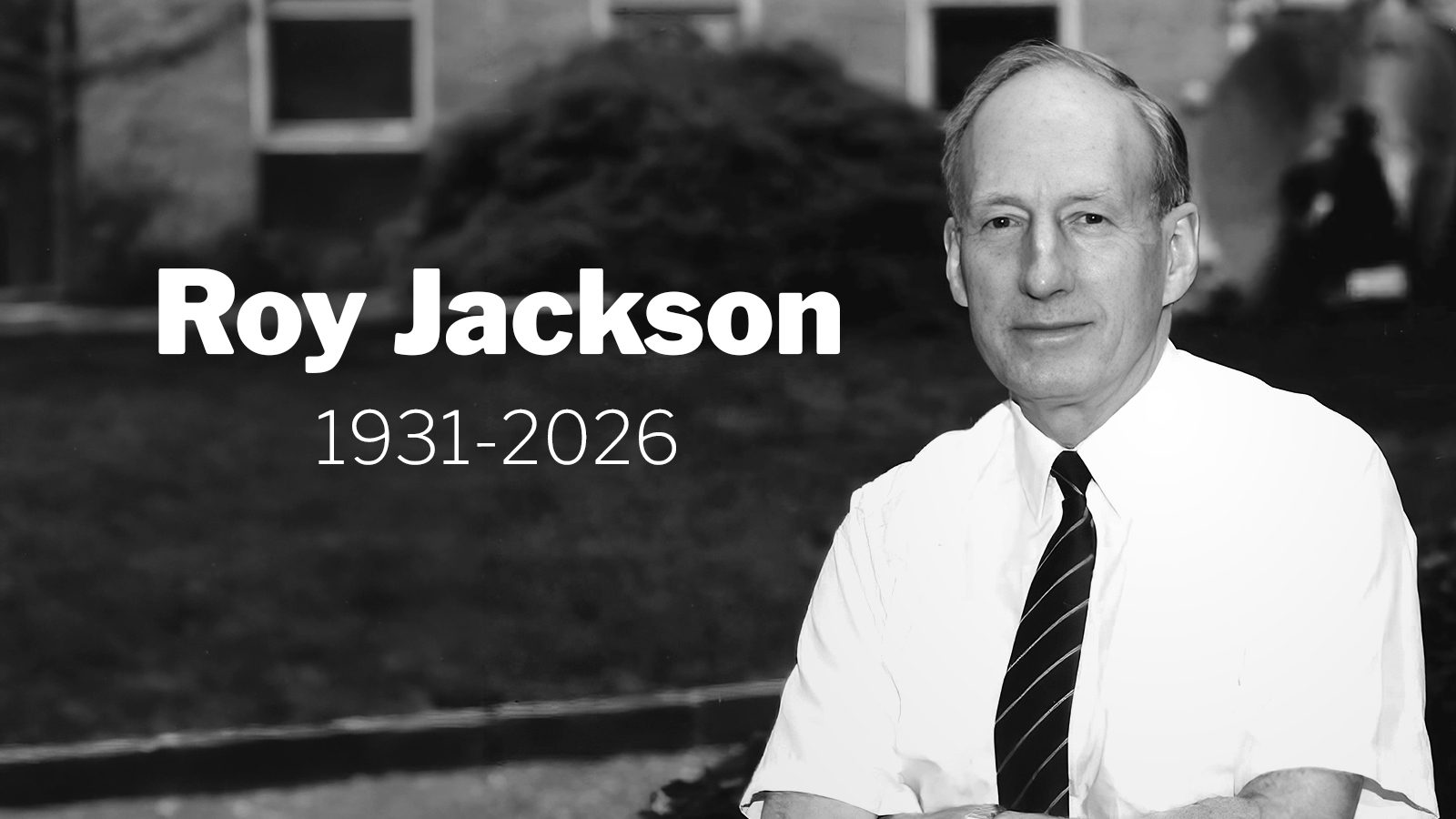
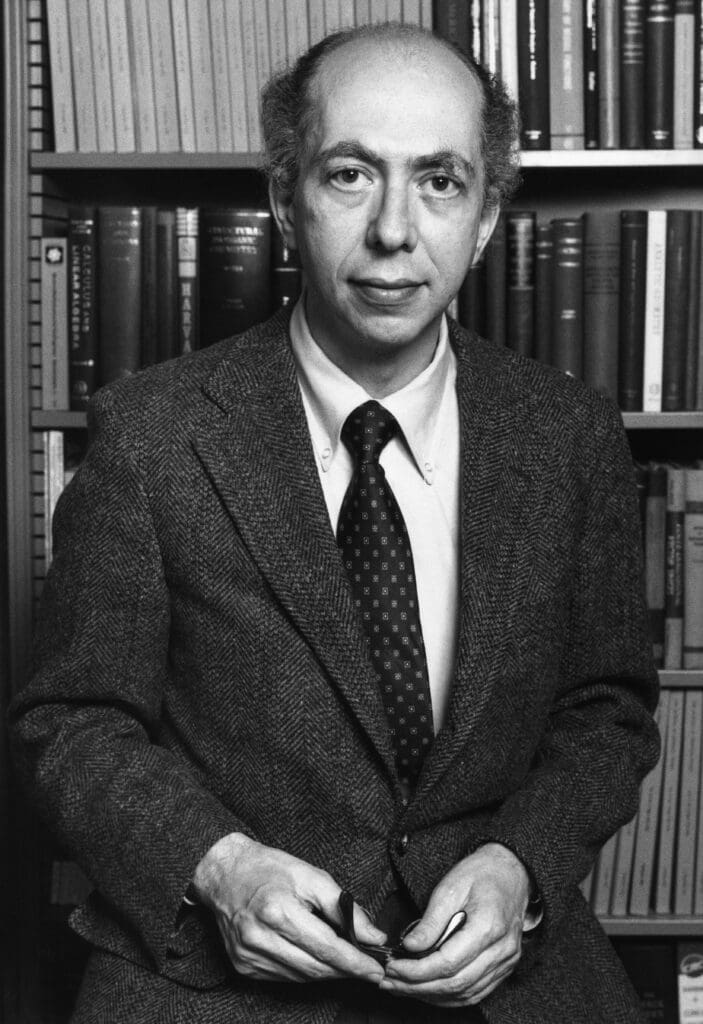
Morton Kostin, who advanced the theoretical underpinnings of chemical engineering, has died at age 89.
Kostin was known for his commitment to teaching fundamental principles in a way that demanded excellence from his students but that empowered them in their own careers.
“He was a very good teacher. He was very clear, very methodical, and very, very demanding. But he also worked hard to make sure that his lectures were well understood,” said Ruben Carbonella, one of Kostin’s first graduate students. “He challenged your thinking. He challenged the way that you were doing things, just to make sure that there were no holes to the theory.”
Two of his former students — Carbonella, Ph.D. class of 1973, and William G. Gray, Ph.D. class of 1974 — have since been elected members of the National Academy of Engineering.
Kostin, who retired as a professor of chemical and biological engineering in 2013, started his career with a wide portfolio of interests, according to his former students, including fluid dynamics, quantum mechanics and chemical reaction kinetics.
“He was probably one of the very first or very few chemical engineers at the time working in quantum mechanics to understand molecular dynamics — how molecules rearrange when they react,” Carbonella said.
In one equation, he sought to describe a key chemical engineering concept known as dissipation, where useful forms of energy are lost to less useful forms like heat. The equation has turned out to be useful in specific applications, although the general problem remains unsolved.
But over the course of his career, Kostin began to focus largely on the study of chemical kinetics, particularly in deriving fundamental equations that underpin the observed rates of chemical reactions. He took special interest in understanding the rates of chemical reactions in the presence of what scientists call hot atoms, where some atoms or molecules have a much greater amount of energy than their surroundings — a topic that is important in both atmospheric chemistry and pharmaceutical development.
Born in Chicago in 1936, Morton Daniel Kostin received his bachelor’s degree from the Cooper Union and his master’s and doctoral degrees from Harvard University. He joined Princeton as a research associate, later becoming a Sloan Postdoctoral Fellow and a visiting lecturer. He was appointed as assistant professor in 1964, the same year he finished his Ph.D. He was promoted to associate professor in 1968 and professor in 1976. Kostin was a member of the American Physical Society and the American Institute of Chemical Engineers.
He is survived by his daughter.
The family asks that contributions in Kostin’s name be directed to Common Cause.