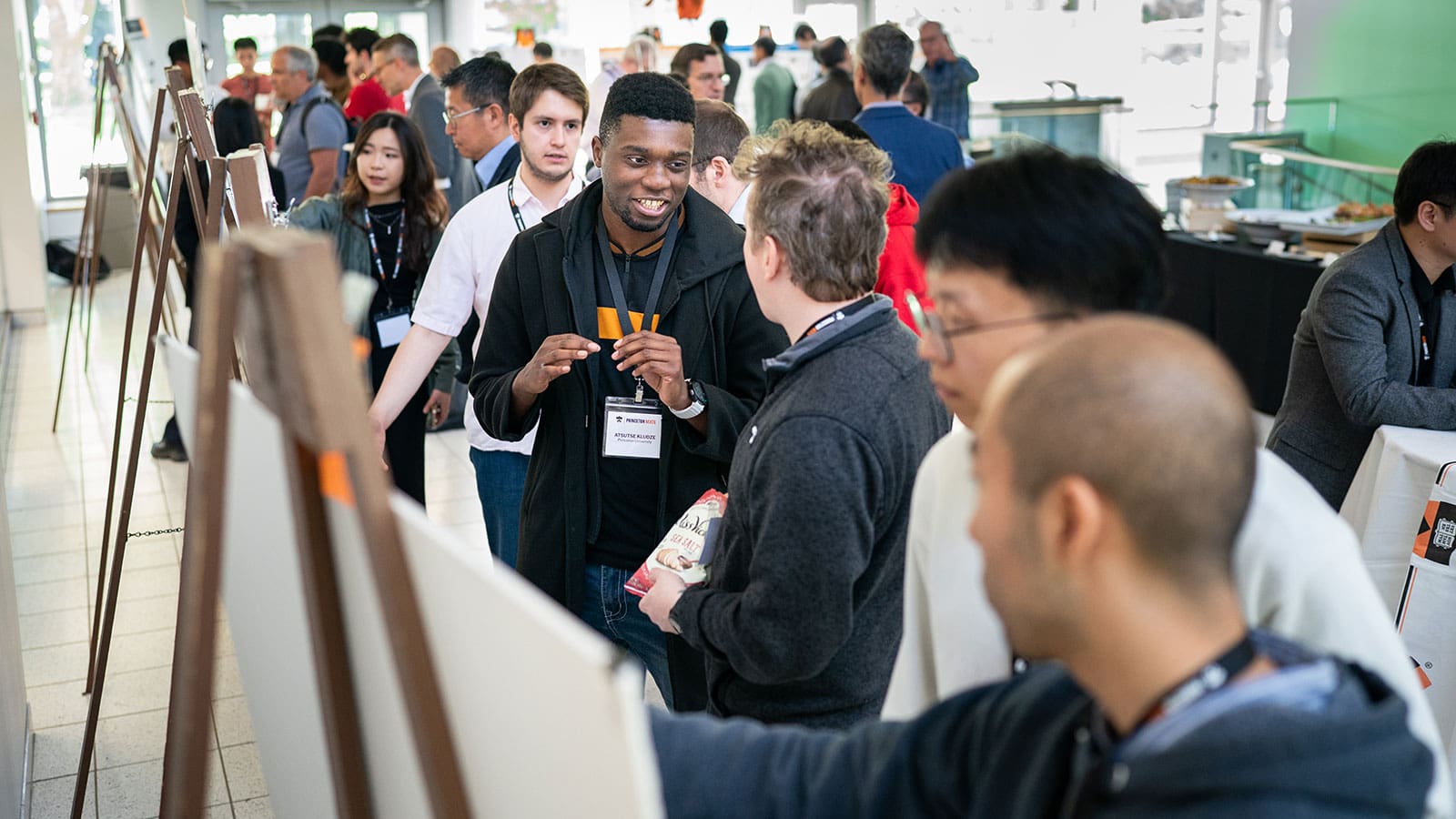
NextG symposium highlights teamwork needed for transformative technology
As AI expands beyond cloud data centers and into the physical world, connectivity demands are growing dramatically. Self-driving cars, humanoid robots, augmented-reality systems and intelligent machines will need to exchange massive amounts of information continuously and in real time.
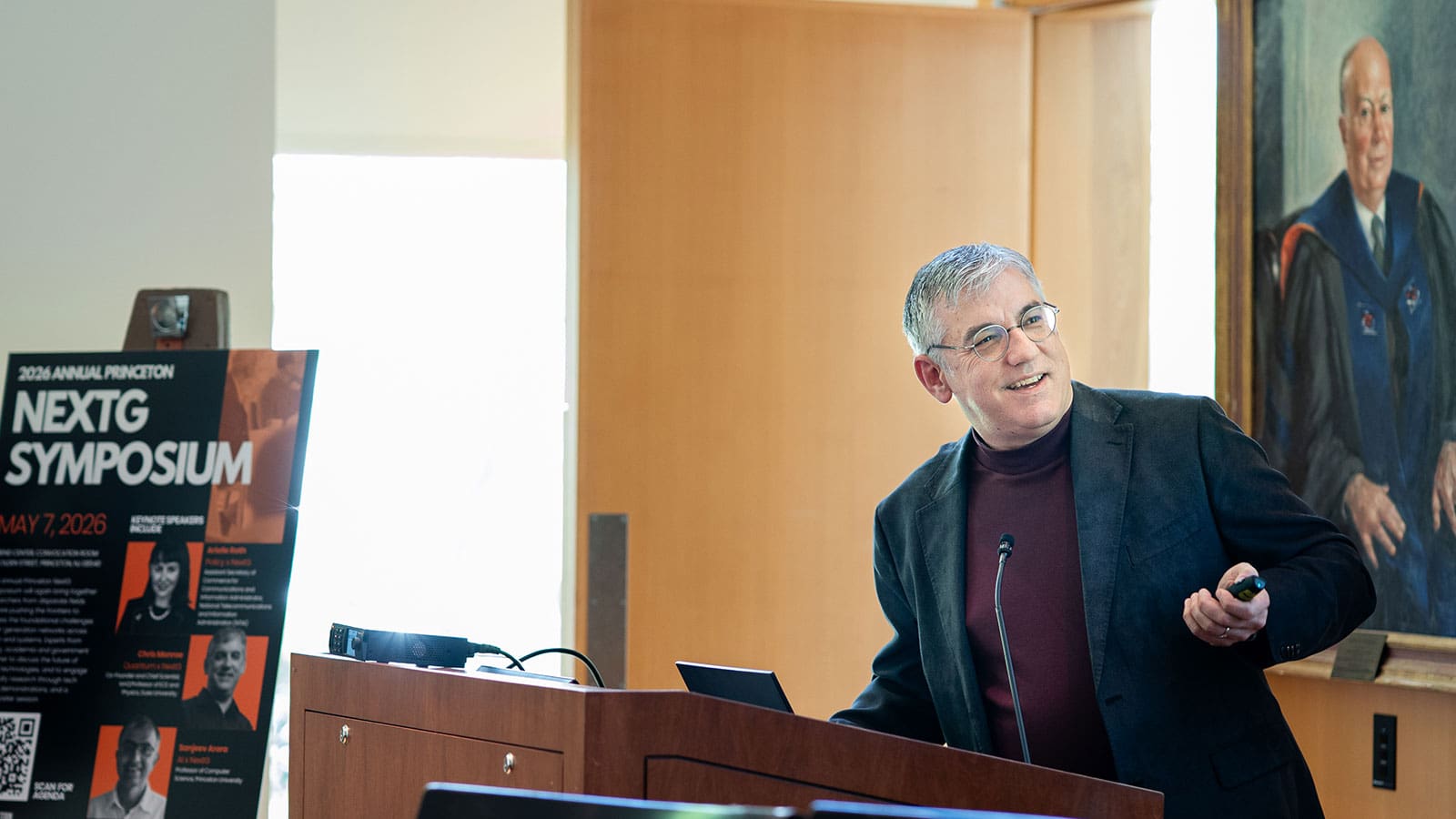
At this year’s Princeton NextG Symposium, Kaushik Sengupta, the NextG co-director, described connectivity as “the invisible backbone of the AI era.”
If computing is the defining bottleneck for AI today, Sengupta argued that wireless connectivity is rapidly becoming the next. “In AI, we are constrained by compute,” he noted. “In wireless, we are constrained by spectrum.”
Spectrum, the range of available communications frequencies, is a finite public resource that underpins modern communication systems. It is governed through federal policy and national allocation decisions. Sengupta said for AI to fully develop, engineers must meet the challenge of overcoming the limits imposed by today’s available spectrum.
“Over the next decade, breakthroughs in wireless infrastructure may shape the future of AI just as profoundly as breakthroughs in the AI models themselves,” said Sengupta, a professor of electrical and computer engineering at Princeton.
Now in its fourth year, the Princeton NextG symposium brought together researchers, industry leaders, and policymakers to examine the future of next-generation connectivity in the context of AI, quantum networking, and national technology policy. Participants included leading voices from academia and industry alongside representatives from federal agencies shaping the future of spectrum and communications policy in the United States.
Welcoming participants to the May 7 session, Sengupta reflected on Princeton’s long tradition of foundational academia–industry collaboration. He pointed to the invention of the Fast Fourier Transform, developed through the collaboration of Princeton mathematician John Tukey and James Cooley at IBM. The FFT became one of the most consequential advances in modern computing and communications, forming the mathematical foundation for technologies ranging from WiFi and 5G to fiber-optic networks and medical imaging.
“The impact of that collaboration cannot be overstated,” Sengupta told the audience. “The ambition of Princeton NextG is to pursue the next breakthrough of that scale — the FFT-equivalent for the future of connectivity — something that fundamentally reshapes how we communicate, interact, and live.”
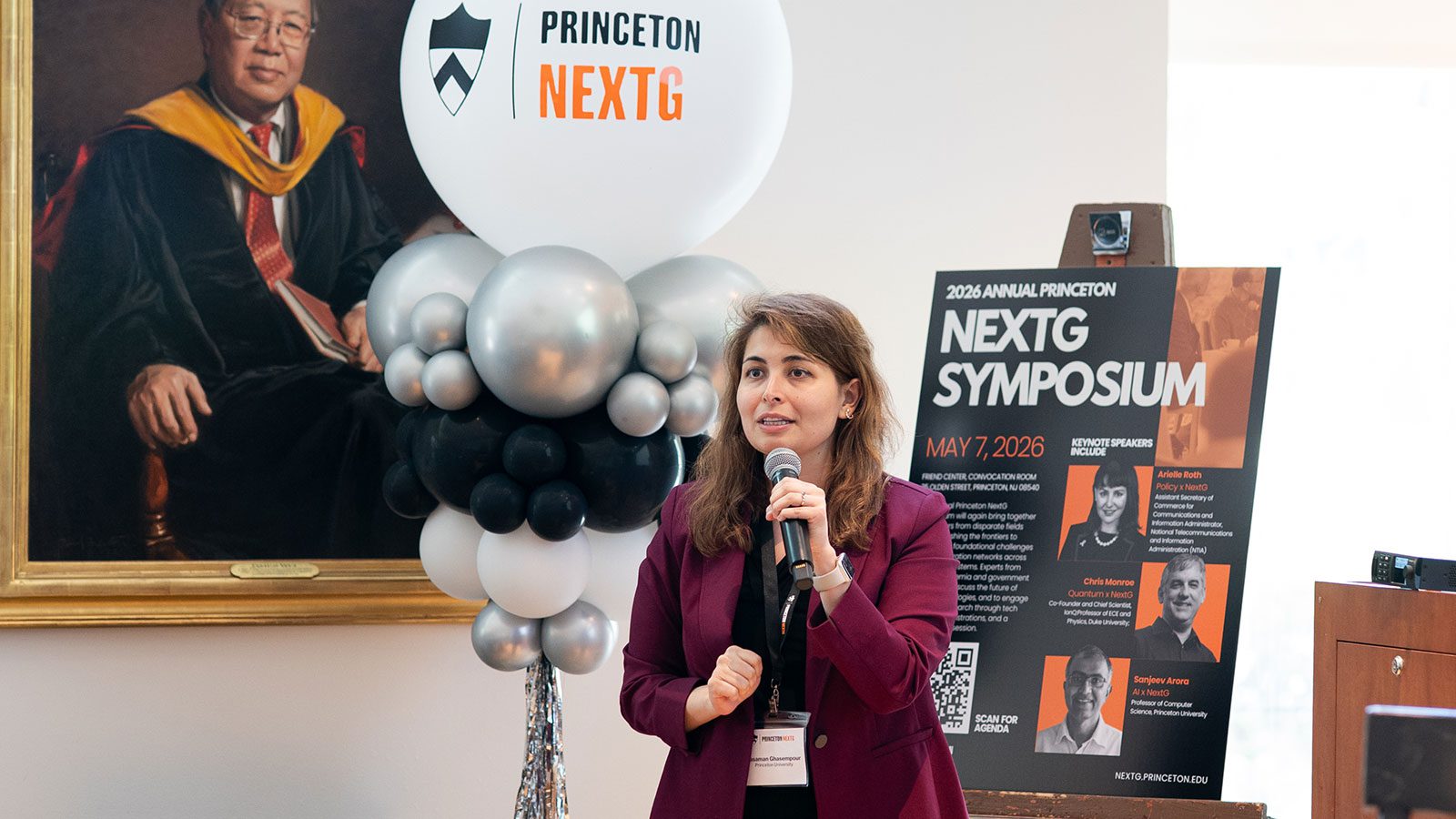
Yasaman Ghasempour, assistant professor of electrical and computer engineering and NextG co-director, said that since its 2023 opening, NextG has gathered a core group of corporate members. Working with the members, the initiative has pursued research in six focus areas: cloud, IoT and Edge Networks; communication and network foundations; intelligent sensing and computing; radio-to-terahertz-to-photonics integrated circuits and systems; security, privacy and resilience; and applications.
Ghasempour said that NextG has sponsored ten collaborations between industry and academic researchers and has funded nine research proposals through its program.
“The program is really successful because of you, our members,” Ghasempour told symposium participants.

Andrew Houck, the dean of engineering, said the last decade has demonstrated the importance of academia engaging with industry to develop technologies that can strengthen society. Such partnerships not only highlight the breadth and depth of academic research, they also allow researchers to focus on problems that matter to companies working in the same technological space.
“NextG showcases the importance we place on engagement with industry,” said Houck, Anthony H.P. Lee ’79 P11 P14 Professor of Electrical and Computer Engineering. “It is an incredible model for what we are trying to do at the university.”
Chris Monroe, co-founder and chief scientist at IonQ, professor of electrical and computer engineering at Duke University.
Presented a future vision of quantum computing and networking and their transformative implications for communication, encryption and security. He discussed the promise of the technology and the scientific and engineering hurdles that must be overcome before they can be realized.
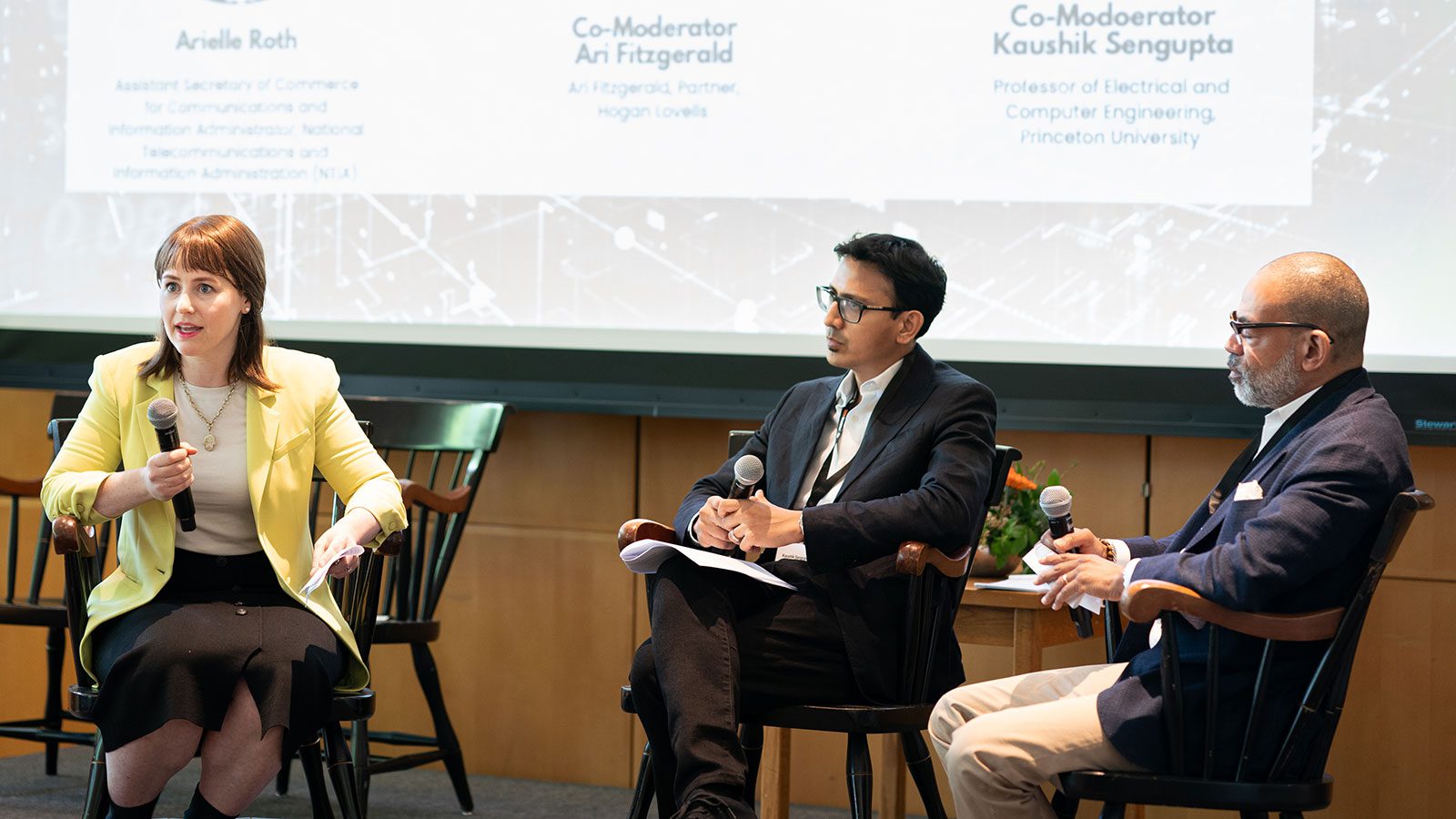
Arielle Roth, Assistant Secretary of Commerce for Communications and Information Administrator, National Telecommunications and Information Administration (NTIA)
Discussed the critical role spectrum policy, federal coordination, and national strategy play in maintaining US leadership in wireless technology. She outlined plans to open nearly 500 MHz of spectrum across the 2.7, 4.4, and 7 GHz bands to address the growing spectrum crunch, while emphasizing the importance of technology-neutral approaches spanning both terrestrial and satellite systems to expand connectivity. She also discussed US priorities and positioning for the upcoming ITU World Radiocommunication Conference 2027.

Sanjeev Arora, the Charles C. Fitzmorris Professor in Computer Science at Princeton
Shared insights into the rapid evolution of AI and foundation models, challenging the common notion that these systems are merely “stochastic parrots.” Through a detailed and intuitive discussion of next-word prediction, he illustrated how seemingly simple training objectives can give rise to remarkably sophisticated reasoning and intelligence. He also reflected on the broader opportunities and challenges associated with increasingly capable AI systems.
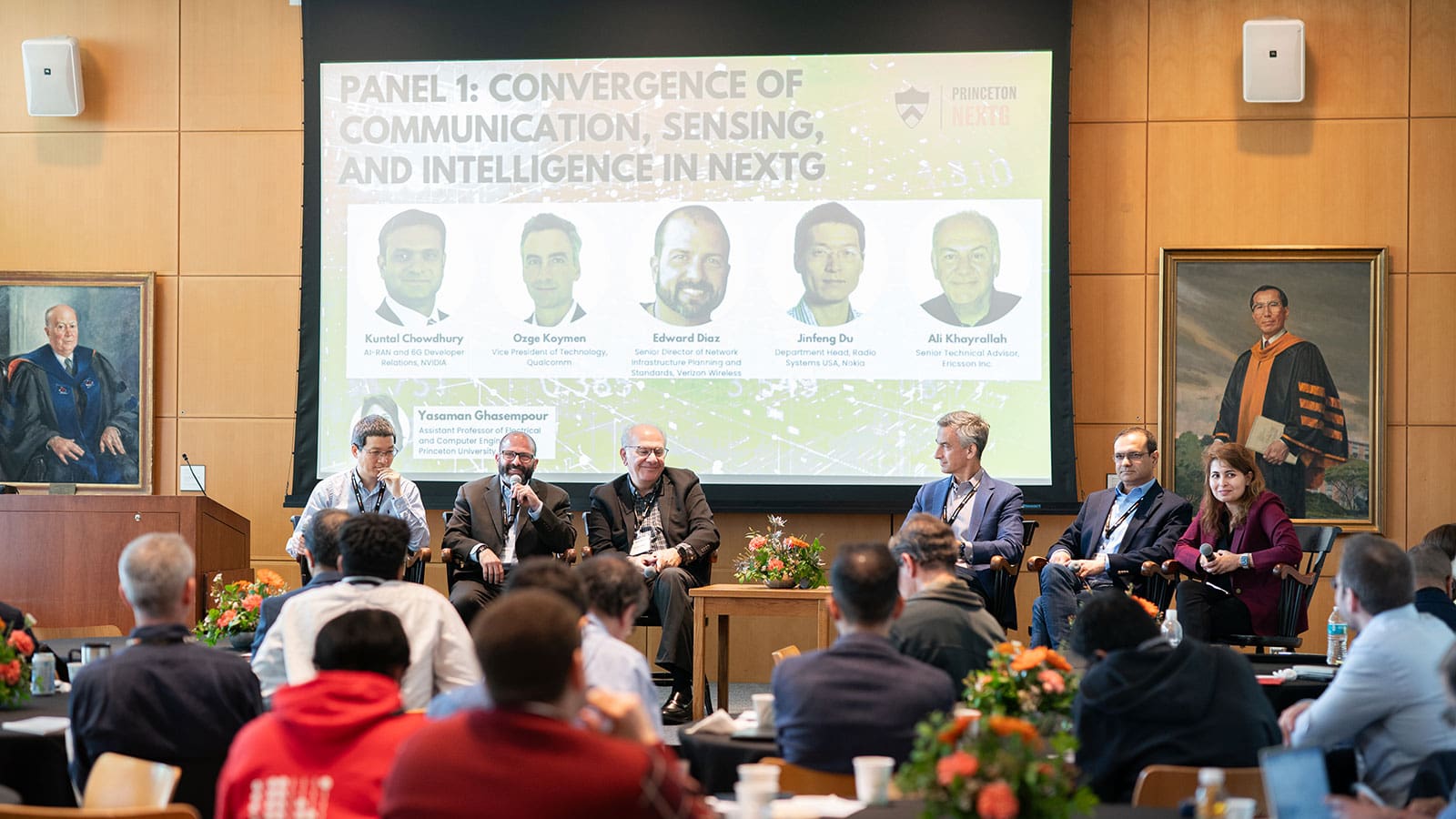
Panel 1: Convergence of Communication, Sensing, and Intelligence in NextG
The panel explored how communication, sensing, and AI are increasingly converging into a unified wireless platform for NextG systems. Discussions focused on intelligent networks capable of simultaneously communicating, sensing their environment, and adapting in real time, enabling applications ranging from robotics and autonomy to immersive digital experiences. The panel also examined where the value proposition of integrated sensing and communications (ISAC) ultimately resides across the technology stack, from hardware and infrastructure to software and services.
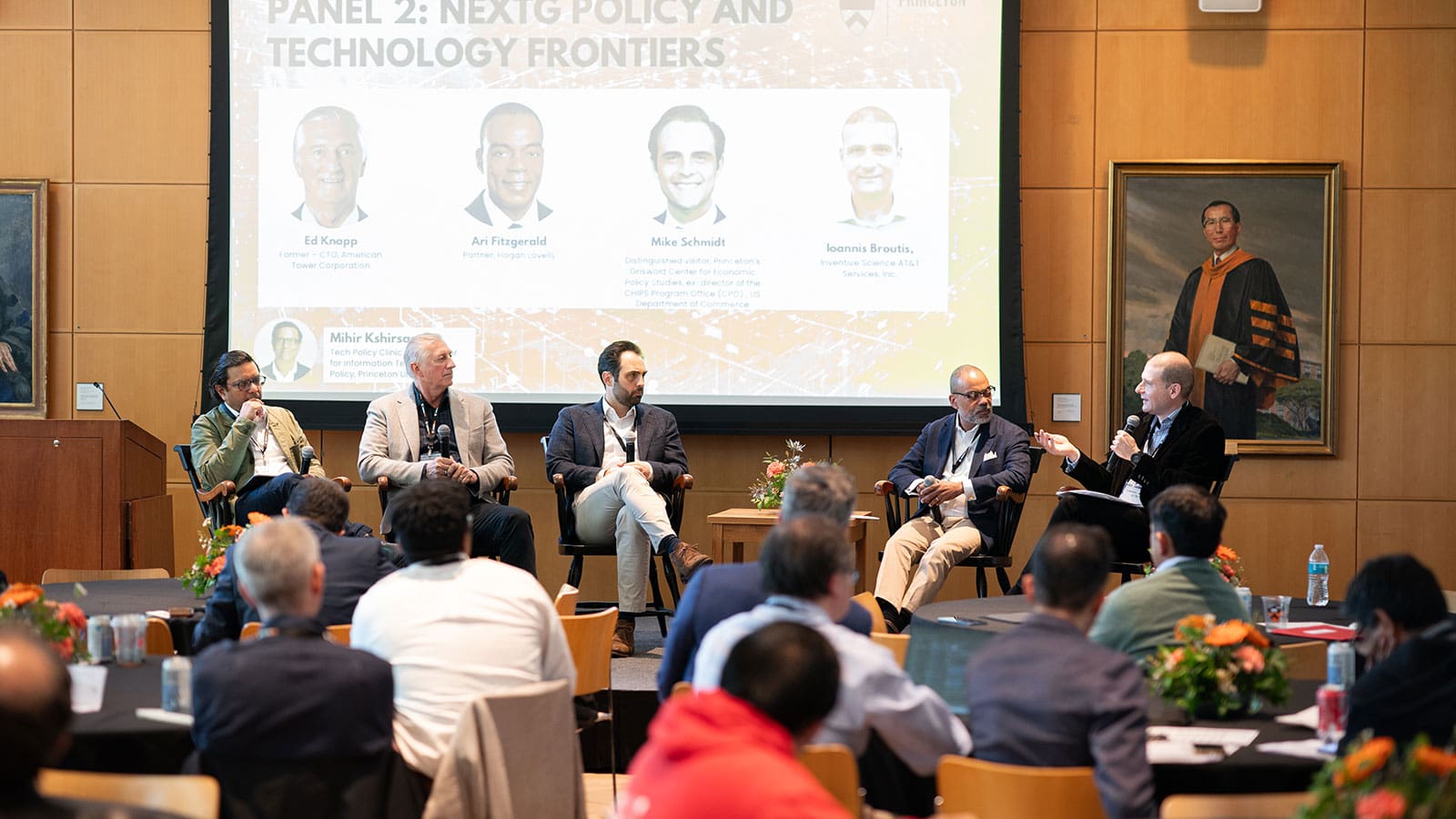
Panel 2: Technology and Policy
The panel examined how federal technology policies can be navigated across party lines to strengthen US technological leadership. Topics included spectrum allocation, regulation, security, standards, industrial competitiveness, and the importance of coordinated action between academia, industry, and government. The discussion reflected on the impact of the CHIPS Act and the broader shift in the US from relatively passive industrial strategy to more assertive post-COVID industrial policies aimed at strengthening supply chain resilience and technological competitiveness. Panelists also debated what the next generation of industrial policy might look like over the coming decade.
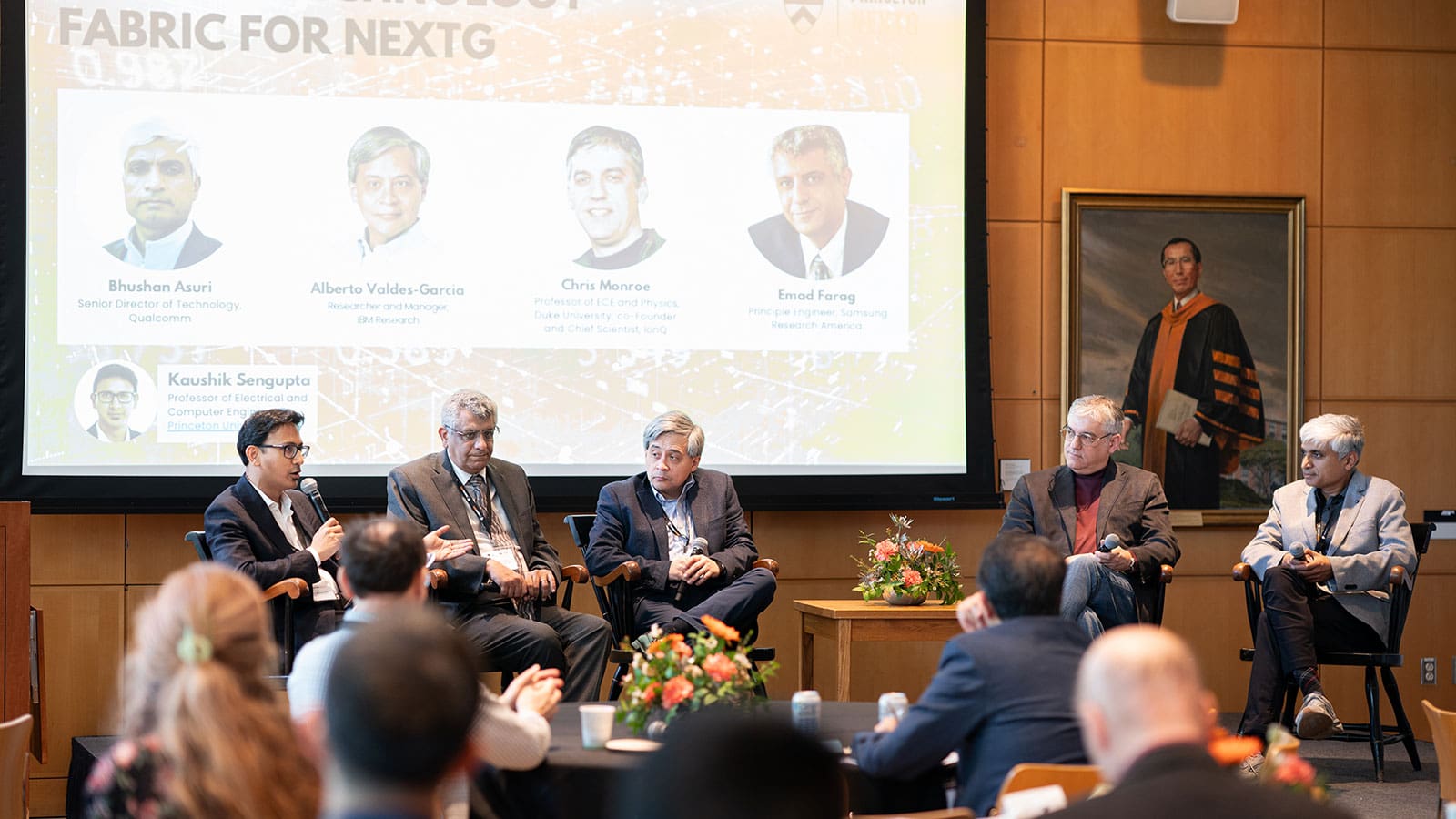
Panel 3: Technology Fabric for NextG
The discussion focused on the foundational technologies required to enable NextG systems, including advanced semiconductors, AI-enabled architectures, photonics, quantum computing, sensing platforms, and advanced packaging technologies. Speakers emphasized the need for innovation across the entire technology stack to support increasingly intelligent, programmable, and distributed communication systems.