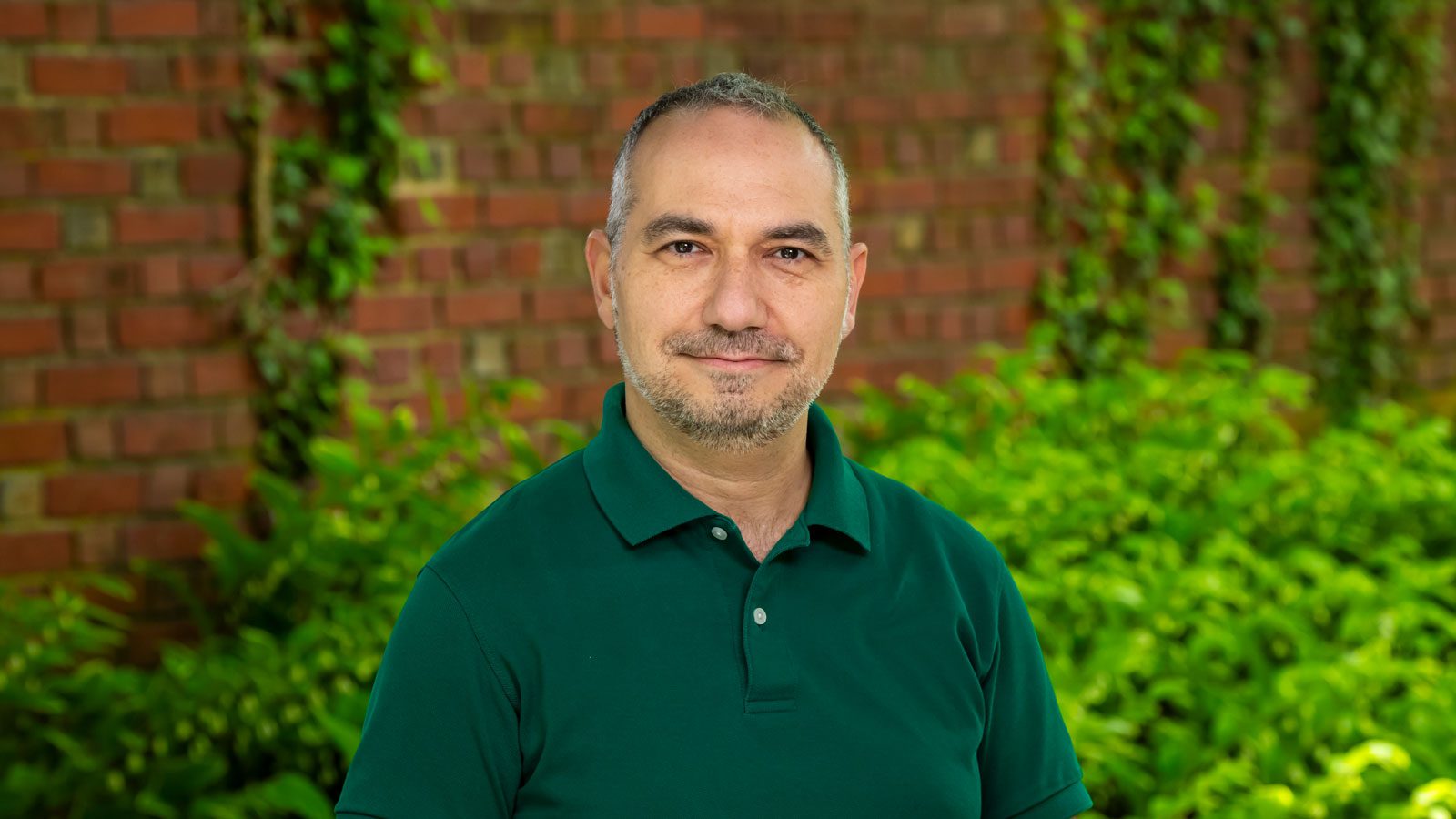
Elie Bou-Zeid has been named a fellow of the American Physics Society, recognizing excellence in physics and exceptional service to the physics community. He was also elected a member of the Lebanese Academy, which honors scholars and innovators whose work has had a transformative impact both in Lebanon and internationally.
Bou-Zeid, a professor of civil and environmental engineering, joins a class of 153 fellows selected from among American Physical Society’s membership of more than 50,000 physicists in academia, national laboratories and industry in the United States and around the world.
He was selected by the Topical Group on Physics of Climate “for fundamental contributions to the understanding of turbulent atmospheric boundary layers, and for pioneering research on urban heat islands that have informed mitigation strategies with broad societal impact, such as green spaces and cool roofs.”
Bou-Zeid is one of 36 members of the Lebanese Academy, which was founded in 2022 and serves as Lebanon’s national, merit-based academy of sciences, arts and letters. It was established to unite the country’s intellectual community — within Lebanon and across its diaspora — around the shared mission of advancing knowledge, fostering innovation and promoting evidence-based dialogue in service of society.
Bou-Zeid holds a bachelor’s degree in mechanical engineering and a master’s degree in environmental and water resources engineering from the American University of Beirut, and a master’s in mechanical engineering and a Ph.D. in environmental engineering from Johns Hopkins University. He joined Princeton in 2008 and served as the founding director of the Metropolis Initiative until 2022.
In September, Bou-Zeid was named a fellow of the American Geophysical Union, which had previously awarded him its 2025 Atmospheric Sciences Ascent Award. The American Meteorological Society has named Bou-Zeid winner of its 2026 Helmut E. Landsberg Award and its 2024 Distinguished Scientific/Technological Accomplishment Award by the Board on Urban Environment. His research was also recognized with a ‘Beyond Bauhaus – Prototyping the Future Award’ for the Cityreader project on mobile urban sensing. He is the current chair of the American Meteorological Society Committee on Boundary Layer and Turbulence and served as editor of the Journal of the Atmospheric Sciences from 2020 to 2025.