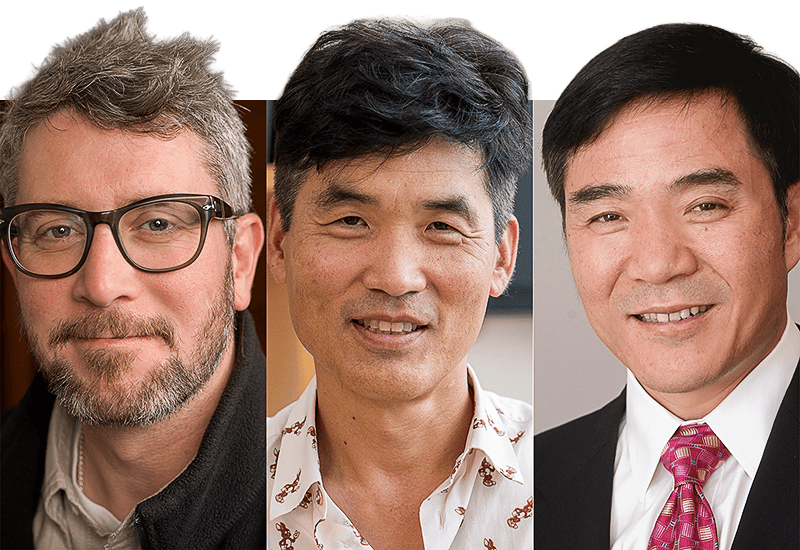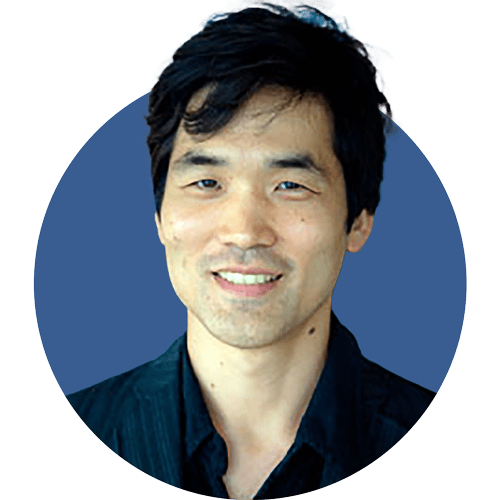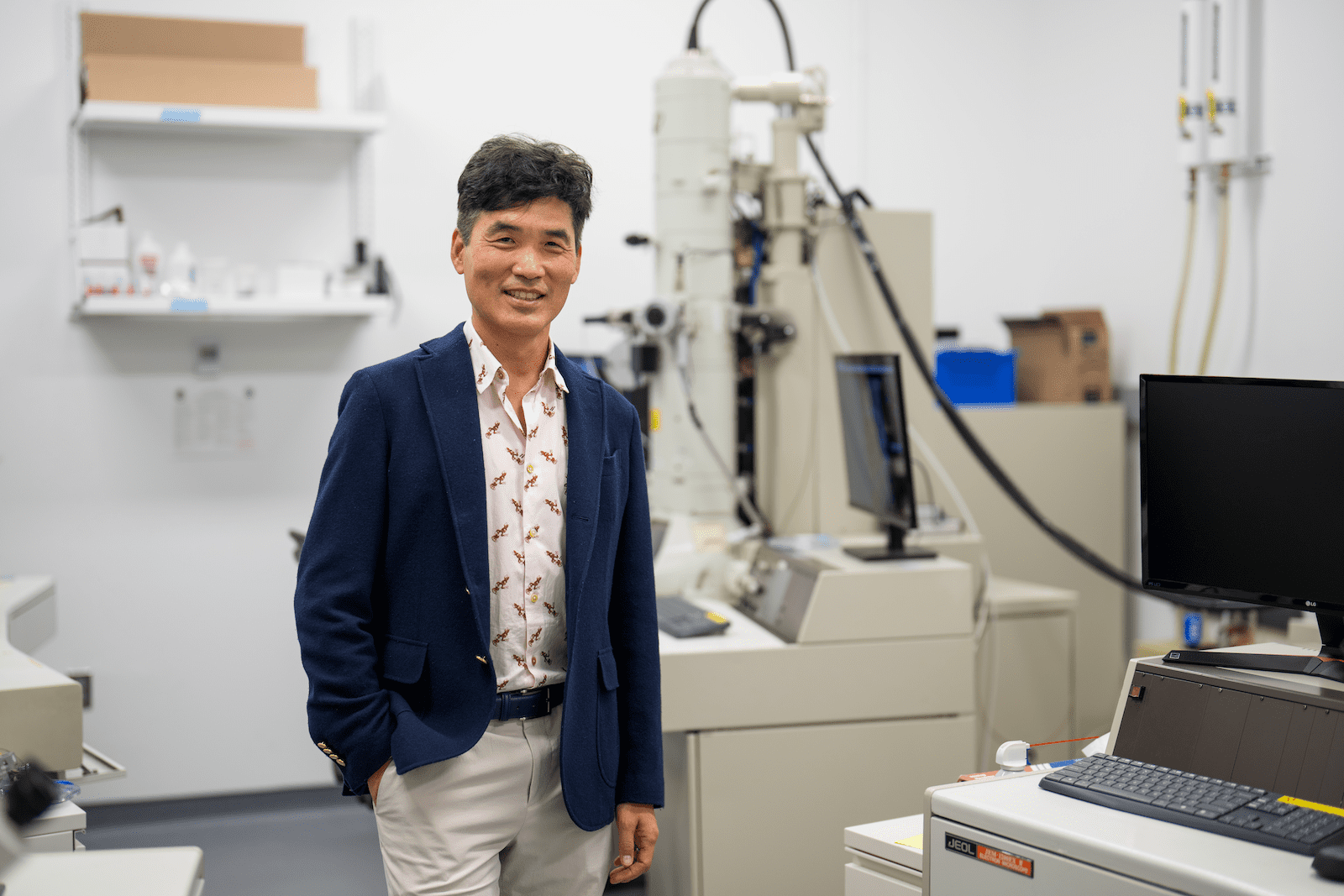
H. Sebastian Seung, a pioneer of computational neuroscience, has been named the winner of the National Academy of Sciences’ 2026 Pradel Research Award. The award, which honors mid-career neuroscientists who have made major contributions to the field, provides a $50,000 prize for recipients to support neuroscience research.
The Academy recognized Seung’s work for having “fundamentally reshaped modern neuroscience and computational biology, transforming our understanding of how neural circuits are reconstructed, analyzed and interpreted.”
Early in his career, Seung, the Anthony B. Evnin ’62 Professor in Neuroscience and professor of computer science, pioneered learning algorithms based on techniques that decompose complex data into simpler features, and introduced a mathematical framework to understand how the brain can integrate and remember information over time.
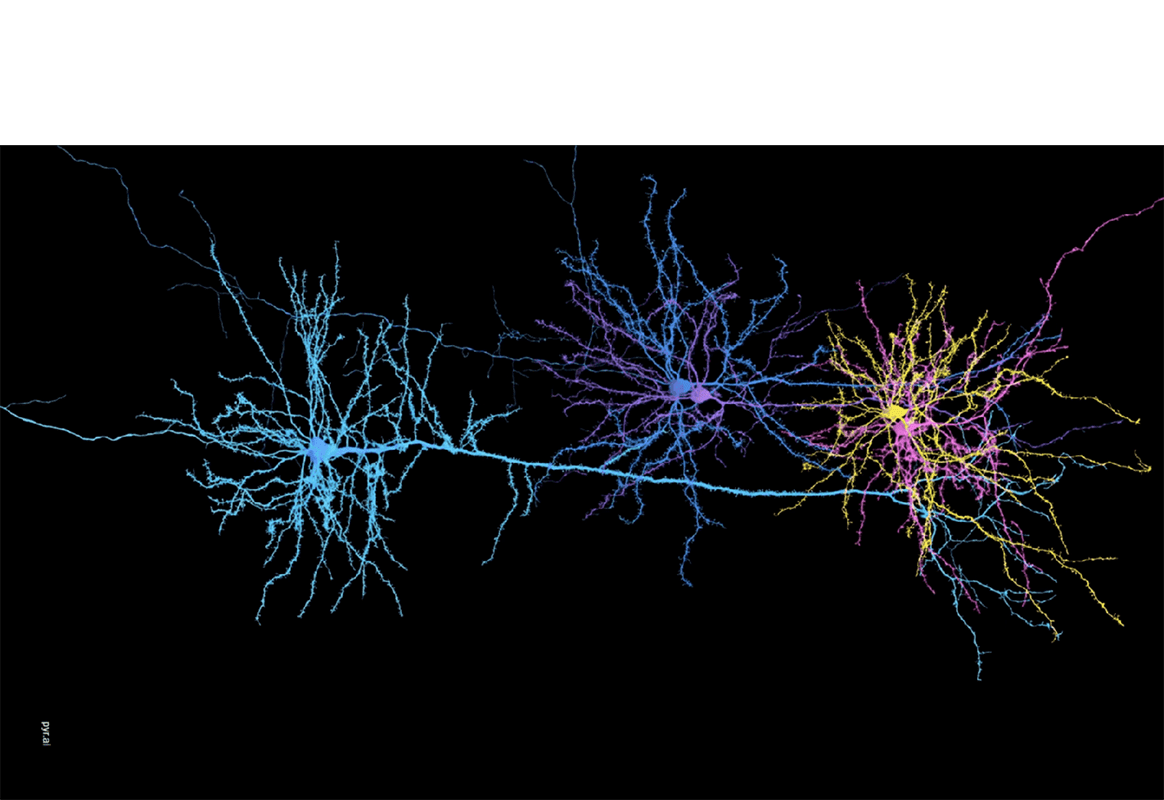
In the 2000s, he and his students began to apply convolutional nets to trace the “wires” of the brain in electron microscopic images. Such automation by artificial intelligence was required for reconstructing neuronal wiring diagrams of brains, or “connectomes.”
After moving to Princeton in 2014, Seung led his lab to scale up the AI to much larger image datasets. This expansion enabled Seung — as part of a collaborative effort called the Machine Intelligence from Cortical Networks (MICrONS) Consortium — to reconstruct a wiring diagram from a cubic millimeter of brain tissue in a mouse’s visual cortex.
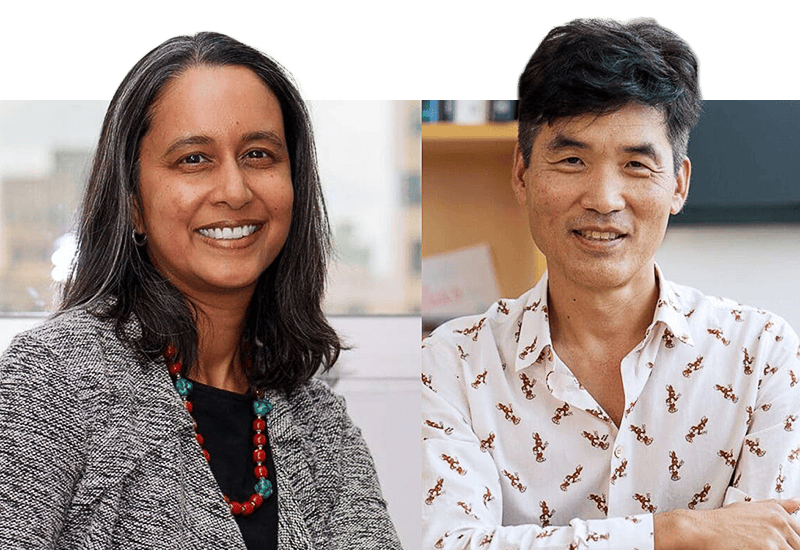
Seung also joined forces with Mala Murthy, the Karol and Marnie Marcin ’96 Professor of Neuroscience and Director of the Princeton Neuroscience Institute, to lead the FlyWire Consortium — a globe-spanning group of 75 laboratories and a team of citizen scientists. They completed the first wiring diagram of a fruit fly’s 140,000 brain cells and the tens of millions of synapses connecting them — a resource now used worldwide by neuroscientists.
In his dozen years at Princeton, Seung has helped the Neuroscience Institute achieve a preeminence in the field of connectomics. He and David Tank, the Henry L. Hillman Professor of Neuroscience, are now helping lead efforts that aim to scale up to a whole mouse brain.
“For over 20 years, many dedicated researchers around the world have worked to realize the dream of connectomics,” Seung said. “I’m especially indebted to the talented members of my laboratory, past and present, and to Princeton University for its wonderful intellectual environment. It’s been my privilege to live a life in science.”
Seung will be presented with the award at a ceremony on April 26 during the National Academy of Sciences’ 163rd annual meeting.
Seung previously held positions at the Massachusetts Institute of Technology and Bell Laboratories and has served as President of Samsung Research. He earned both his bachelor’s and doctoral degrees in physics at Harvard University, followed by a postdoctoral appointment at the Hebrew University of Jerusalem.