Six projects have been awarded grants through the Sustainability of Our Planet fund, which facilitates research across disciplines that explores new ideas and concepts aimed at finding sustainable energy solutions.
This latest round of funding supports innovative approaches to modernize building materials and construction; reduce people’s exposure to heat and air pollution inside their homes; manage solar radiation; clean up forever chemicals; and enhance the resilience of regional energy systems.
The Sustainability of Our Planet fund was established in 2021 through the vision and generosity of John McDonnell, Class of 1960. It supports the discovery, development, and adoption of sustainable solutions that address natural resource extraction, climate change, land-use change, and other human activities that degrade the environment and pollute Earth.
The following projects were selected for funding:
Back to the future: Reinventing timber joints
Jürgen Hackl, assistant professor of civil and environmental engineering
Branko Glišić, professor of civil and environmental engineering and chair, Department of Civil and Environmental Engineering
Ming Shan Ng, professor of architecture, construction and innovation at Kyoto Institute of Technology, Japan

The construction industry’s dependence on carbon-intensive materials and inefficient practices is driving high emissions and resource depletion, jeopardizing long-term environmental sustainability. This project revives ancient Japanese timber joinery techniques for modern construction. For more than a millennium, Japanese craftsmen used timber joints to construct large buildings and structures that were resilient, earthquake-resistant and long-lasting. These timber joints achieve structural integrity through precise geometric interlocking — without nails, adhesives or metal fasteners. They provide an added benefit of low-carbon, sustainable and environmentally sensitive alternatives to conventional construction methods.
The research team aims to evaluate, adapt and reintroduce these joints as scalable, low-carbon structural connectors for 21st-century construction. To do so, they plan to digitize these historical joints, optimize their geometries through simulation and machine learning, and evaluate and validate their performance through prototyping and testing. Ultimately, the researchers believe these innovations will help to develop a sustainable, reusable building system that can be used for contemporary construction projects.
Convective surface cooling through architected materials
Reza Moini, assistant professor of civil and environmental engineering
Lara Tomholt, former distinguished postdoctoral fellow, Andlinger Center for Energy and the Environment
Thermoregulation of buildings accounts for approximately 15% of global carbon emissions. As building facades and roofs absorb solar heat, it drives up interior temperatures. While reflective coatings and evaporative methods exist or are being developed, leveraging natural airflow for heat dissipation through material and structural design remains underexplored. This project will develop architected materials — purposefully structured surfaces with fins, pores, or undulations — to dramatically enhance convective cooling of building envelopes, slashing air conditioning demand as global temperatures climb.
The project team will create a parametric modeling platform to generate architected designs at the meso scale and simulate airflow enhancement and surface temperature drops under various climates (hot/dry/high-wind vs. humid/low-wind). They will use additive manufacturing or hybrid casting methods to develop prototypes from everyday materials such as cement-based substances; investigate them in relevant environmental conditions with heat and airflow; and refine the designs based on real-world airflow and heat flux measurements to scale up the technology for building envelopes.
Preliminary simulations have demonstrated finned cement-based surfaces cool about 6.5°C better than smooth or flat surfaces, directing toward potentially cutting an average U.S. home’s cooling need by 40%. Such architected materials cool buildings passively, without energy input or changing construction methods. The same technology could also help cool bridges, solar panels and more.
Reducing indoor exposure to heat and air pollution with minimal energy use
Elie Bou-Zeid, professor of civil and environmental engineering
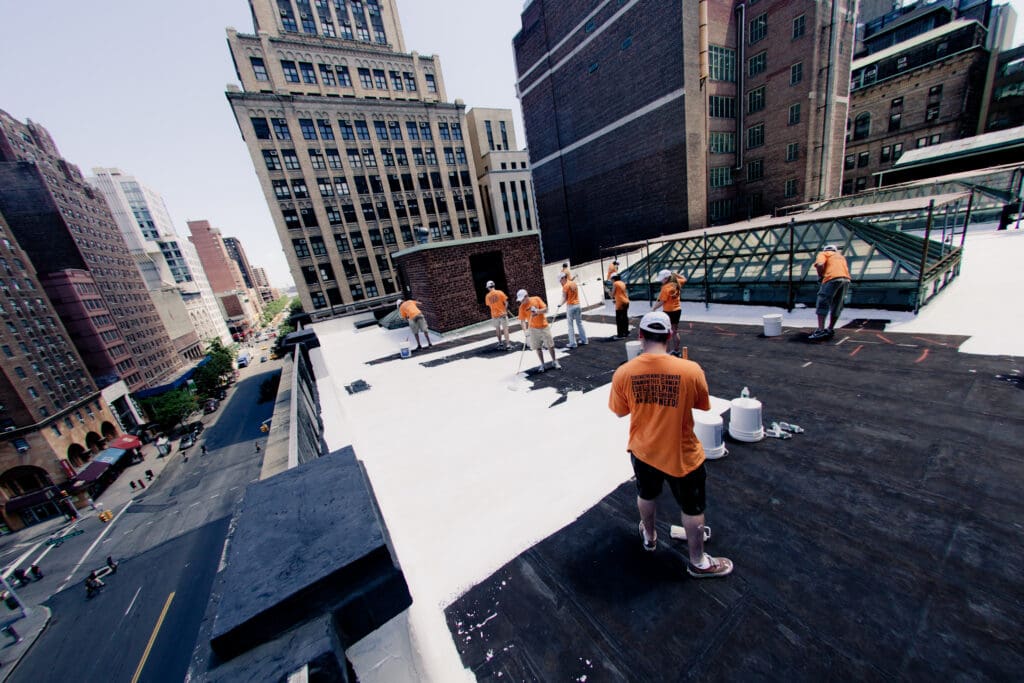
This project seeks to understand and reduce people’s exposure to dangerous heat and air pollution inside their homes, particularly in underserved urban communities. Many existing models treat cities as outdoor systems or focus on individual buildings in isolation. By contrast, this work focuses on exposure at the interface between indoors and outdoors, where heat and pollutants move through walls, windows and ventilation systems. This interchange can create higher and more prolonged hazards indoors than outside during heat waves and pollution episodes.
The research team will collect data in Newark, NJ, where pairs of sensors will measure temperature, humidity, and key pollutants both inside and outside the same buildings. Using these fine-scale observations, the researchers aim to understand how outdoor weather, building materials and neighborhood conditions combine to shape indoor hazards — and how these patterns intersect with socio-economic factors such as income and race.
Building on this dataset, the team will develop and evaluate a coupled modeling framework that links a detailed building thermodynamic model to an existing urban canopy model. This integrated tool will simulate how heat and pollutants move between buildings and the city around them. The goal is to see how different designs, materials and operating strategies affect both indoor comfort and outdoor environmental quality.
Finally, the project will use this framework to test practical, low-cost solutions for homes without access to air conditioning or filtration — such as air filters, misting coolers, optimized natural ventilation, and solar panels used for shading and heat reduction. The overarching goal is to provide cities like Newark with concrete, affordable strategies to protect residents, equipping planners, engineers and policymakers to create urban environments that are more resilient, energy-efficient and equitable.
Ice nucleation in solar radiation management science
Marissa Weichman, assistant professor of chemistry
Luc Deike, associate professor of mechanical and aerospace engineering and the High Meadows Environmental Institute
Stratospheric aerosol injection (SAI) is a solar radiation management technique that has emerged as a potential intervention to counteract global warming. The method involves releasing aerosols into the atmosphere to reflect sunlight and cool the planet. However, scientists still poorly understand how these aerosols interact with the climate system.
This project will advance fundamental knowledge of atmospheric aerosol science to inform future atmosphere-based solar radiation management strategies. The research team will investigate the impact of atmospheric aerosols on both solar radiation and cirrus cloud coverage, using innovative techniques and devices such as cavity-enhanced frequency spectroscopy (CE-FCS) and an aerosol-ice nucleation cloud chamber.
Specifically, the researchers will conduct a quantitative study of light-matter interactions and ice nucleation microphysics of proposed SAI candidates (i.e., sulfate, calcite, titania and alumina particles) and ice particles. They will investigate how aerosols scatter and absorb solar radiation and characterize their potential to form (i.e., nucleate) cirrus cloud ice particles as they settle into the troposphere. This research will further understanding of solar radiation management and help to better predict the impact of hypothetical climate interventions.
Novel, low-energy enzyme-based technologies for PFAS removal
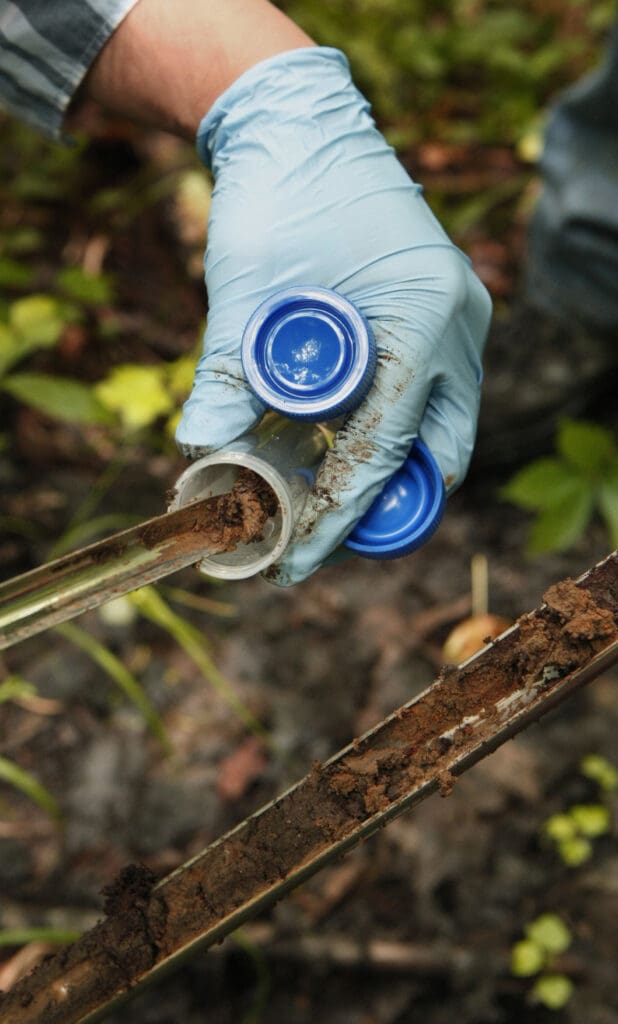
José Avalos, associate professor of chemical and biological engineering and bioengineering
Peter Jaffé, William L. Knapp ’47 Professor of Civil Engineering; professor of civil and environmental engineering
This project tackles the environmental crisis posed by perfluorooctanoic acid and perfluorooctane sulfonate — which are some of the more ubiquitous chemicals collectively known as PFAS, or “forever chemicals” for their very long lifespans in soils, waterways and the human body. These compounds, ubiquitous in many consumer products, firefighting foams, and industrial waste, have been linked to cancers and other health issues. They also defy conventional cleanup because of their extremely strong carbon-fluorine bonds. Existing methods either capture PFAS onto absorbent materials or destroy them through energy-intensive processes like soil heating, plasma treatment, or high-temperature incineration. These approaches work for small sites, but no affordable, environmentally friendly technology exists to destroy PFAS at the scale needed for America’s contaminated water systems and farmland.
The researchers discovered a bacterium that degrades major PFAS chemicals and have identified its key enzyme responsible for the defluorination reaction. They then bioengineered a concentrated form of this bacterial enzyme in E. coli. Preliminary tests show that the enzyme produced by the engineered E. coli destroyed 50% of PFAS chemicals in just 16 hours, compared with approximately 30 days for the natural bacteria.
This project will identify the enzyme’s optimal working conditions, scale up production, and test real-world applications: regenerating water treatment filters, cleaning contaminated farmland, and treating firefighting foam sites. Unlike current methods that merely capture PFAS, this novel technology destroys them permanently using minimal energy, offering the first scalable solution to clean up forever chemicals.
Resilient renewable integration for energy systems under climate risks
Ning Lin, professor of civil and environmental engineering
More than 80% of U.S. power outages since 2000 stemmed from weather events, with hurricanes causing the largest blackouts. This project confronts the vulnerability of power grids to climate events such as hurricanes and compound heatwaves, exacerbated by the clean energy transition’s reliance on weather-sensitive renewables like solar and wind. Large-scale integration of variable renewable energy is associated with increased operational uncertainty during extreme events; wind farms cannot operate during extreme events, and extensive damage to solar panels has been observed during past hurricanes.
The researchers aim to develop an integrated resilience framework for renewable-heavy regional energy systems along the U.S. East and Gulf Coasts. They will build physics-based power outage models that account for wind, rain, flooding, tree damage, and network topology; agent-based recovery optimization that simulates repair crews and dispatchable renewables under duress; and microgrid solutions optimizing solar photovoltaics (PV), storage, and demand response to maintain community power during blackouts. Using synthetic hurricane datasets from these models, comprehensive grid data from 50 utilities, and real-time demand profiles, researchers will project vulnerabilities and test resilience strategies across cities like New York, Houston and New Orleans.
By measuring outage risks, recovery times, and microgrid performance during future extreme weather, the work provides practical strategies for utilities. It enables distribution networks to become flexible, self-contained subsystems that isolate from the main grid during disasters, while still advancing carbon reduction targets. The effort ultimately bridges rapid energy transitions with stronger infrastructure, safeguarding reliability for coastal communities facing worsening storms and overlapping threats.