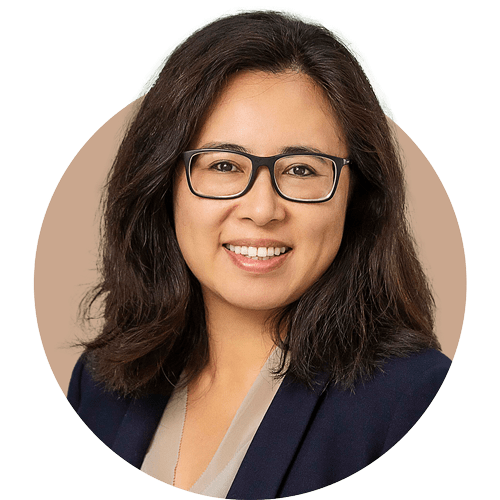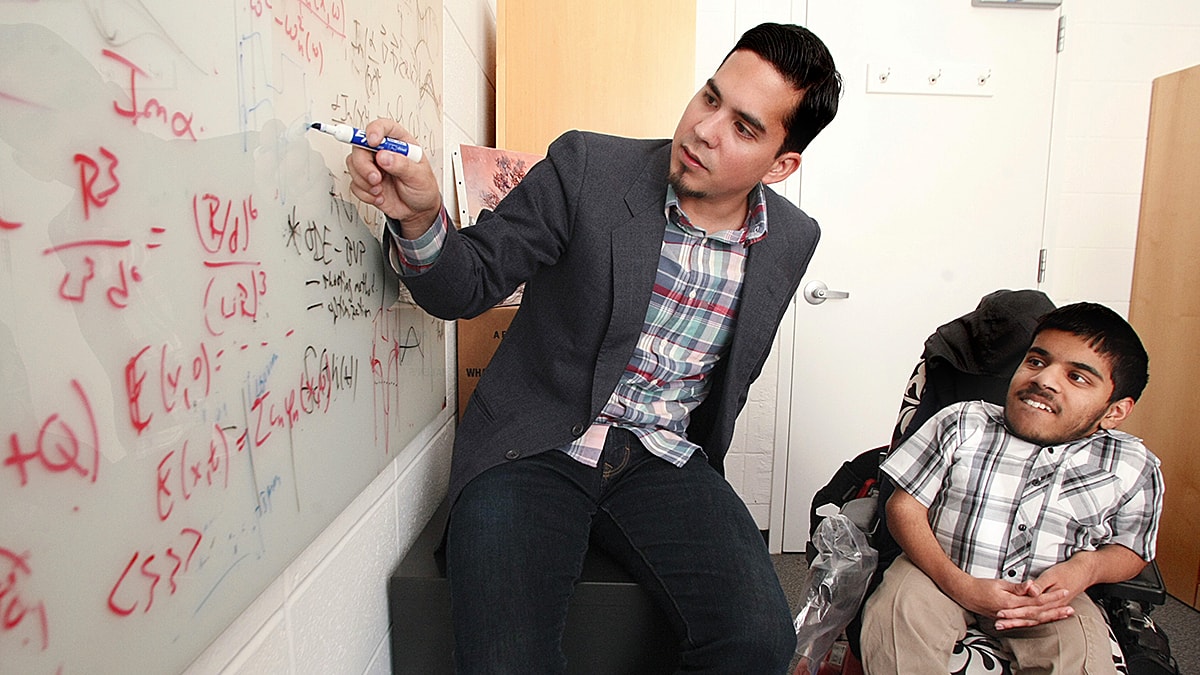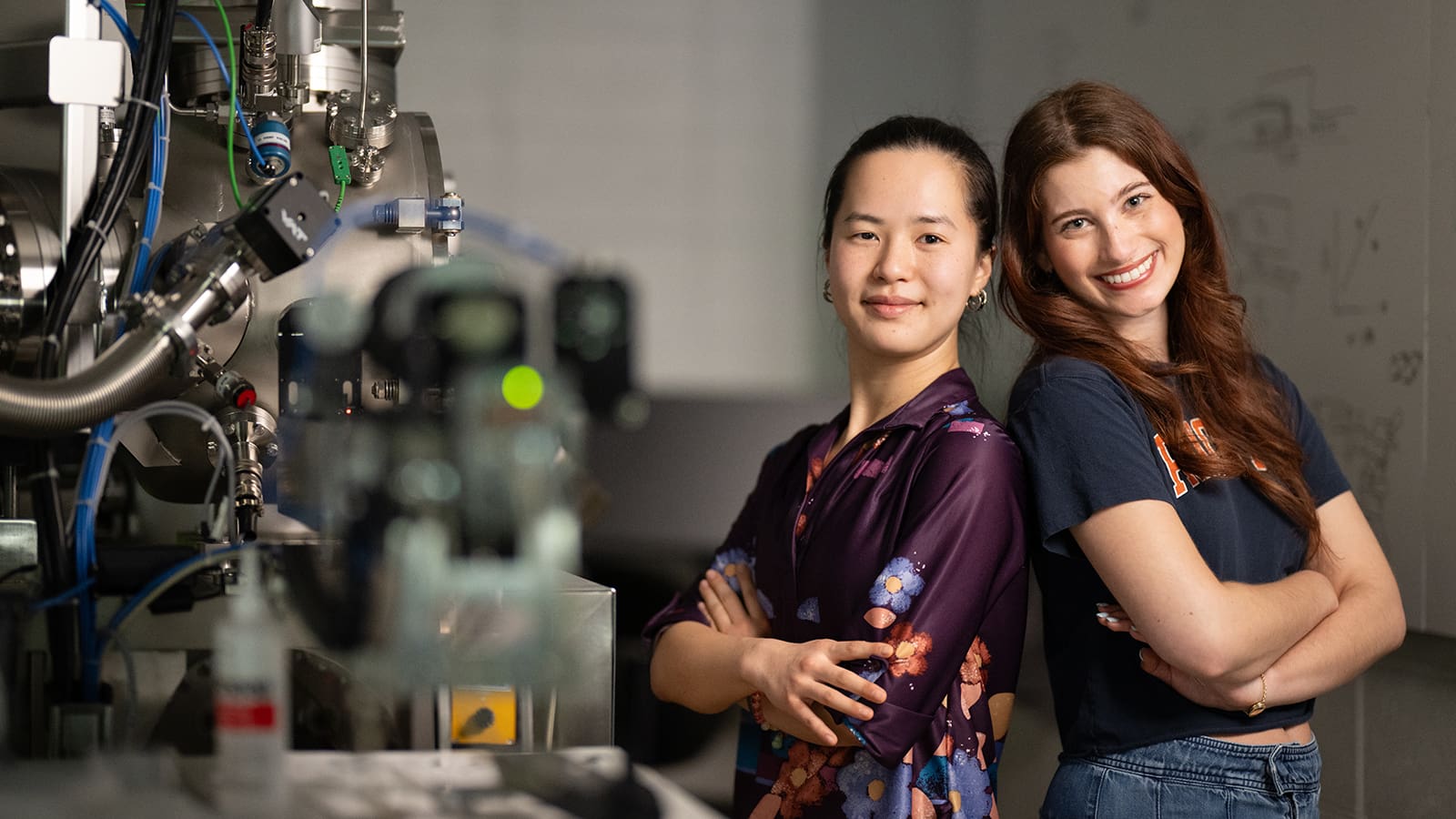
Kalli Zervas was at a California art school when she found she had a knack for math. She taught her peers second-year calculus when her high school couldn’t offer it. She thought she would become a doctor.
Laura Futamura was an art kid at a New Jersey STEM school, playing flute at Carnegie Hall. “Being onstage was eye-opening,” she said. “It taught me a lot of grit.”
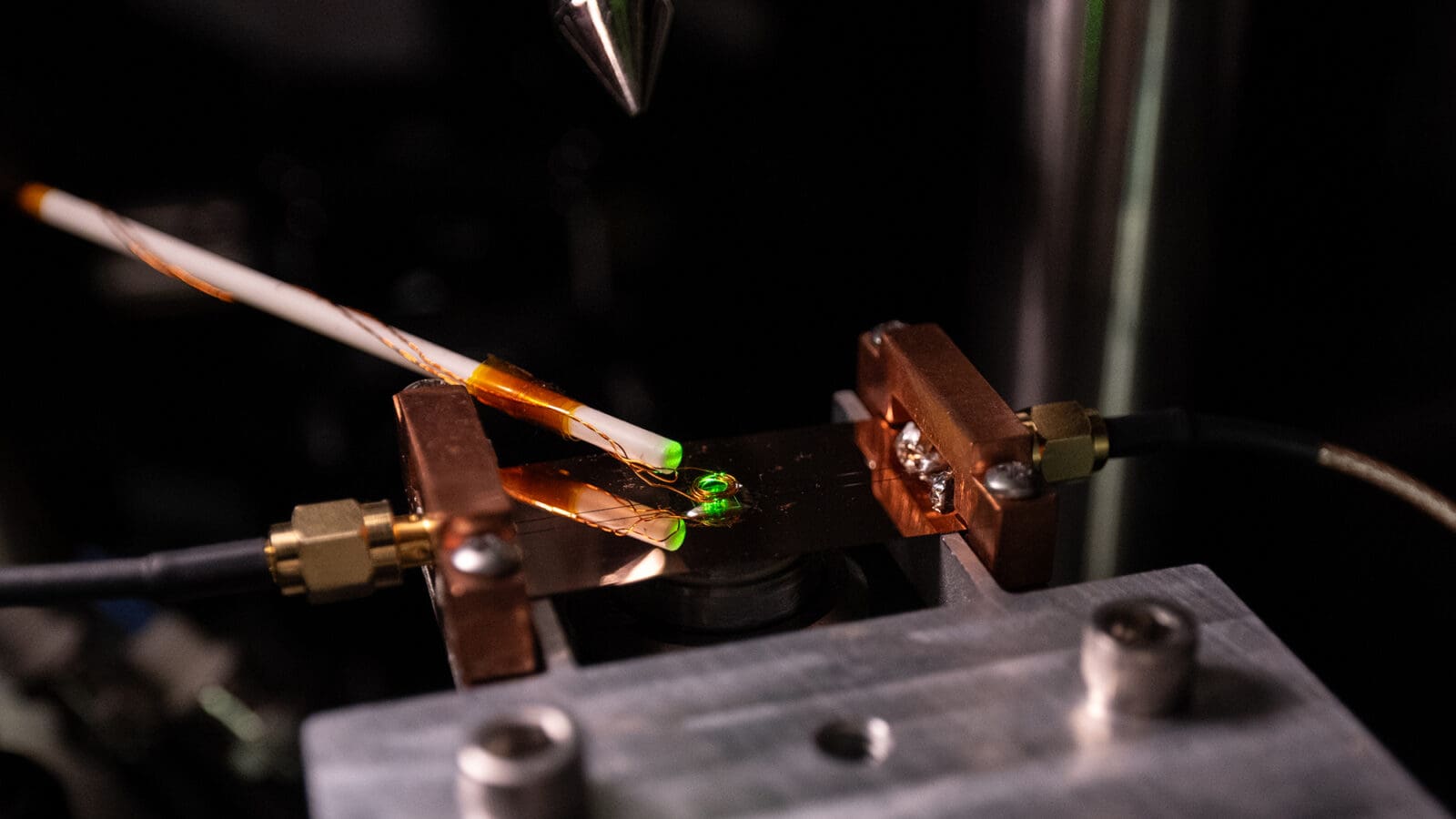
But instead of soloing in concert halls, Futamura now studies molecules at low temperatures — 100 billionths of a tick above the coldest temperature in the universe. Zervas is making the world’s cleanest diamond surfaces, perfecting them to the point where she can attach single molecules and measure the delicate signals of their nuclear spins.
In 2024, both women joined the inaugural cohort of Princeton’s quantum science and engineering graduate program, pioneering a field that promises to define the next era of discovery and invention.
“We’re bringing students to Princeton who otherwise wouldn’t have found a natural home,” said Nathalie de Leon, co-director of the Princeton Quantum Initiative, which sponsors the quantum science and engineering (QSE) graduate program, now in its second year. “They had to think of things in terms of what is possible, as opposed to relying on a bunch of data about what people have done in the past.”
The heart of Princeton’s Quantum Initiative
Bringing together deep and varied expertise is at the heart of the Princeton Quantum Initiative. A recent breakthrough in chip design created a step change in hardware for the quantum computing industry. Another changed the math on error correction for a competing platform. Others lead in the transformative areas of quantum sensing, quantum materials and quantum systems that challenge our most basic understanding of how materials and information interact.
Waseem Bakr, a professor of physics and faculty member of the Princeton Quantum Initiative, said quantum science is undergoing a transformation similar to the emergence of electrical engineering in the 1880s.
“It’s starting to become its own field,” he said. “In terms of the training we need for graduate students, it’s distinct from physics and other fields.”
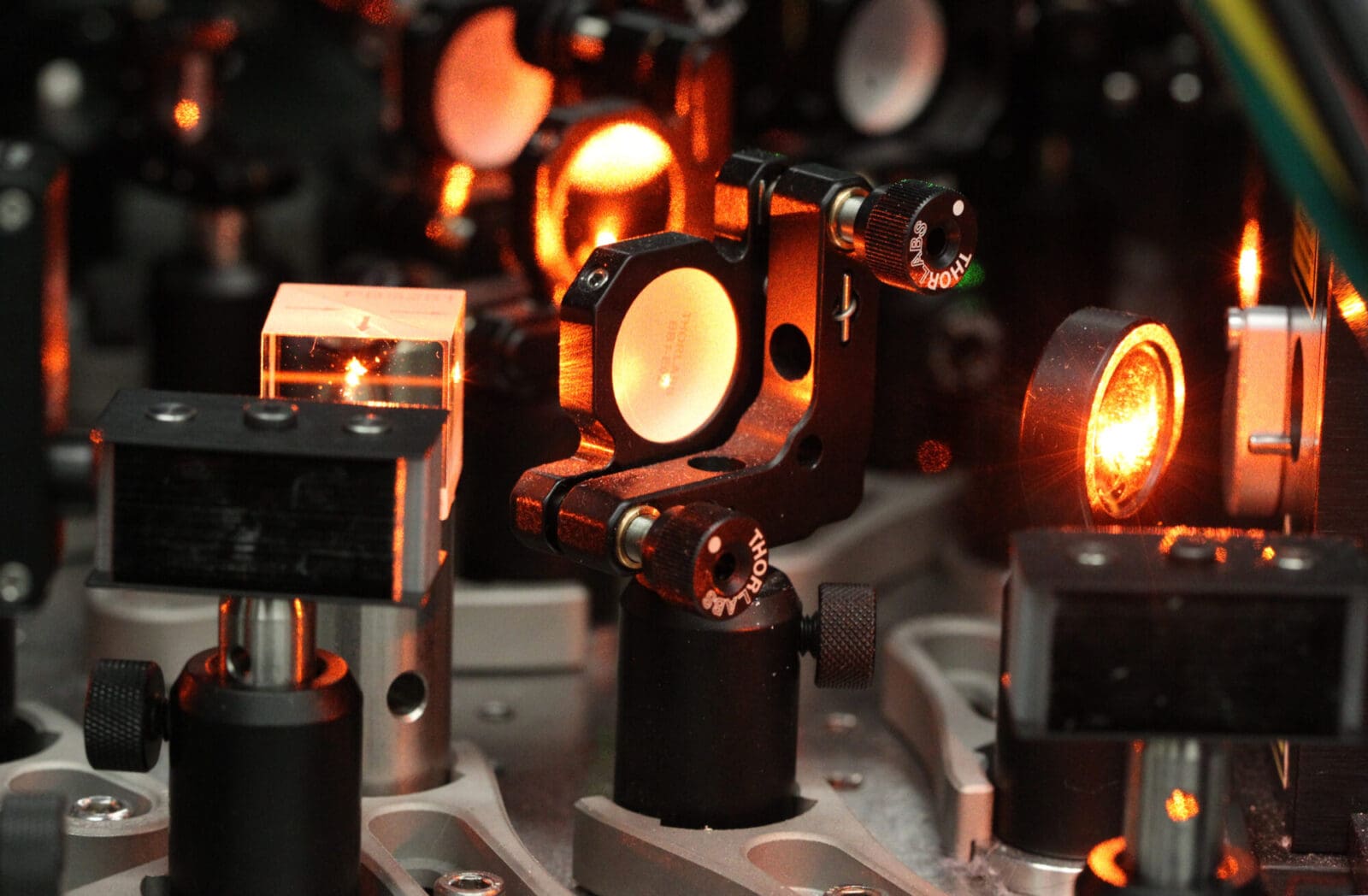
Major gift promises to accelerate Princeton University’s leadership in quantum science
A major gift from Andy Florance ’86 and Heather Florance will support the Princeton Quantum Initiative and will accelerate the next generation of quantum science research and discovery at Princeton University.
Graduate students in Princeton’s quantum Ph.D. program — one of only a few of its kind in the United States — have backgrounds in physics, computer science, electrical engineering, materials science and chemistry. The vision for the program, according to de Leon, is to give students rigorous graduate-level training in elements of quantum physics and information theory and glue that curriculum together with courses on advanced quantum information technologies.
What is quantum information?
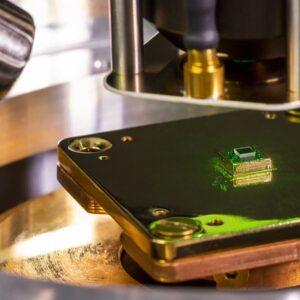
Switching back and forth between ones and zeroes creates logic, and digital logic is what makes the modern world. But while the information encoded as either a one or a zero is an abstraction, it all has a physical basis.
Quantum information has a physical basis, too. But the physical system generating quantum information acts very differently than conventional logic boards. And likewise, the information generated by a quantum bit (or qubit) must be processed differently than a digital bit.
Researchers use quantum information to study the mysterious undercurrents of the material world and develop technologies that go far beyond the realm of familiar things.
“Quantum information is a lens for understanding the whole world,” de Leon said. “For many domains of science, we’re still opening this opportunity space. But you can’t put the genie back in the bottle. This is now the future.”
Forging a scientific frontier takes guts
Working at the forefront of any field comes with immense challenges. Working at the forefront of a field this new means that nearly every choice comes with the risk of total failure.
“Laura has this fearless personality,” said Bakr, who is Futamura’s adviser. “She was willing to jump into these very difficult experiments and take on the challenges.”
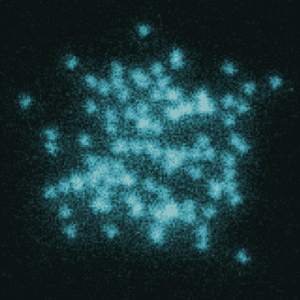
In the 1990s, Nobel Prize-winning teams demonstrated a special new state of matter, called Bose-Einstein Condensates, first predicted by Albert Einstein a century ago. The teams that shared the prize looked at very cold atoms. Only in the last few years has anyone demonstrated this state with molecules. “Now Laura’s trying to do it in a different way from what people have achieved in the last couple of years,” Bakr said.
Zervas, who studied chemistry as an undergraduate, had no connection to New Jersey or to Princeton when she cold-emailed de Leon to ask if she could work in the quantum-sensing lab. She was deciding between med school or bench science, and explained this would be her way of figuring things out. Zervas had only glancing experience with quantum science, but something in her inquiry stood out to de Leon.
“She had this spark,” de Leon said. “I thought that I should give her a chance.”
She said Zervas dove right into the work of diamond-surface processing, by which de Leon’s group creates some of the world’s best quantum sensors.
It’s exacting work. The people who do it have to diagnose strange, often inexplicable, problems that crop up. And they have to be fast, with no room for error.
“Very few people can do it,” de Leon said. “It’s just very demanding.”
This didn’t seem to bother Zervas, de Leon recalled. “Kalli had it working at this very high level right away.”
Now, Zervas and Futamura have fellowships from the University and the National Science Foundation to explore these projects. They are part of an inaugural cohort of 11 graduate students whose research includes several distinct quantum computing platforms, diamond-based quantum sensing, experimental approaches to quantum materials, and quantum information theory.
The second cohort of 10 students began joining their research groups last month. And a third cohort was recently admitted, starting in the fall of 2026. Together, with a small but growing number of peers and their advisers, these trainees are creating something new. “There’s this very exciting opportunity to be part of forging this new frontier,” de Leon said, “and giving students the actual training to do it.”