Algorithms for swimming, and life
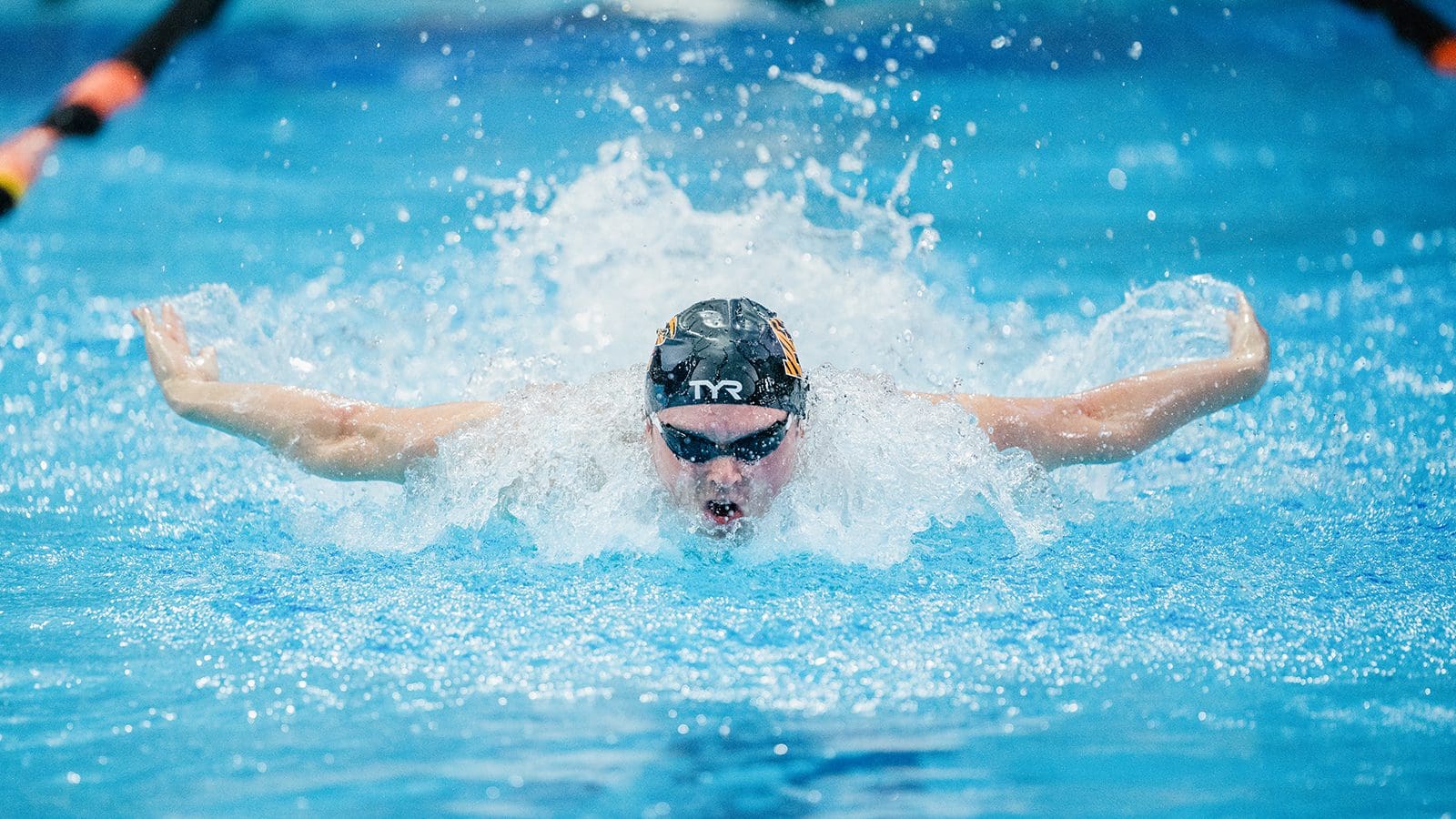
Before mounting the starting block at DeNunzio Pool, Conor McKenna optimizes variables.
“There’s stroke counts and tempos and a lot of visual aspects of technique,” said McKenna, a senior majoring in computer science.
“There’s heart rates and pace, the amount of resistance used, the exertion throughout the set — this number of repetitions at this intensity with this amount of rest in between. In the weight room, tracking velocities on various exercises, tracking the amount of weight used, and just trying to use as much information as can possibly be gathered.”
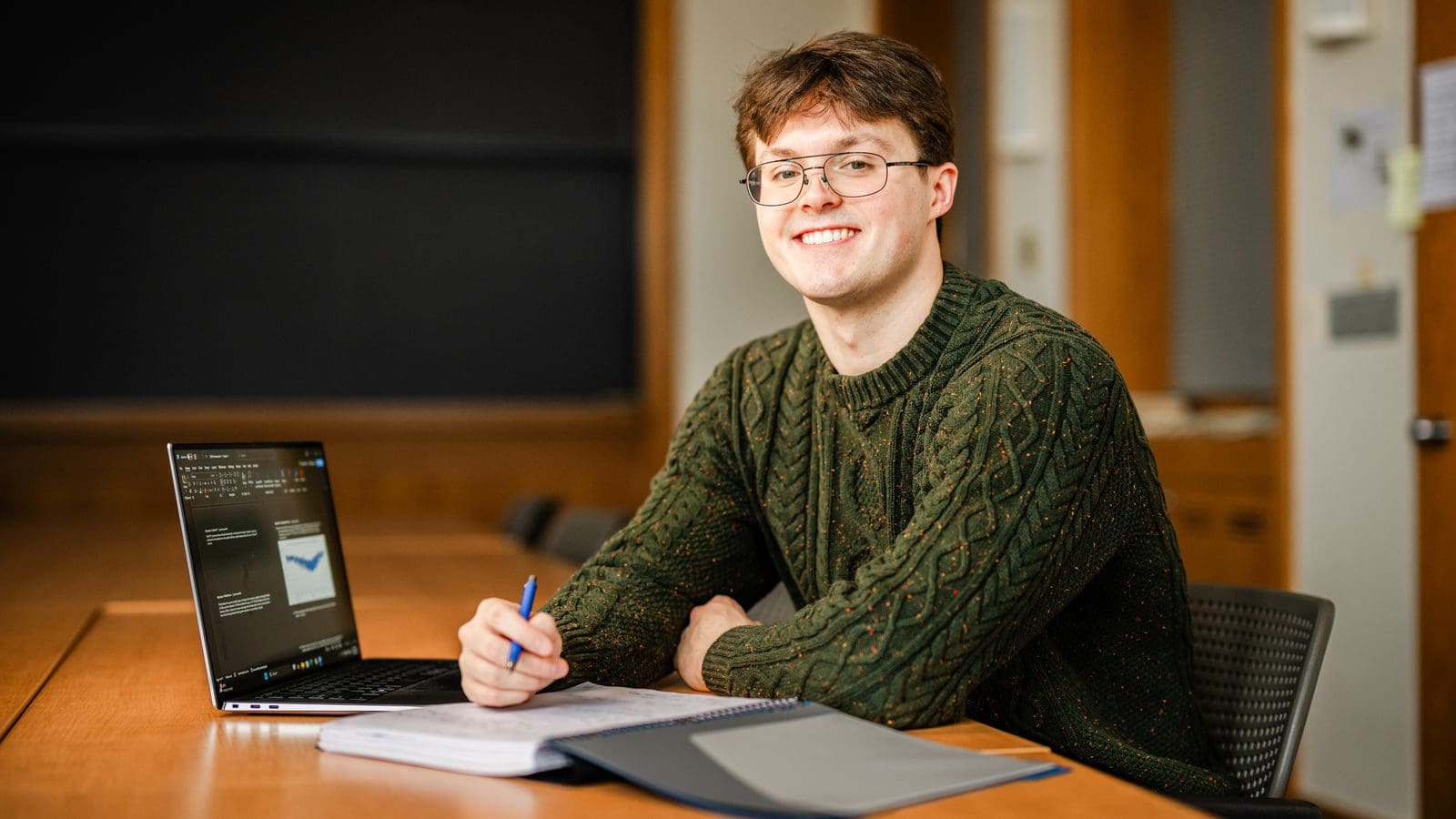
“I think it’s all process-oriented for me,” said McKenna. “Trying to improve myself in various facets of life.”
This kind of analytic discipline propelled McKenna to Olympic tryouts while still in high school in Frisco, Texas. It led to his role as co-captain of the Princeton swimming and diving team and all-Ivy and all-American honors as a student athlete.
It’s also a formula that has benefited — and benefited from — his academic successes.
By his junior year, McKenna was working on two independent computer science projects. One, part of Computer Science 333, improved students’ ability to sort through available floor plans and configurations in the annual room draw. It worked so well that the students who run the widely used TigerDraw app adopted the innovations that McKenna and his collaborators created.
At the same time, McKenna launched an independent research project to create a video game. He had never created a game, nor worked in 3D modeling and animation. “I sort of went into the project blind,” he said. His focus became the “hierarchical finite state machine” to control how characters in the game respond to player inputs. After 15 weeks, McKenna produced a working version, which earned him the Department of Computer Science’s Exemplary Independent Work Award.
Success, whether in the pool or in computer science, has been about creating efficient sets of steps to achieve a desired output.
“Learning how to program and learning all these algorithms and how to think algorithmically, I think connects to a lot of things in life, athletics especially,” he said.
“I think it’s all process-oriented for me,” said McKenna. “Trying to improve myself in various facets of life.”

The Engineering Student Athlete
Engineering student athletes train and compete at a high level while also designing robots, building computer algorithms, and planning for climate resilience.
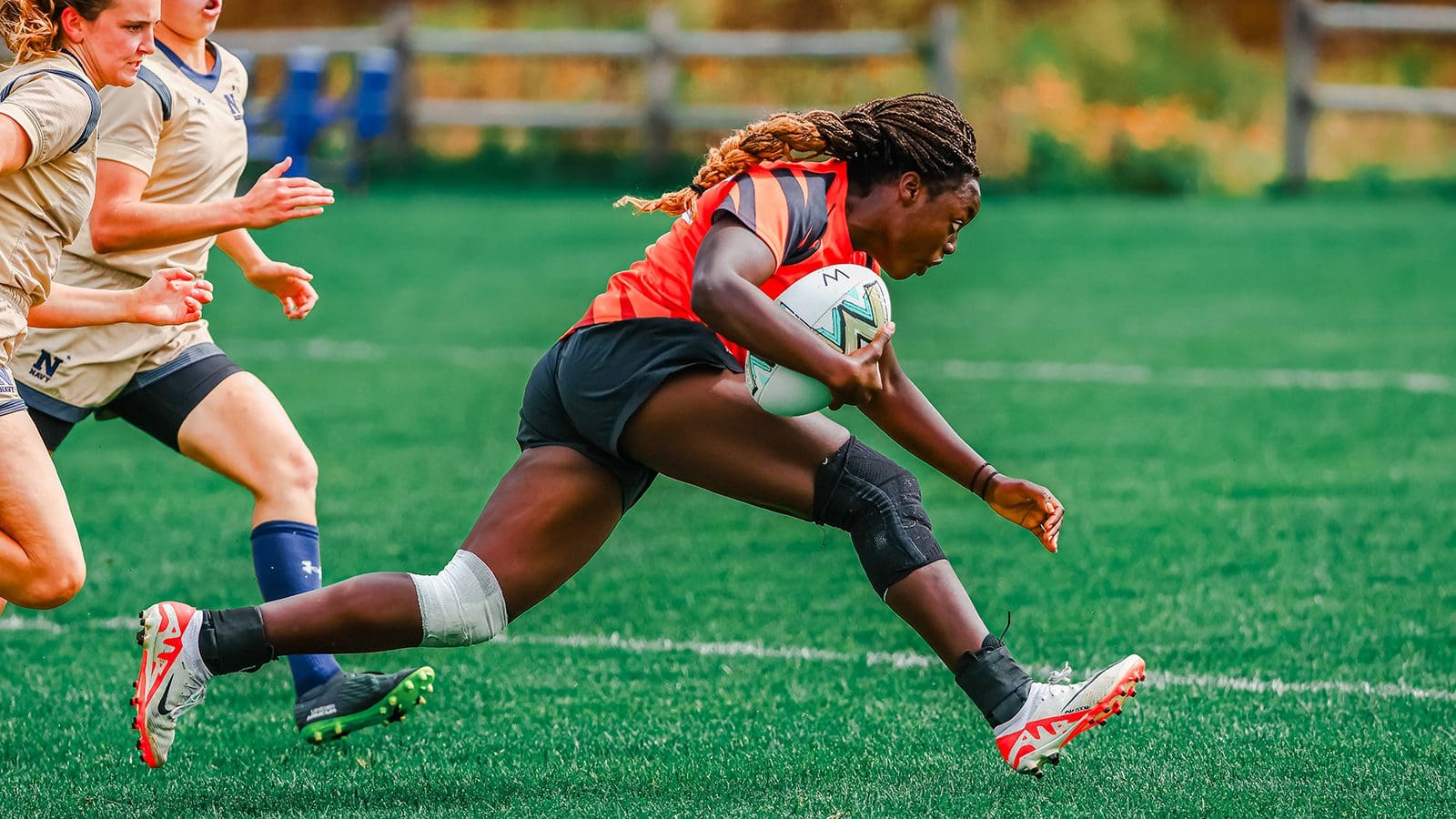
A commitment to connect
For rugby player Malinka Kwemo, taking a breadth of classes reveals new ways of thinking about engineering and how it intersects with other fields.
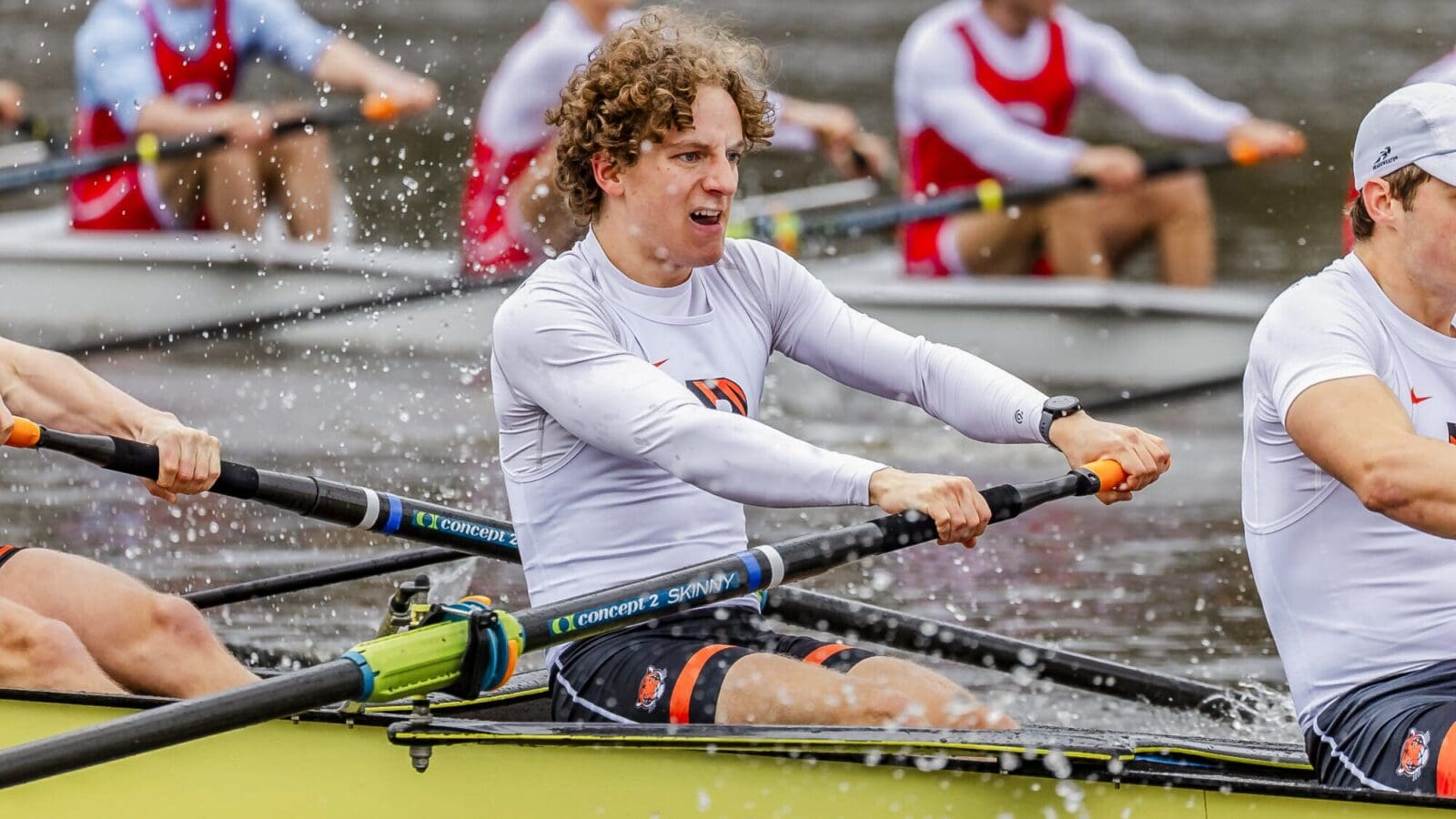
Rower-engineer awarded Pyne Prize, Princeton’s top undergraduate honor
Braeden Carroll’s academic pursuits have bridged engineering, the humanities, social sciences, and policy studies, including extensive interdisciplinary fieldwork.

From hurdles to heat mapping: Bringing it all together
Growing up pursuing a sport that requires mastery of sprints, hurdles, shot put and high jump, Julia Jongejeugd knows how to do more than one thing well. And not just in sports.
Algorithms for swimming, and life
For Conor McKenna, success, whether in the pool or in computer science, has been about creating efficient sets of steps to achieve a desired output.
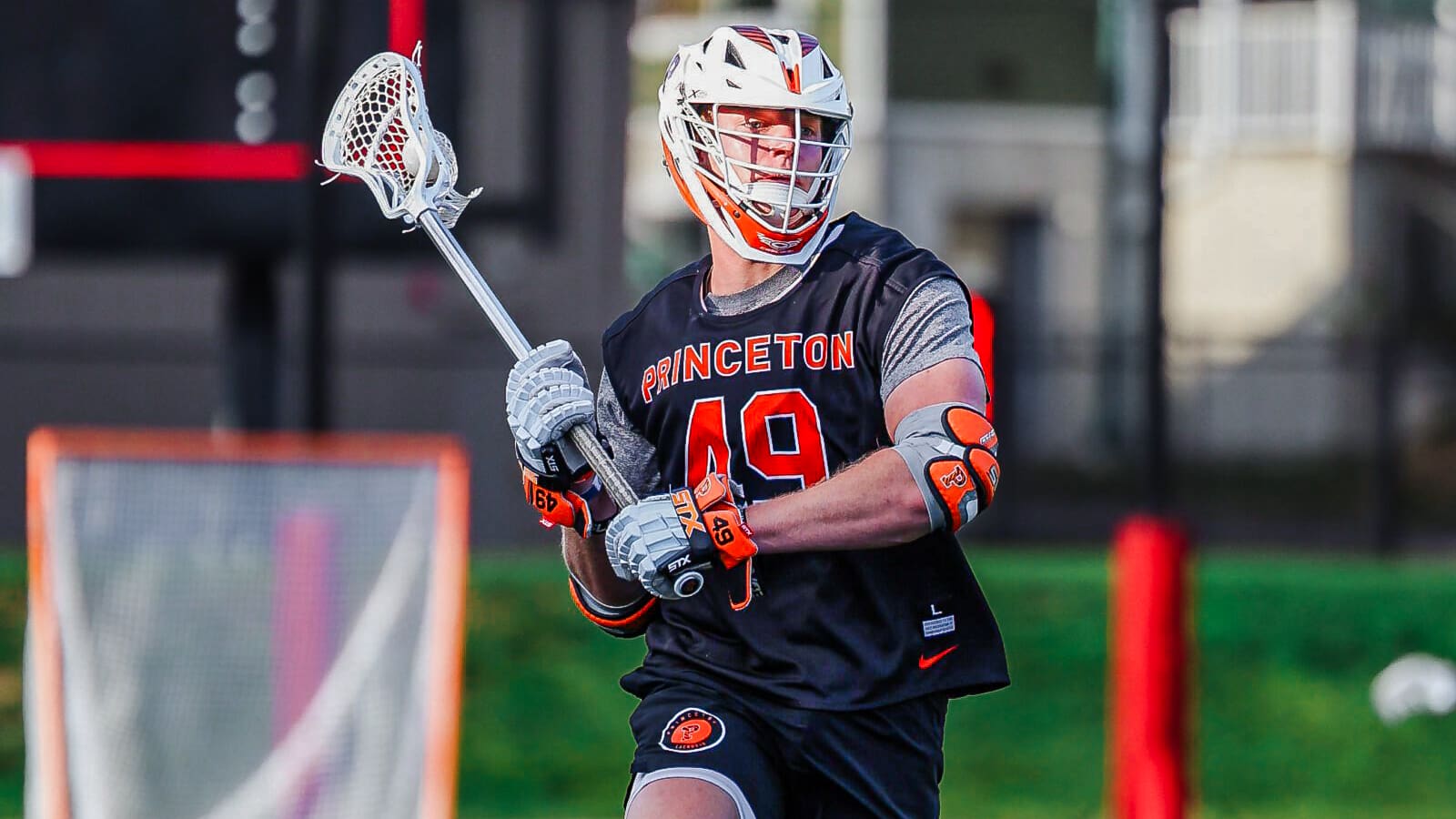
Contagious energy
Lacrosse player Tyler Harris was drawn to the hands-on approach and collaborative style of mechanical and aerospace engineering.
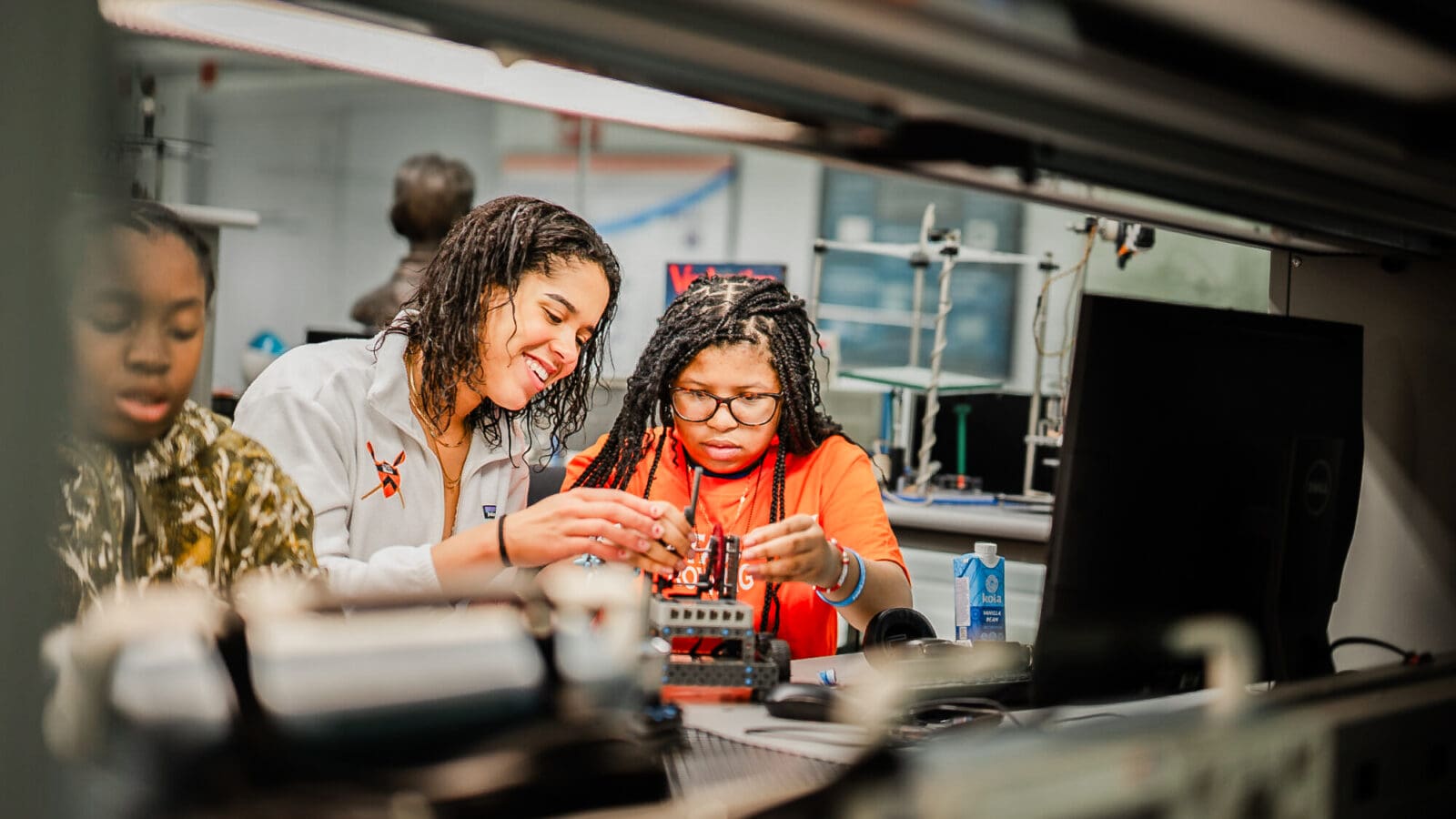
Princeton engineers coach middle schoolers in rowing and robotics
The STEM to Stern afterschool program brings local students to the University’s boathouse and to engineering teaching labs, where they build and program robots for tasks like stacking blocks.

Wrestling life into balance
Sebastian Garibaldi has a job lined up developing a robot that does housework. Engineering problems activate his analytical mind, while wrestling activates something almost purely physical. “Brutish,” he said.