
For more than 100 years, Princeton Engineering has produced innovations that improve lives and drive economic growth.
The examples below often resulted from decades of work and were enabled by the longstanding partnership between the federal government and American universities. Our commitment to foundational research produces long-term payoffs that would have been hard to predict at the beginning.
This hub of innovation also prepares generations of students who go on to build some of the most significant businesses and technologies powering our economy and aiding our everyday lives.
Life-saving medicines
For one professor, a passion for understanding how molecules make materials led him to discover new ways to deliver medicines and vaccines now being used around the world. For another, a similar question is opening promising routes to treating neurological diseases.
Covid vaccines and other life-saving medicines
An innovation from the lab of Professor Robert Prud’homme enabled large-scale manufacturing of precisely controlled particles that can hold drugs, such as mRNA vaccines. Without such technology, these drugs would be impractical to deliver. The initial discovery in 2002 came from asking fundamental questions about how materials mix. With funding from federal agencies and industry, the team developed and refined the technology for more than two decades. Their invention of “flash nanoprecipitation” is now credited with enabling mass production of the covid-19 vaccines and is being deployed for hard-to-treat illnesses around the world. In 2024, the National Academy of Engineering elected Prud’homme as a member – one of the highest honors in engineering – citing him for the “mass manufacture of SARS-CoV-2 vaccines and other applications to improve human health.”
Looking forward
Neurodegenerative disease
Cliff Brangwynne also started with a deep dive before emerging with surprising findings that upended key ideas about how cells work. As a young researcher he became fascinated with the material properties of substances within cells. Years later, studies now show that the processes Brangwynne discovered play an unexpected role in the aggregation of proteins that cause neurodegenerative disease such as Alzheimer’s and ALS, suggesting new routes for treatment. Brangwynne, whose work is funded by the National Science Foundation and the National Institutes of Health, is one of the most highly cited researchers in the world.
Autism
A collaboration between computer scientists, biologists, and autism experts is yielding a new understanding of how differences among people with autism relate to underlying genetics and biological processes. Researchers at Princeton and the Simons Foundation recently identified four clinically and biologically distinct subtypes of autism. The researchers believe the findings will lead to earlier and more accurate diagnoses and will help guide personalized care. The work was funded by the National Institutes of Health and the Simons Foundation, and by the Princeton Precision Health initiative, which is made possible by Princeton’s charitable endowment.
Alumni pioneers in medicine
Improved ACL repairs
Cato Laurencin, BSE in chemical engineering, combined his interests in medicine and engineering to invent Laurencin-Cooper Ligament, now widely used in repairs of knees with damaged anterior cruciate ligaments (ACL). National Geographic named this innovation one of “100 Scientific Discoveries that Changed the World.” More broadly, Laurencin is regarded as the founder of the field of regenerative medicine for replacing or repairing tissues.
Improved CT scans
Charles Bouman, BSE in electrical engineering, invented widely used iterative reconstruction techniques in CT scans, which improved the quality of medical images while reducing radiation exposure.
Enzyme engineering
Frances Arnold, BSE in mechanical and aerospace engineering, won the 2018 Nobel Prize for “directed evolution,” a technique for optimizing the performance of enzymes, now used in many fields including drug development, pharmaceutical manufacturing, and enzyme-based therapeutics.
Abundant energy and a safe environment
Princeton engineers have been at the forefront of new energy technologies and better ways to predict, avoid, and manage environmental risks.
Global energy transition
A set of tools for analyzing national energy systems has guided major investments in new energy infrastructure in the United States and is being adopted by nations around the world. The tools help planners understand how various scenarios would affect the growth, economic impact, public health, and carbon emissions of energy systems on a county-by-county basis. The work is led by researchers at the Andlinger Center for Energy and the Environment.
Safeguarding communities
Flood and drought
A tool created at Princeton Engineering for predicting floods and droughts has been instrumental in stabilizing communities and saving lives in sub-Saharan Africa. The work, in collaboration with the United Nations and the University of Sheffield in the U.K., grew out of the decades-long drive by the late Princeton Engineer Eric Wood to understand interactions between land and the atmosphere.
Forever chemicals
Professor Peter Jaffe and his graduate students pulled mud out of a New Jersey swamp and noticed unusual chemical processes that, years later, show promise for removing PFAS, the dangerous and extremely pervasive contaminants known as “forever chemicals.” Continued research, with recently frozen funding from the National Science Foundation and the Department of Defense, had been moving the technology toward commercialization.
Coastal storms
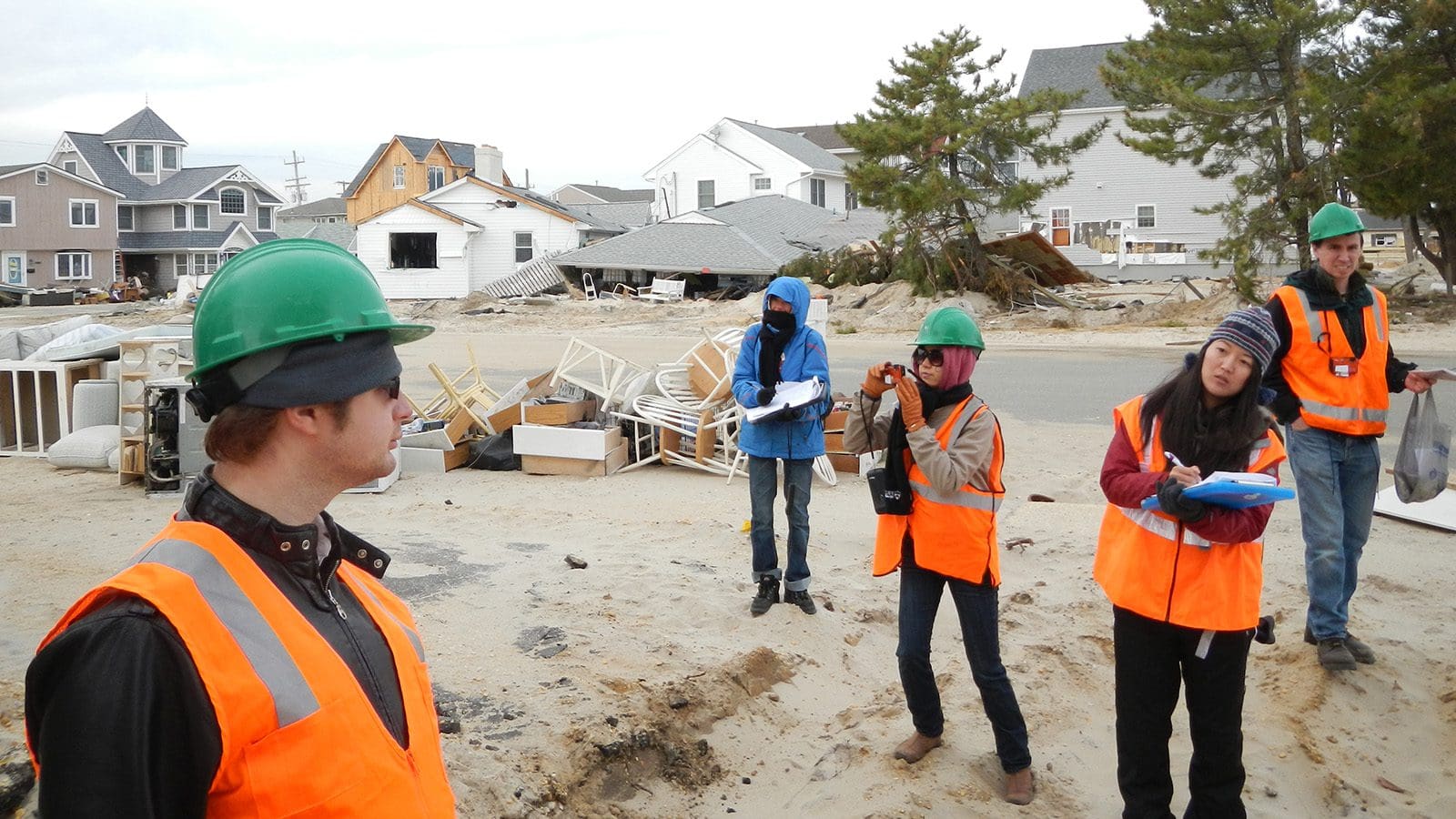
Emergency officials can predict risks of coastal flooding on a county-by-county basis across the entire Eastern seaboard due to tools developed by professor Ning Lin. Lin, who also earned her Ph.D. at Princeton Engineering, has undertaken the painstaking work of combining data about increasing sea level, changing weather, and coastal geography, along with powerful computing techniques, to understand and predict risks to communities. These results revealed surprising vulnerabilities for locations such as the Tampa, Florida, area.
Computing and AI
Modern computing began in the 1930s when Princeton Ph.D. student Alan Turing published “On Computable Numbers” and later pioneered frameworks for artificial intelligence. Almost a century later Princeton’s John Hopfield won a Nobel Prize for laying the foundation for today’s AI systems. Princeton engineers continue to play key roles in computing and artificial intelligence.
Building from the foundational insights of Alan Turing and John Hopfield, Princeton remains at the forefront the computing and AI revolutions.
Foundations of Computing
Efficient algorithms
Robert Tarjan contributed mathematical methods for understanding and designing algorithms and data structures that have fundamentally shaped the development of the field. Among many contributions, Tarjan’s work established elegant and efficient methods of structuring data so that it can be accessed and updated efficiently. In recognition of this work, Tarjan won the Turing Award, the highest award in computer science, in 1986. He joined the Princeton Department of Computer Science in 1985, the year it became a stand-alone department.
Robert Sedgewick, the founding chair of computer science at Princeton, also made important discoveries in algorithms and data structures, and propelled the field by writing some of the most important textbooks on algorithms, which influenced generations of innovators.
Limits of computing
Many practical innovations in computing and much of modern cryptography are guided by a mathematical understanding of what kinds of problems are practical to compute or verify. Professor Sanjeev Arora established some of the most fundamental ground rules of computability with a series of seminal insights in the 1990s. Today, Arora is developing similar a similar mathematical and conceptual understanding to guide better and safer artificial intelligence.
Artificial Intelligence
Deep learning
In 2007, Fei-Fei Li, then a computer scientist at Princeton, created a tool that turbocharged artificial intelligence. With the help of colleagues, including Ph.D. student Jia Deng and Professor Kai Li, she organized millions of images into a single framework using semantic rules developed two decades earlier by Princeton psychologists. They called it ImageNet.
By 2010, Fei-Fei Li had moved to Stanford, followed by Deng, where they recruited Ph.D. student Olga Russakovsky to expand the project. This small team launched a competition that allowed researchers to test how quickly and accurately their AI systems could identify images, using ImageNet as a standard reference. It turned out to be just what the community needed: massive amounts of extremely well-organized training data and a clear way to measure results. Within two years, a group from Toronto won the ImageNet contest by an unthinkable margin, demonstrating the power of deep learning at scale and sparking the modern AI revolution.
ImageNet, now jointly managed by Princeton and Stanford researchers, continues to play an important role in testing new AI frameworks.
AI fairness
Princeton researchers continue to develop tools that reduce biases in AI systems. Professor Olga Russakovsky, a pioneer in the field of computer vision, has led improvements to the ImageNet database that continues to drive innovation in artificial intelligence, and has spearheaded efforts to diversify participation in AI.
AI safety and governance
Princeton researchers led a consortium of leading experts in AI to create a consensus set of recommendations and best practices to avoid errors and harm when using artificial intelligence and machine learning in research. This area of research is a major focus of Princeton’s Center for Information Technology Policy.
Next-generation AI
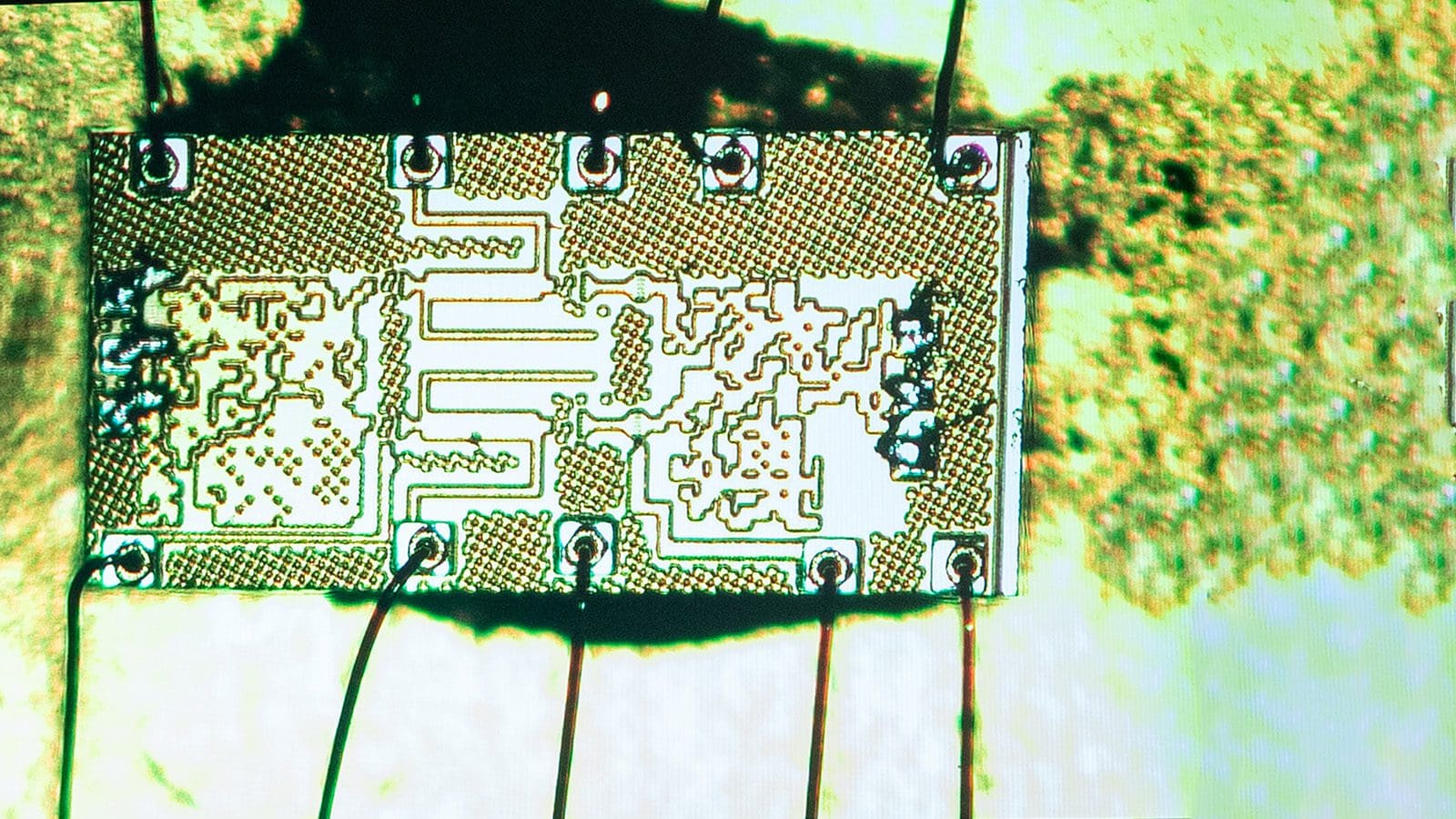
Princeton engineers are leading the development of entirely new approaches to artificial intelligence, including reducing how much energy AI computing consumes. For example, one lab invented a new type of chip that uses analog, in-memory computing to perform AI functions faster, with less energy, and less risk to data. Another recent advance recognizes images almost entirely without computers.
Digital Security and Privacy
Voting security
Princeton computer scientists exposed major vulnerabilities in electronic voting machines starting in 2006. Their work played a significant role in states moving to auditable paper ballots instead of electronic-only voting. The research began at Princeton with Professor Ed Felten and two students demonstrating easy hacks of voting machines. One of those students J. Alex Halderman, now a professor at the University of Michigan, has continued the work and is a leader in the field voting security. Princeton computer scientist Andrew Appel has testified frequently at the state and federal levels to advise about secure ways to integrate digital systems and voting.
Electronic privacy
Princeton computer scientists have frequently identified and analyzed the impact of hidden ways that digital technologies can leave users vulnerable to tracking and spying. In one example, a research team documented how set-top streaming devices track and distribute to other companies granular information about the users’ viewing behaviors. In a different area with national security implications, Princeton engineers demonstrated how a drone flying above a submarine could intercept underwater transmissions.
Foundational Contributions of Alumni
Flash memory
Ph.D. alumnus Eli Harari played a key role in creating flash memory and founded the company SanDisk, which continues to be one of the largest manufacturers of consumer memory chips and flash drives. Harari was award the National Medal of Technology and was inducted into the National Inventors Hall of Fame in recognition of these transformative contributions.
Cryptography
Ph.D. alumnus Avi Wigderson won the Turing Award, the highest honor in computer science, in part for his unifying work and practical approaches to the cryptography underlying much of today’s digital infrastructure such as online authentication. More fundamentally, Wigderson is considered one of the most profound contributors to theoretical computer science, the mathematical foundations of efficient algorithms.
The internet and its security
While a Ph.D. alumnus, Robert Kahn, is known as one of the fathers of the internet – he invented the basic protocols that make it work – Princeton faculty have continued to make major contributions that improved the security, reliability, and performance of the internet.
Enabling innovation
PlanetLab
PlanetLab, a global platform spearheaded at Princeton, enabled researchers worldwide to improve the performance of the internet. Current uses of the internet could not have been imagined when Princeton alumnus Robert Kahn and Stanford researcher Vint Cerf created the basic protocols. Researchers and companies found it difficult to implement innovations in internet services without testing them first. With leadership at Princeton (Professor emeritus Larry Peterson) and hosted by a consortium of academic and commercial labs around the world, PlanetLab created a mini-internet on which researchers and entrepreneurs could test ideas without breaking the existing internet. It was instrumental in improving “content delivery networks” and other innovations that are central to streaming video and music and ensuring reliability. It was supported with a combination of federal and private funding.
Software-defined Networking
Cloud computing, 5G wireless networks, and distributed data centers are vital pieces of today’s digital landscape that depend on “software-defined networking” or SDN. Research and innovation at Princeton contributed to the design of new high-level languages for programming the network, technologies for verifying that networks behave as expected, and algorithms that enable sophisticated network functionality at high speed. SDN separates control of networks from fixed hardware, allowing dynamic, programmable control of network behavior.
Safeguarding the internet
Princeton researchers have made critical contributions to improving the security and reliability of the internet. In one example, an undergraduate student working with Professors Jennifer Rexford and Prateek Mittal discovered a flaw that allowed hackers to subvert the bedrock system that issues certificates to assure the authenticity of websites – the service that adds the “s” for “secure” onto web addresses that start with https://. Using the student’s hack, which required just minutes to perform, the research team demonstrated to major companies, such as Google, that all websites including their own were vulnerable. The team also identified a way to fix the problem and worked with companies and agencies worldwide to implement the solution in September 2024.
Princeton Engineering also has been at the forefront of identifying and avoiding unfair and deceptive online practices through its Center for Information Technology Policy.
Alumni Pioneers
Founding the internet
Robert Kahn earned his Ph.D. at Princeton in 1964 under Professors John Thomas and Bede Liu, whose students went on to be some of the most important pioneers of networking technologies. Kahn himself went on to establish the communications protocols that underly and enable the internet. He did that work at the U.S. Defense Advanced Research Projects Agency, where he teamed up with Vint Cerf of Stanford University. Together, Kahn and Cerf are known as fathers of the internet.
Content distribution
Tom Leighton, BSE in electrical engineering and computer science, co-invented content delivery networks, which allowed the internet to deliver high-bandwidth multimedia content at high speed. Leighton, who developed the technology with one of his students at MIT, co-founded the company Akamai, which distributes up to 30% of all web traffic.
Ethernet
The foundation of local computer networks is a set of protocols known as ethernet, which was co-invented by David Boggs, who earned his undergraduate degree in electrical engineering from Princeton in 1972.
E-commerce
Jeff Bezos, BSE in electrical engineering and computer science, founded the online commerce giant Amazon. Jeff Wilke, an alumnus of the same department, played a key role in building the business and was CEO of Amazon Worldwide Consumer.
Search
Eric Schmidt, BSE in electrical engineering and computer science, joined the young company Google as CEO in 2001 and led the company to become an industry leader. More generally, Schmidt has been a thought leader on the evolution of technology, including his 2024 book with Henry Kissinger and Craig Mundie on the opportunities and challenges posed by AI.
Your cellphone and its wireless service
Princeton engineers invented the techniques phones use to transmit vast amounts of data quickly and securely through the air. And a fundamental insight into small green light 25 years ago led to the thin, vibrant displays now used in most of smartphones.
Vibrant Phone Screens
In 2000, Stephen Forrest, then a professor of electrical engineering at Princeton, achieved a fundamental breakthrough that, 20 years later, resulted in vibrant, super-sharp, energy-efficient screens on the majority of today’s smartphones. His insight was how to coax certain materials to emit more light. Forrest, his graduate student, and their collaborator at the University of Southern California conceived a trick of quantum mechanics that allowed them to combine fluorescence and phosphorescence in a single material called an organic light-emitting diode. In their lab, the result was a noticeably bright green dot. A start-up company, Universal Display Corp., licensed the technology, and went on to become a major publicly traded company that works with the world’s largest manufacturers of consumer displays, including smartwatches, tablets, smartphones, and televisions.
High-speed, high-bandwidth wireless
Princeton engineers invented core innovations that allow today’s cellular and wifi networks to transmit images, audio, and video at unprecedented rates with a high level of reliability and security.
H. Vincent Poor, who earned his Ph.D. at Princeton in 1977, laid mathematical foundations for a technique called “multiple-input-multiple-output (MIMO)” radio, which has been a key part of cellular technology since 3G networks were introduced in the early 2000s. His work continues today as he contributes to a method called nonorthogonal multiple access, or NOMA, which is important in 5G networks. For this work, Poor was elected a fellow of the National Academy of Inventors and is one of the most highly cited researchers in the world.
Similarly, Andrea Goldsmith, dean of engineering from 2020 until August 2025, also made important contributions to MIMO technology and developed techniques that allowed engineers to vary the speed of wireless transmissions to match rapidly shifting demands of receiving networks. In recognition of her foundational contributions, Goldsmith was elected a member of the National Academy of Inventors, the National Inventors Hall of Fame, and won the Marconi Prize, the highest honor in telecommunications research.
Next-generation Wireless
Given Princeton’s leadership in wireless technology, the University launched its NextG initiative to bring together the top wireless companies and researchers from around the world to advance the field. The NextG Corporate Affiliates Program includes many of the largest technology and network companies in the world.
Security
Princeton engineers have played key roles in identifying critical security failures in wireless systems and finding solutions. In one example, a team of researchers at Princeton’s Center for Information Technology Policy conducted a systematic investigation to demonstrate how easily bad actors could hack into a person’s cell phone and steal highly sensitive information using a “SIM swap attack.” The team’s work greatly raised awareness of this kind of attack and resulted in numerous security improvements.
Space exploration
Princeton engineers pioneered the form of propulsion increasingly used to drive spacecraft after they leave Earth – part of a long history of key contributions to aerospace technologies.
Deep space travel
Government and private organizations, including NASA and SpaceX, deploy spacecraft with plasma thrusters, a technology pioneered at Princeton since the 1960s. For example, all SpaceX’s satellites use at least one plasma thruster.
The late professor Robert Jahn worked with NASA to develop one of the first plasma thrusters and founded the Electric Propulsion and Plasma Dynamics Laboratory at Princeton in 1962. Plasma propulsion is an efficient, sustainable way of propelling rockets in space. Instead of burning fuel, plasma thrusters use electric and magnetic fields to push hot, ionized gas, or plasma, out of the engine to propel a spacecraft. Plasma thrusters can propel a craft farther and use less fuel than chemical thrusters. This makes plasma propulsion ideal for long-duration space missions, like sending spacecraft to Mars or keeping satellites in orbit for many years. The work continues today with a NASA-funded lithium thruster and a Defense Department-funded “air-breathing” thruster that uses particles from lower-Earth orbits to eliminate the need to carry propellent.
Aerospace engineering
Princeton engineers played leading roles in key aerospace advances, particularly in areas such as hypersonic flight. After World War II, with funding from the Guggenheim Foundation, Princeton became a major center of jet propulsion research (along with the NASA Jet Propulsion Laboratory at the California Institute of Technology). Among the early innovators was Alexander Nikolsky who worked with Igor Sikorsky on the first practical helicopter. With federal funding, the lab also created one of the first hypersonic wind tunnels to establish the foundations for supersonic and hypersonic flight. One of the leaders of that work, Professor Seymour Bogdonoff, “trained many of the engineers and scientists who designed and built supersonic aircraft and who made the moon mission possible,” former department chair Alexander Smits said at the time of Bogdonoff’s death.
Alumni pioneers
Lockheed Martin
Norman Augustine, who earned his undergraduate and master’s degrees in mechanical and aerospace engineering at Princeton, led the merger of Martin Marietta and Lockheed to form the aerospace giant Lockheed Martin and served as chairman and CEO of the company. Augustine chaired the NASA-commissioned Review of United States Human Space Flight Plans Committee in 2009, which defined goals to human exploration of Mars and further exploration of the Moon. Augustine served in multiple government positions, including undersecretary of the Army, and chaired a series of Congressionally mandated studies on U.S. competitiveness in science and technology.
First moon landing
Robert Stengel, who earned his Ph.D. at Princeton in 1968, went on to the MIT Instrumentation Laboratory where he designed the Apollo Lunar Module’s manual attitude control system, which allowed Neil Armstrong and five others to fly to the lunar surface. Stengel returned to Princeton as a faculty member in 1977 and retired in 2020 after numerous other significant contributions to space flight and having trained many leaders in the field.
Moon walk
Pete Conrad, who earned his undergraduate degree in engineering from Princeton in 1953, commanded the Apollo 12 mission during which he was the third person to walk on the moon. He also was pilot of the Gemini 5 mission and commander of the Gemini 11 and of Skylab 2.
Commercial moon landing
Thomas Markusic, who earned his Ph.D. at Princeton’s Electric Propulsion and Plasma Dynamics Laboratory, co-founded Firefly Aerospace, a private company that, in March 2025, became the second commercial company to land a probe on the moon and the first to run an extended (two-week) mission on the surface. Will Coogan, who earned his Ph.D. from the same Princeton Engineering lab in 2018, is the chief engineer of Firefly’s lunar lander program.