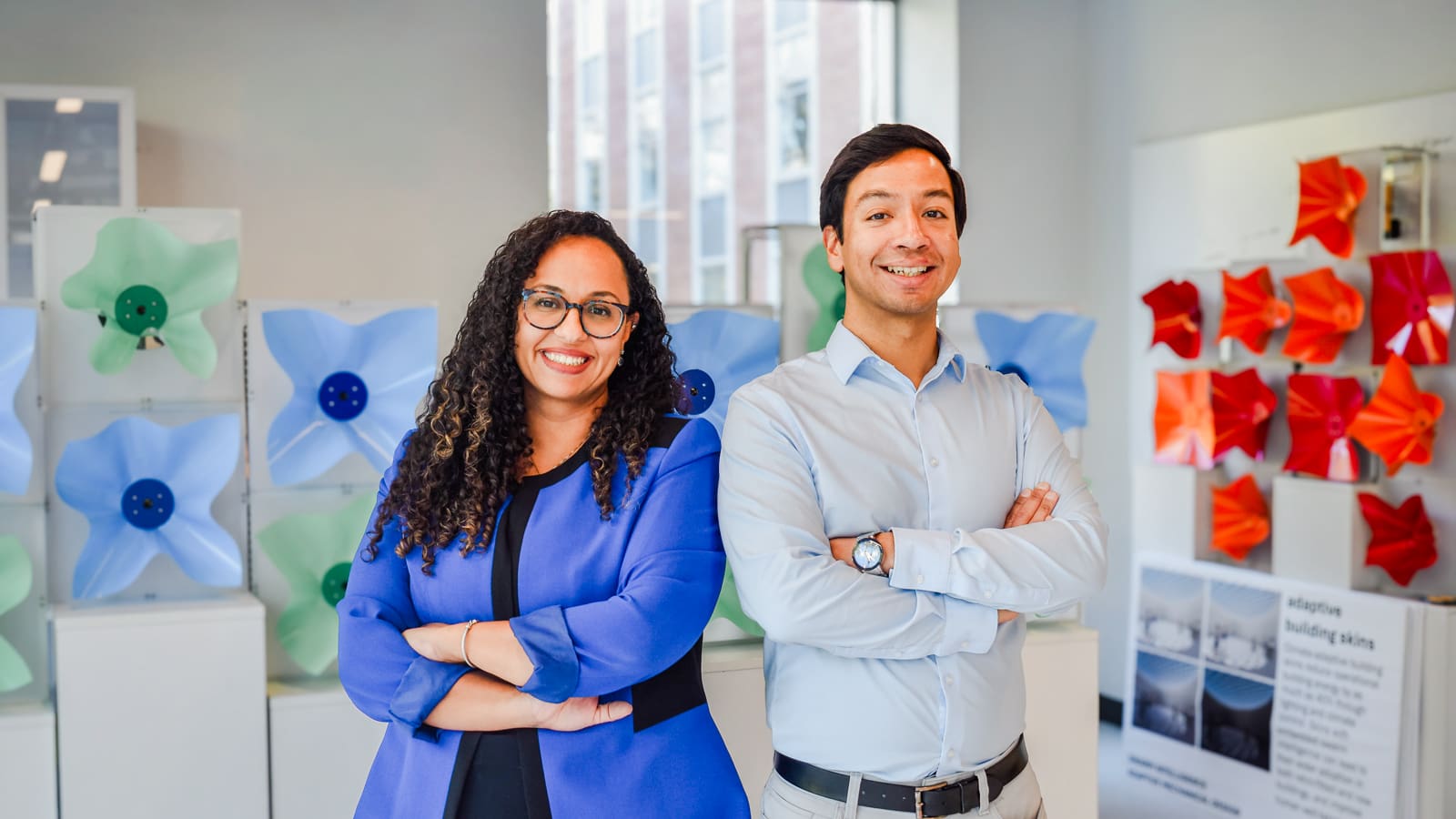
Anirudha Majumdar and Aimy Wissa have been appointed inaugural co-directors of Princeton Robotics, a research initiative fostering collaborations across engineering and the broader campus to shape the future of robotics.
Majumdar and Wissa, associate professors of mechanical and aerospace engineering, said they are building on years of momentum from faculty research, student interest and investment from the University. The growing group will hold a symposium April 20, convening the Princeton robotics community and leading figures from academia and industry.
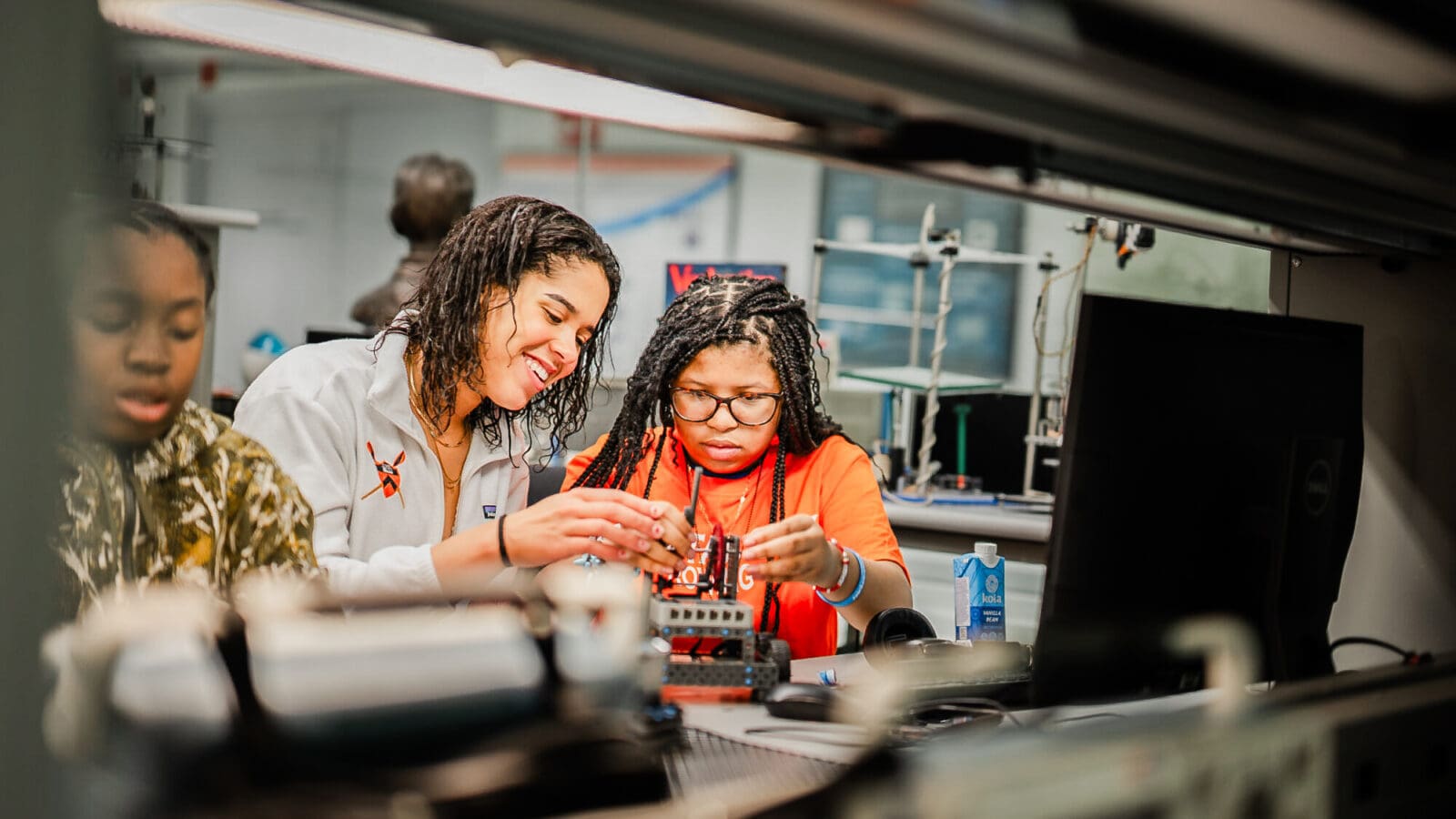
Princeton’s engineering school identified robotics as a strategic priority in 2014. That was followed by a surge of faculty hiring and the transformation of the Engineering Quadrangle’s north wing into a dedicated two-story robotics lab. The lab opened in 2021 and includes an aerial drone-flying space, a living lab furnished like a home, and a prototyping area.
“Our investments in robotics are moving us to the forefront of a field that is changing rapidly,” said Andrew Houck, dean of engineering and the Anthony H.P. Lee ’79 P11 P14 Professor of Electrical and Computer Engineering. “Artificial intelligence is expanding what robots can do and weaving robotic devices more deeply into our daily lives, from self-driving cars to household machines. I am excited about the broadly interdisciplinary vision that Aimy and Ani bring to ensuring that robotics serves humanity.”
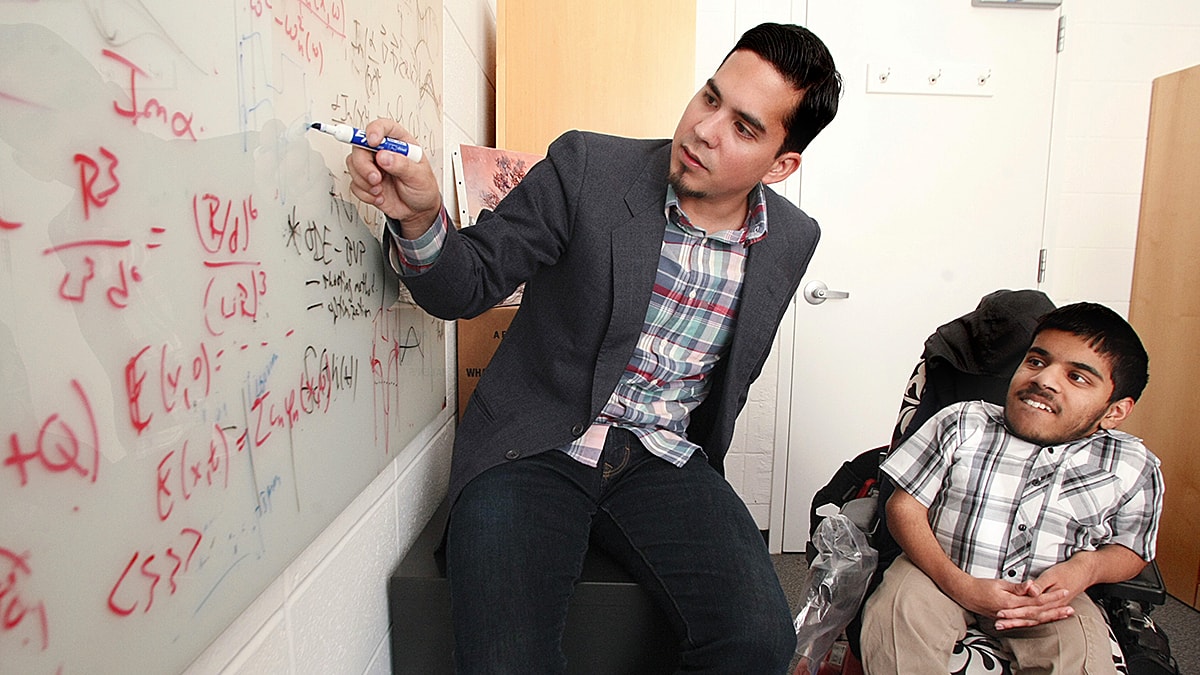
Robotics at Princeton spans engineering, the natural and social sciences and the humanities, according to Majumdar. He said he and Wissa now intend to deepen connections with other parts of the University and other institutions, creating new collaborations with researchers in fields including psychology, architecture, biology and neuroscience.
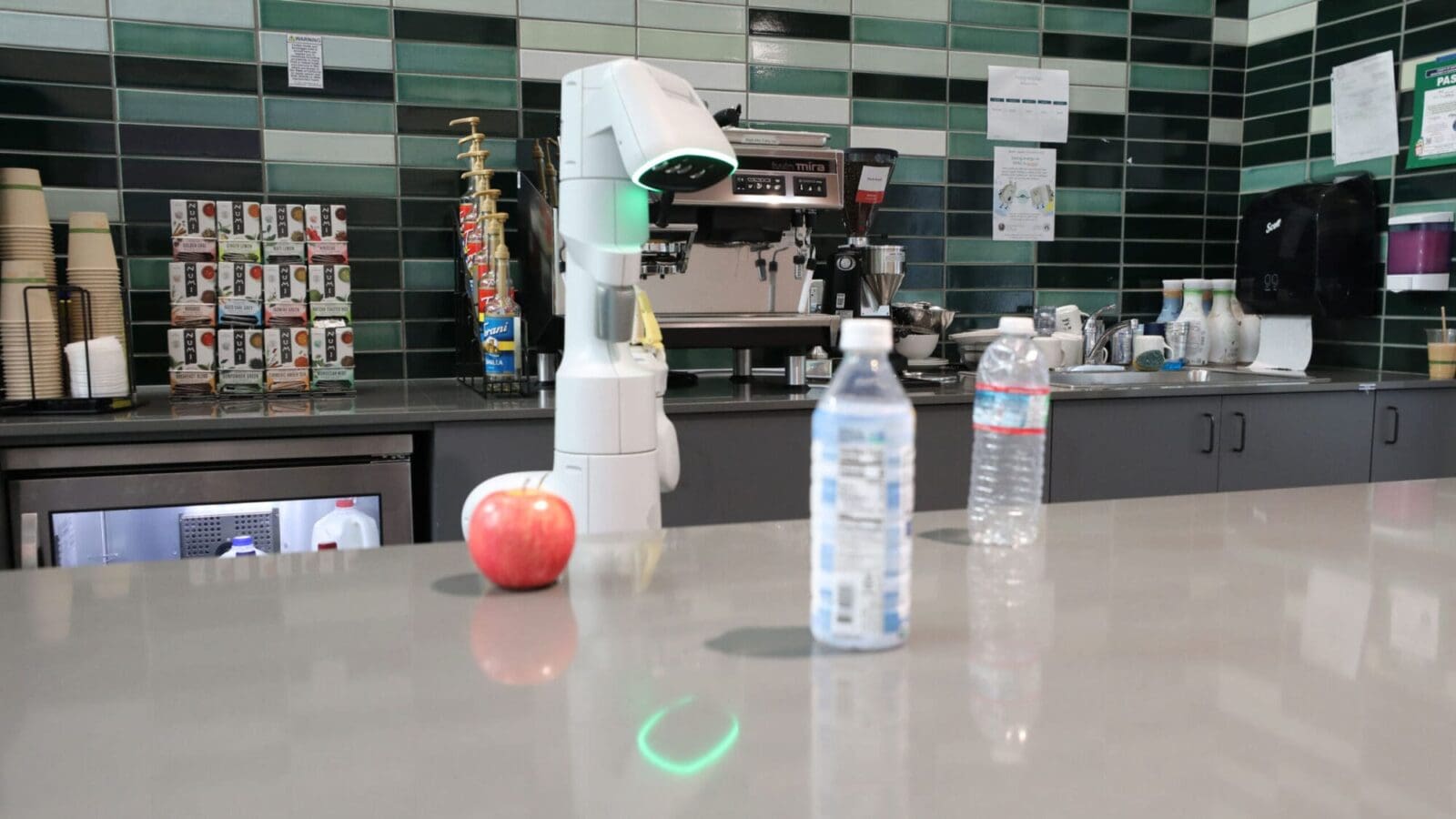
Majumdar works with industry entities such as NVIDIA, Toyota Research and Google DeepMind to bring fundamental discoveries to life in real world settings. He focuses on robot intelligence and has developed ways to program robots to see obstacles and adapt in diverse and changing conditions.
“I think we’re uniquely positioned here at Princeton to lead what we’re calling humanity-driven robotics,” Wissa said. She said working at a leading liberal arts university enables close collaboration with researchers outside of traditional robotics disciplines and creates opportunities to find solutions to persistent problems.
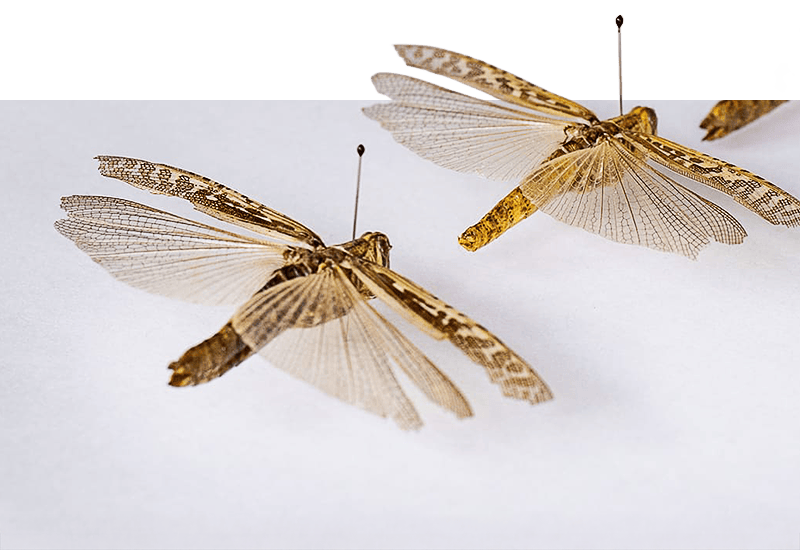
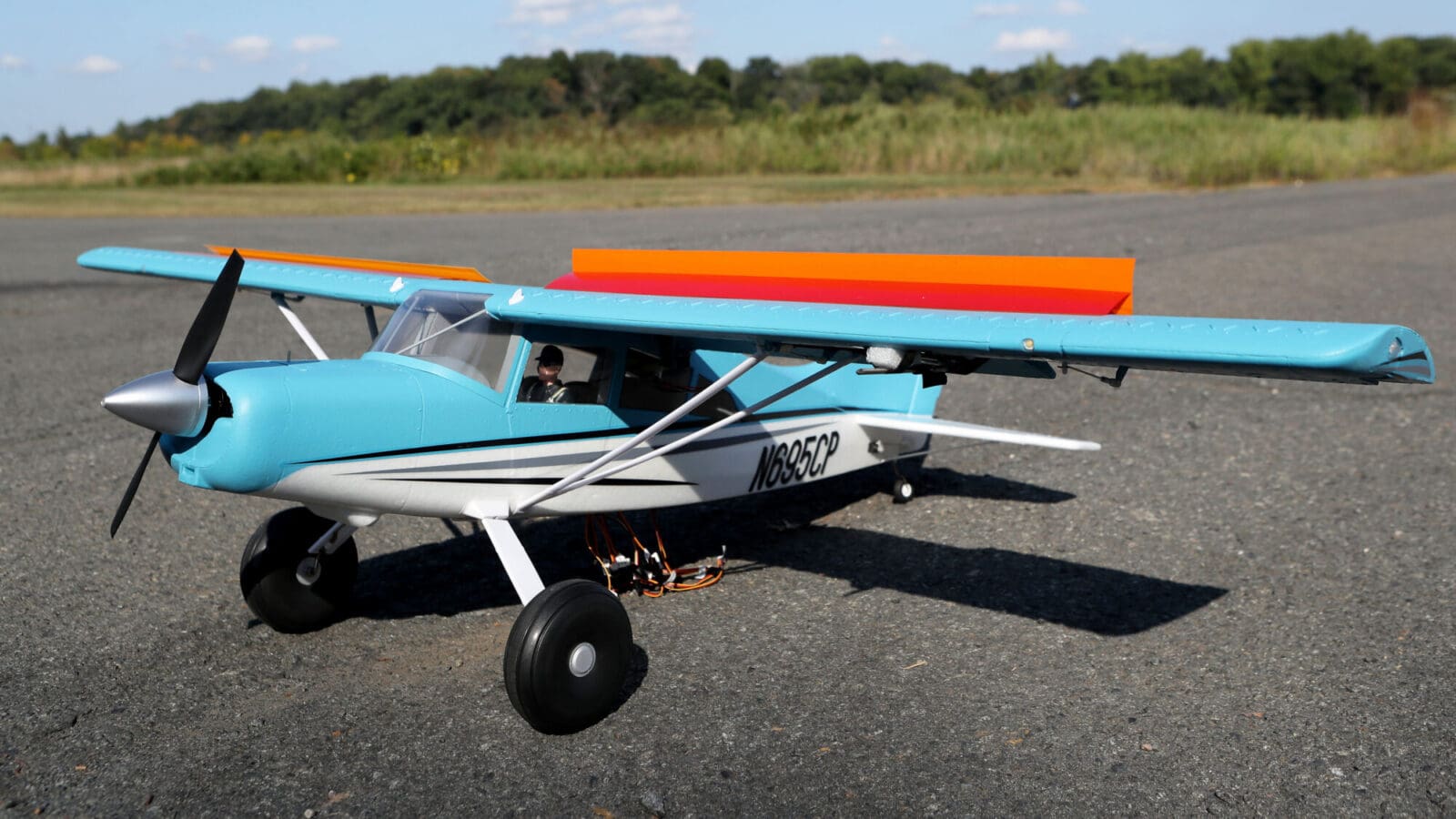
Wissa has built robots that fly and hop with insect-like parts, and she improved airplane wings by developing feather-inspired flaps to stabilize steep flight angles. Some of those machines have in turn provided new tools to study lifeforms.
“The way a biologist thinks about an organism is very different than an engineer,” she said. “Oftentimes when you ask a question that comes from one discipline, even if you’re able to answer the question, you miss out on looking at the problem from different ways.” When multiple experts look at the same question, however, “that’s when the surprising insight and discovery happens.”
Fostering these kinds of collaborations is essential for creating new research directions as robotics moves further into daily life, according Majumdar.
Since 2014, Princeton has hired 11 new robotics core faculty with a range of specialties, from intelligence to hardware to collective behavior.
One key area of focus for core faculty is how robots plan and how they create rules for making decisions, which are both essential for making robots safe and effective in society. That work draws on insights from computer science, computer engineering, robotics, economics and sociology. Other core groups focus on AI hardware, origami-inspired robotics, 3D representations of the physical world, and the complexities of coordinating multiple agents.
The inaugural Princeton Robotics Symposium on April 20 is free and open to the public, and will bring together leaders from industry and universities across the country. Researchers from more than 15 institutions will present recent work in a poster session.
The directors outlined three key growth areas for expanding Princeton Robotics: building more bridges across the broader campus, recruiting faculty and students with a wide range of research interests, and creating new shared lab and teaching spaces.
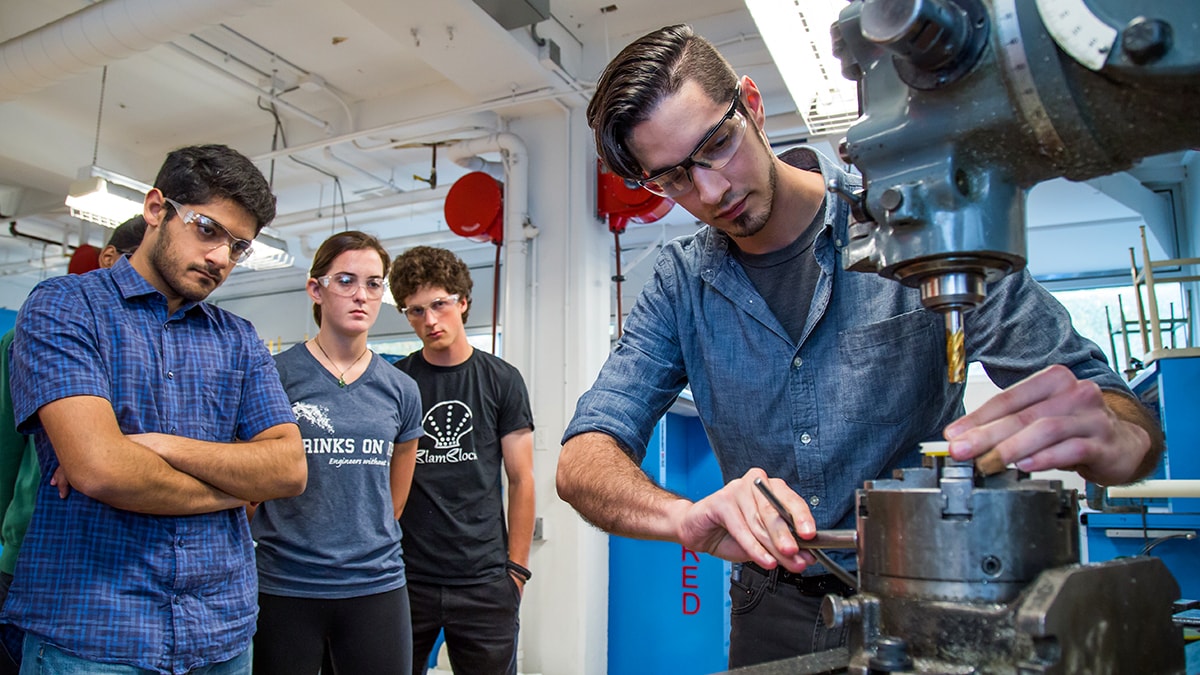
Education is a core part of the initiative’s mission, and Princeton’s recently established undergraduate minor in robotics is an exciting step in shaping the curriculum, Wissa and Majumdar said. They added that Princeton must prepare students to lead in this field as robotics transitions from labs and factories into more human-centered environments. “There are long-term research directions that we need to really focus on, and that’s where academia shines,” Majumdar said.