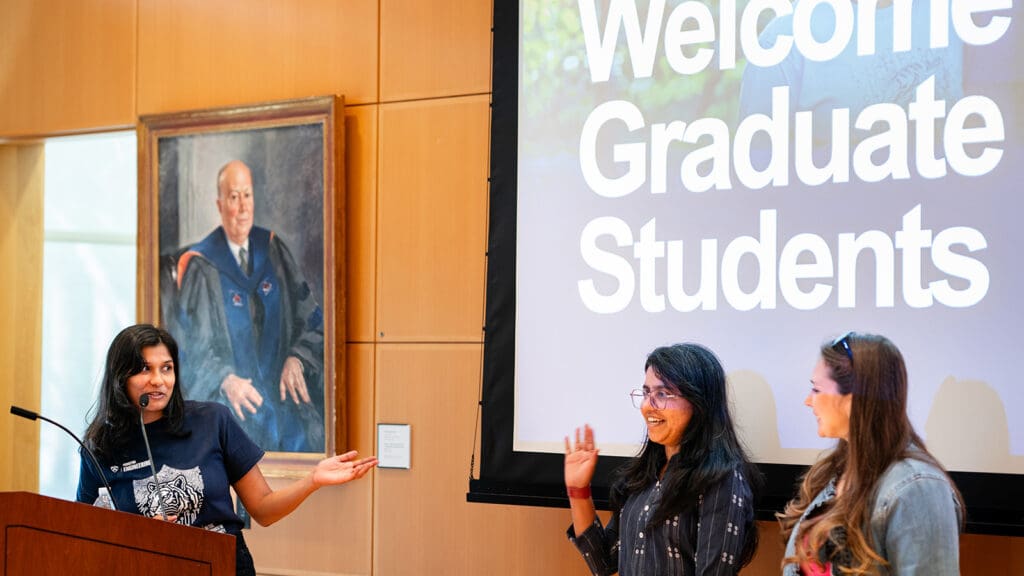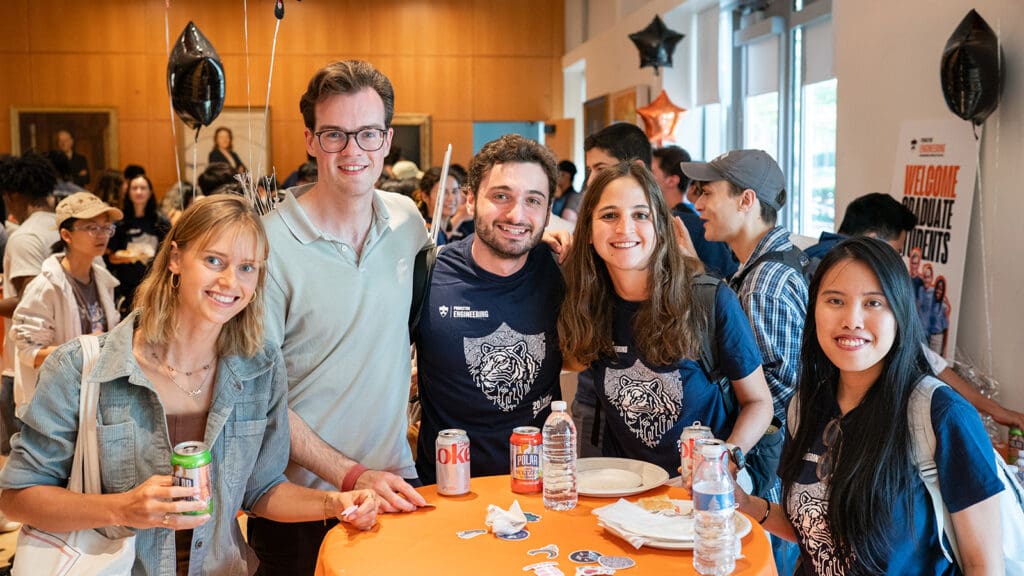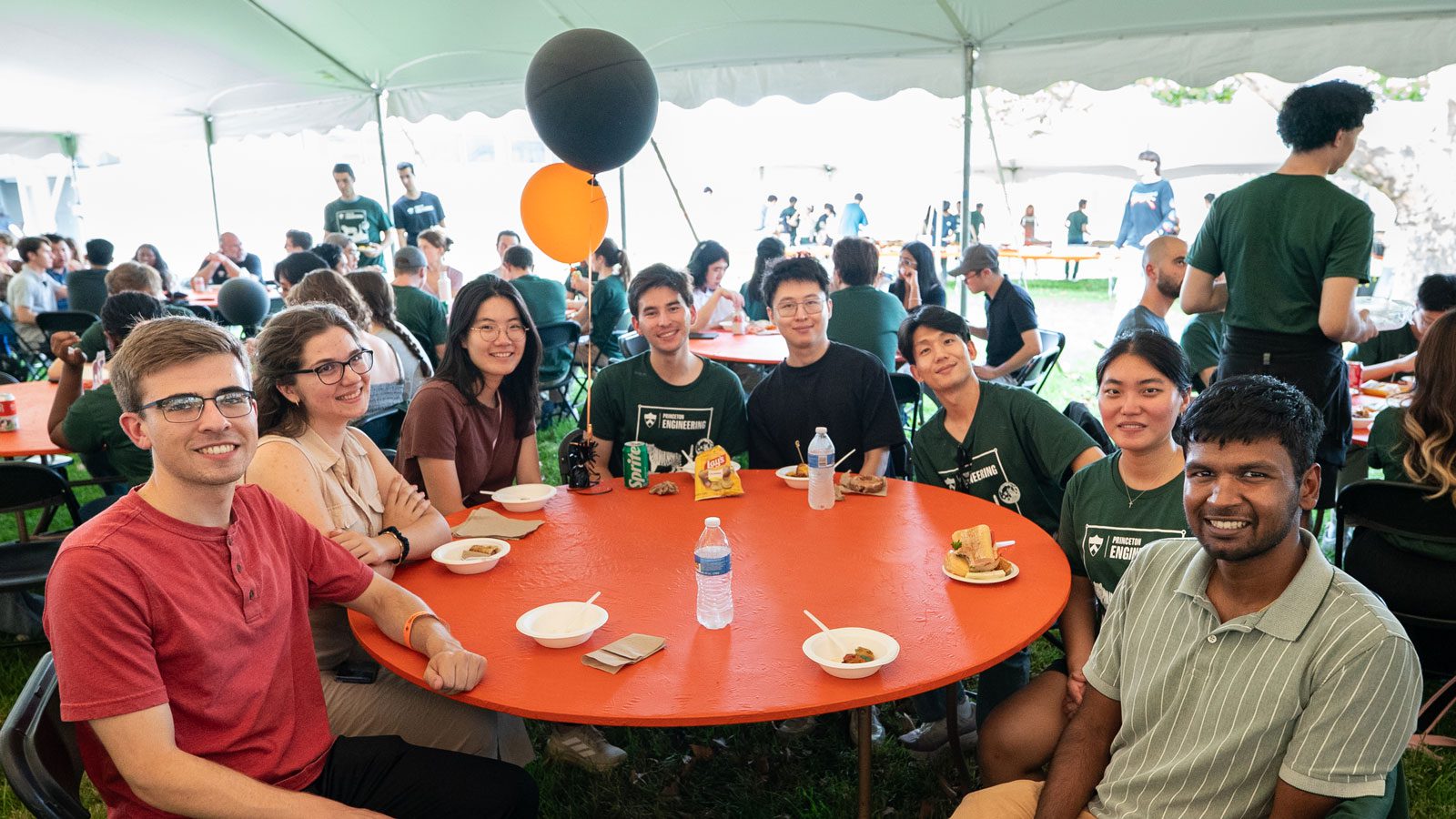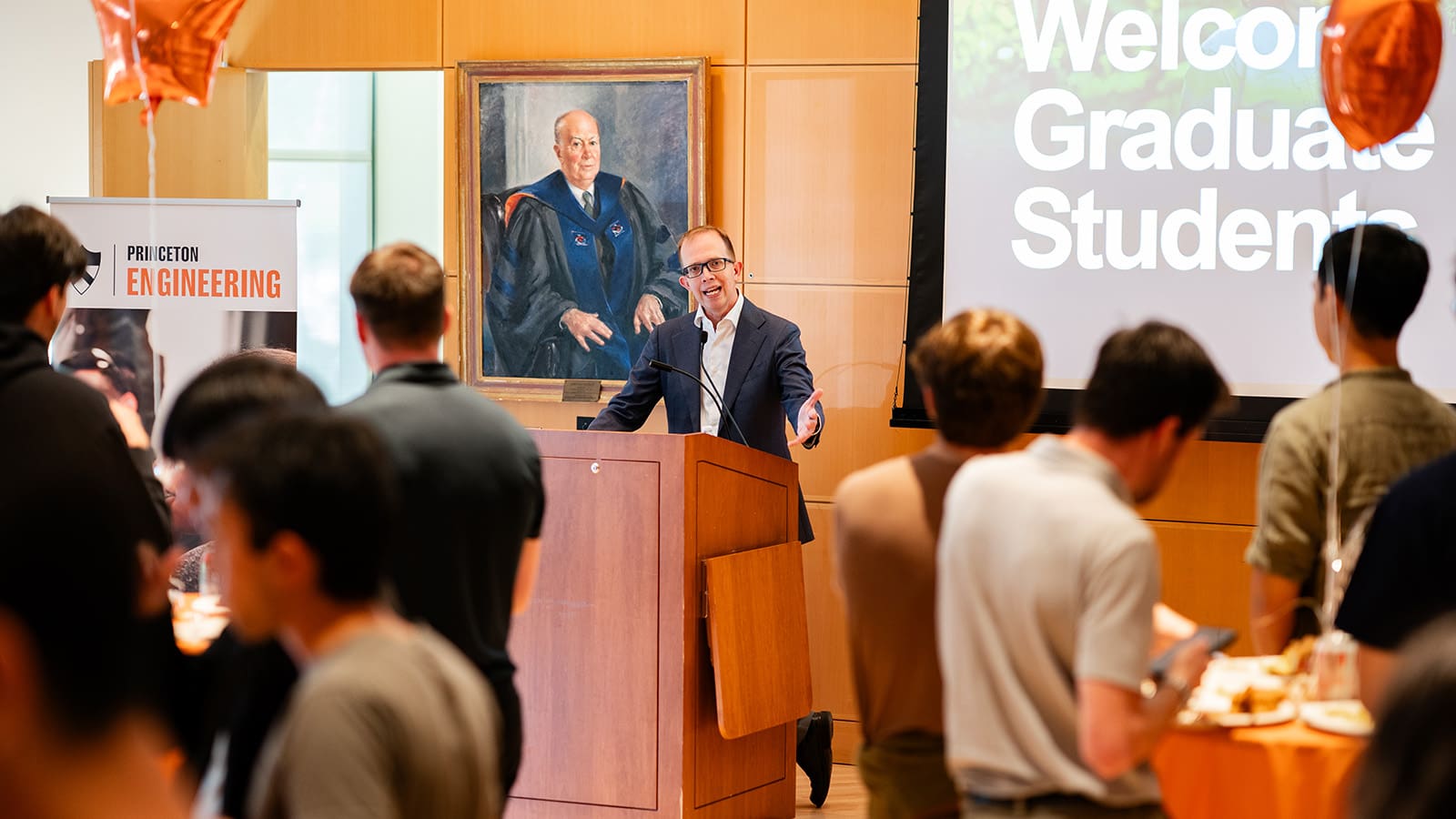
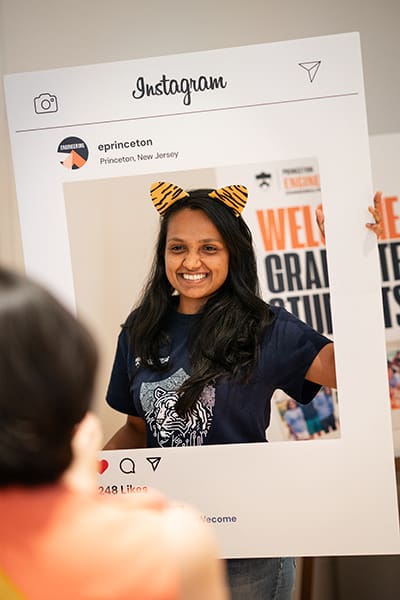
Graduate students joining Princeton Engineering are transitioning from consumers to creators of knowledge, Andrew Houck, dean of the School of Engineering and Applied Science, said at a welcoming reception Sept. 3.
“You are now working in real time to expand the frontiers of what we know,” said Houck, the Anthony H.P. Lee ’79 P11 P14 Professor of Electrical and Computer Engineering. “You will see the data first or do the computation first. You will do something that no one has ever done.”
As undergraduates, Houck said, students move through the textbook history of scientific and technological discovery in just four years of education. As graduate students, working on their own projects or in small groups, discovery comes much more slowly.
“The pace of creating new knowledge, or discovery, can often feel incredibly slow. Remember that every little drop matters,” Houck said. “It’s hard. It can be frustrating. That’s normal. So don’t freak out when you’ve been trying to solve the same problem for six months and feel like you’re not making progress.” In such moments, he advised, students should talk with others, including their advisors, for a broader perspective. “That’s when friends matter,” he said.
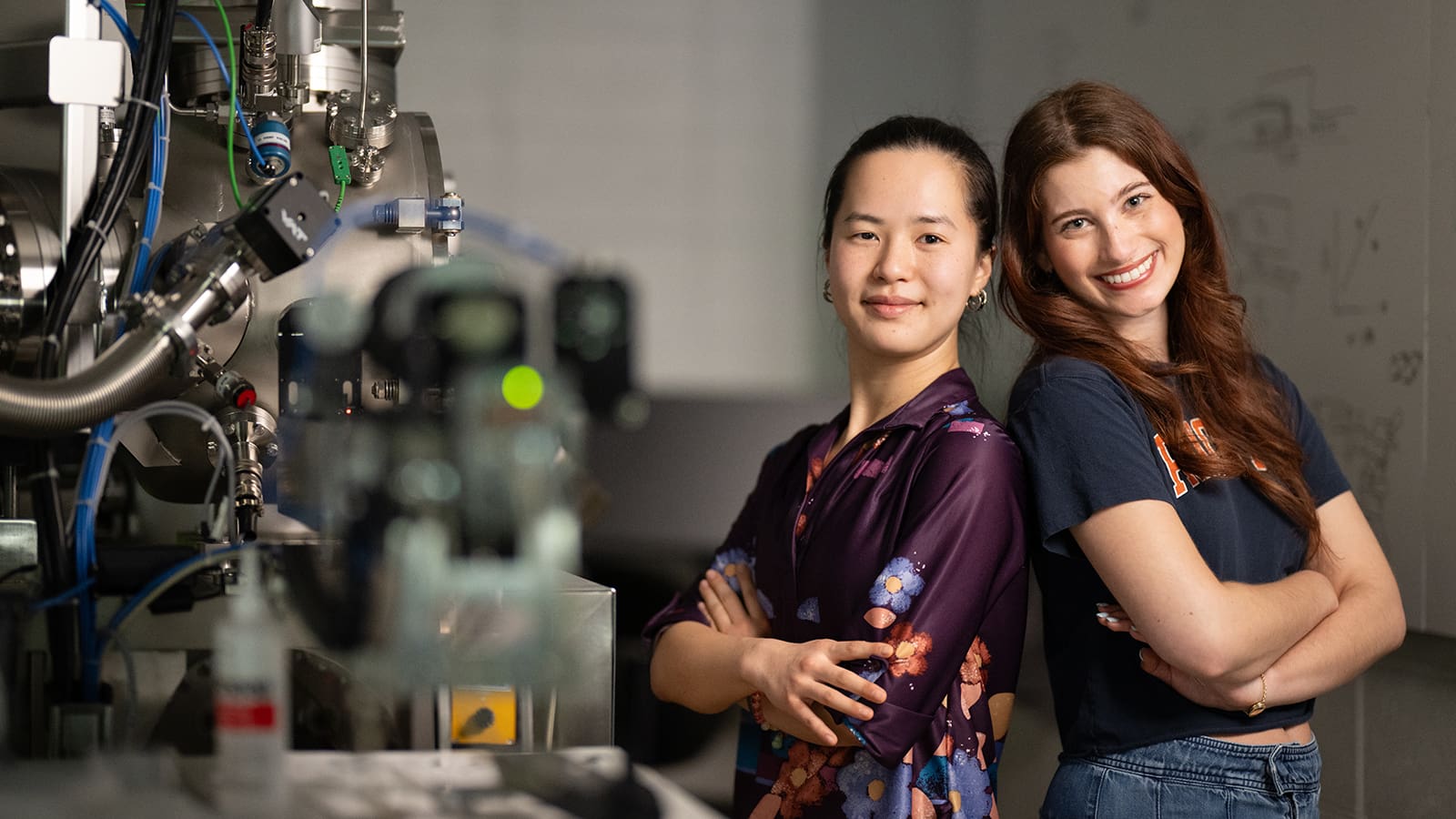
In starting graduate school, incoming students are taking on a greater role in the campus community. Graduate students help run labs and review sessions for undergraduate courses, while also leading the day-to-day work of research labs. “Nothing we do at the university would be possible without you all,” Houck said.
“So, when I say, ‘Welcome to Princeton,’ it’s not ‘Let me show you what we’re doing.’ It’s ‘Welcome, and join us in building Princeton Engineering.’”