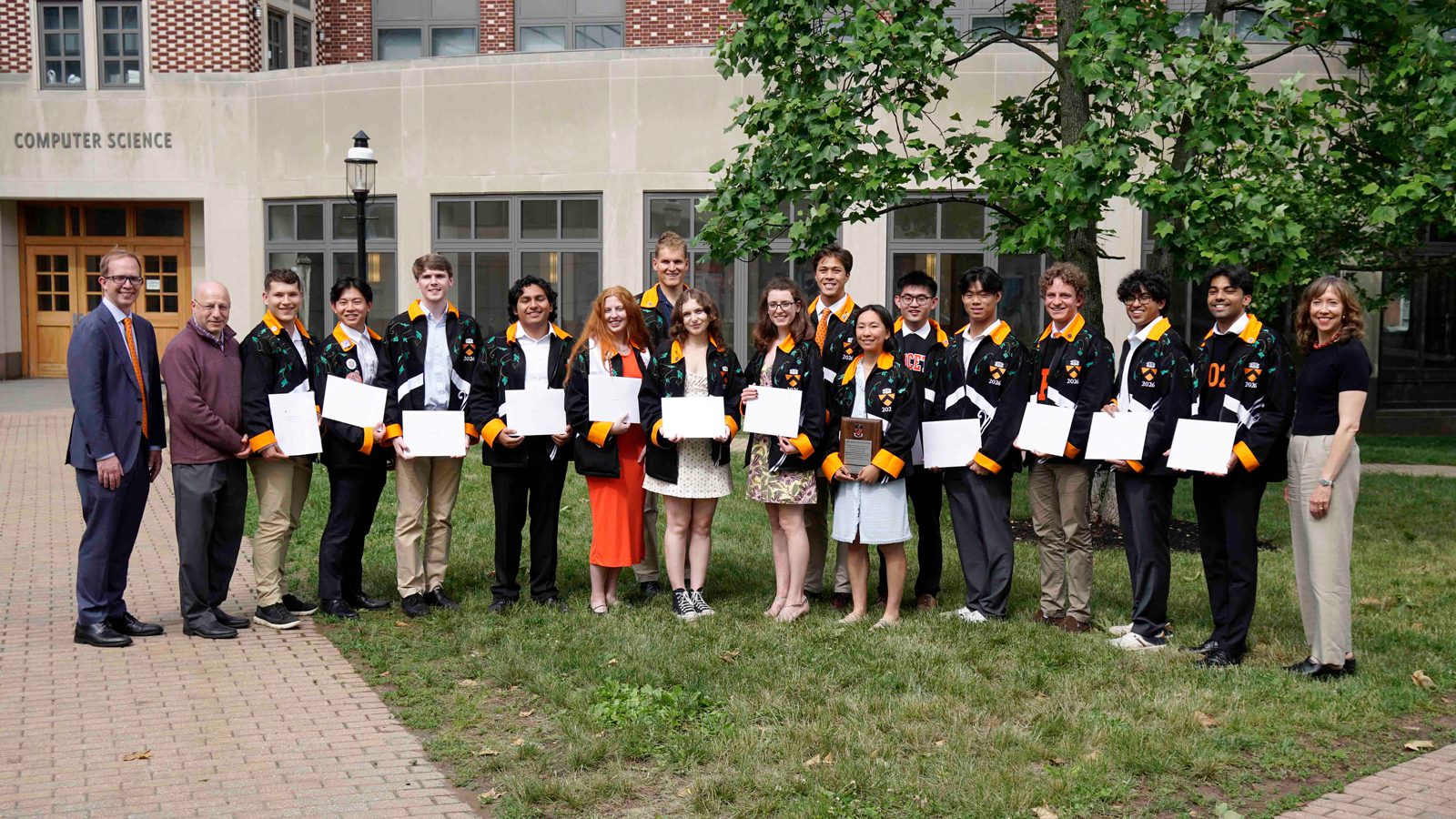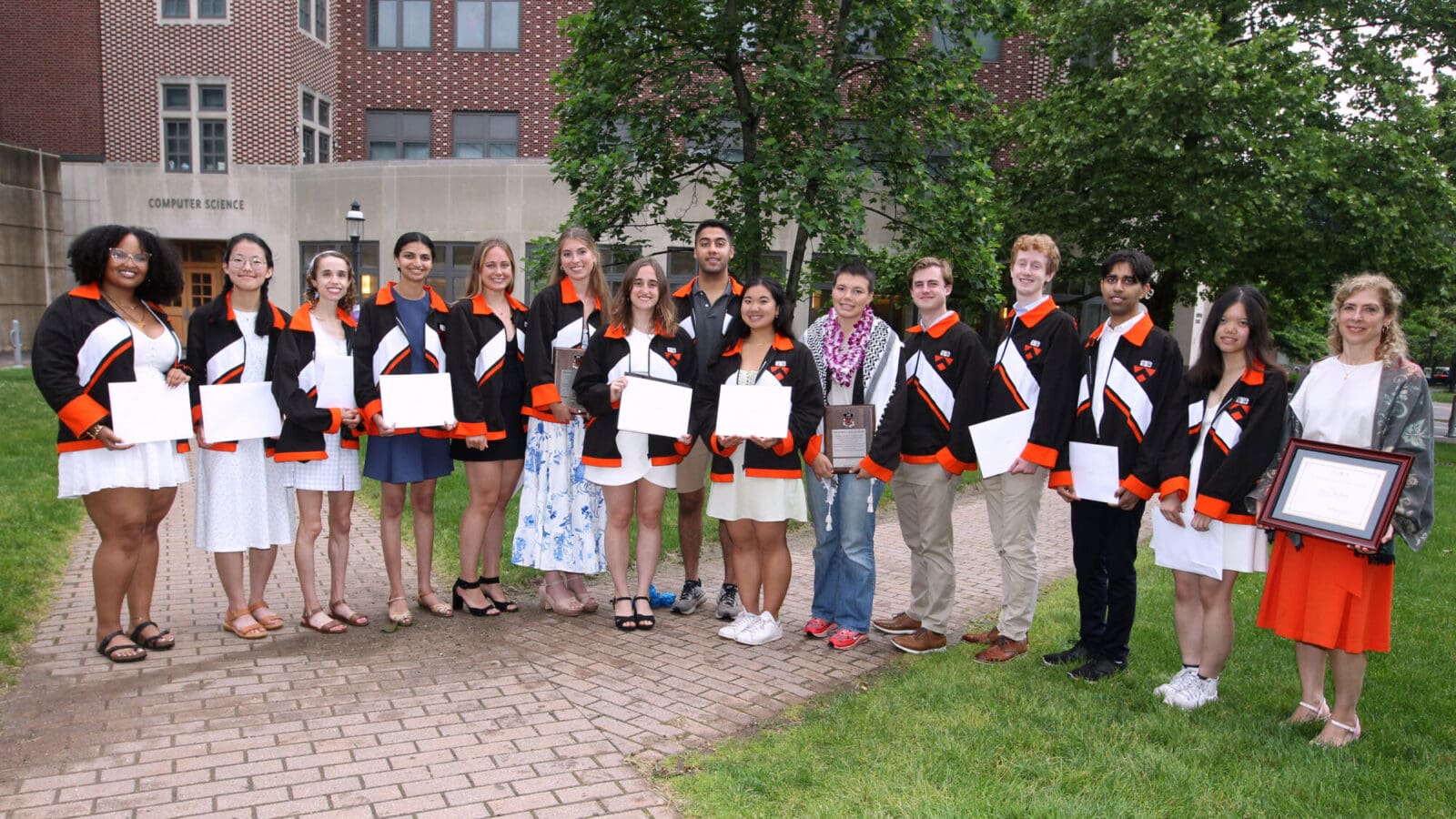
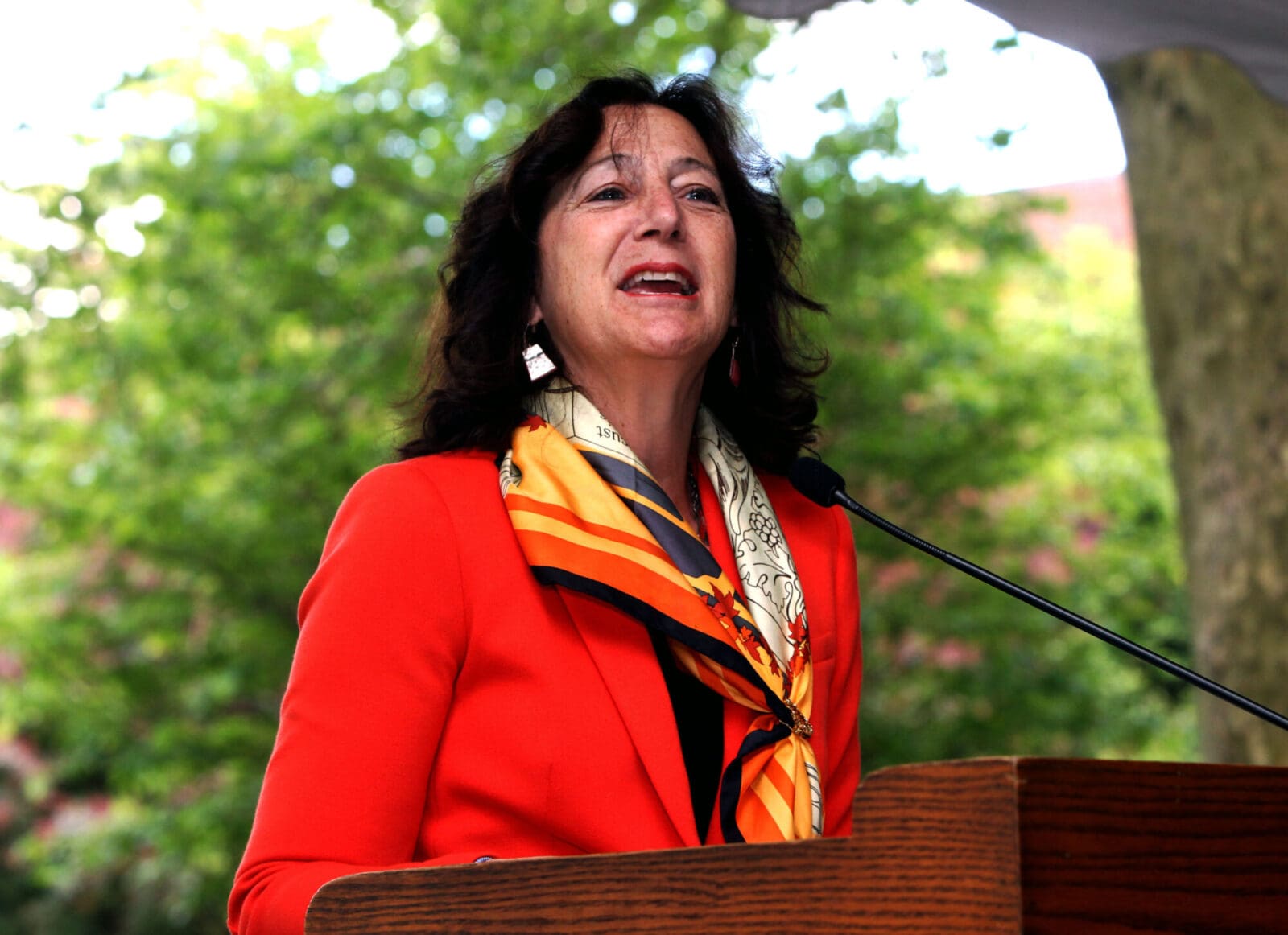
Welcoming graduates, friends and families to the annual Class Day ceremony on Monday, May 26, Dean Andrea Goldsmith told graduates that their passion and determination in the face of challenges “give all of us great hope for the future, because it will be led by all of you.”
“You chose to come here to get a broad liberal arts education, and that will enable you to create technology that will benefit people and help solve the most complex and urgent challenges facing the world today,” Goldsmith, the Arthur LeGrand Doty Professor of Electrical and Computer Engineering, told graduates at the gathering in the Friend Center courtyard. “We so look forward to seeing the positive impact that all of you can have as engineers and as leaders in the years ahead.”
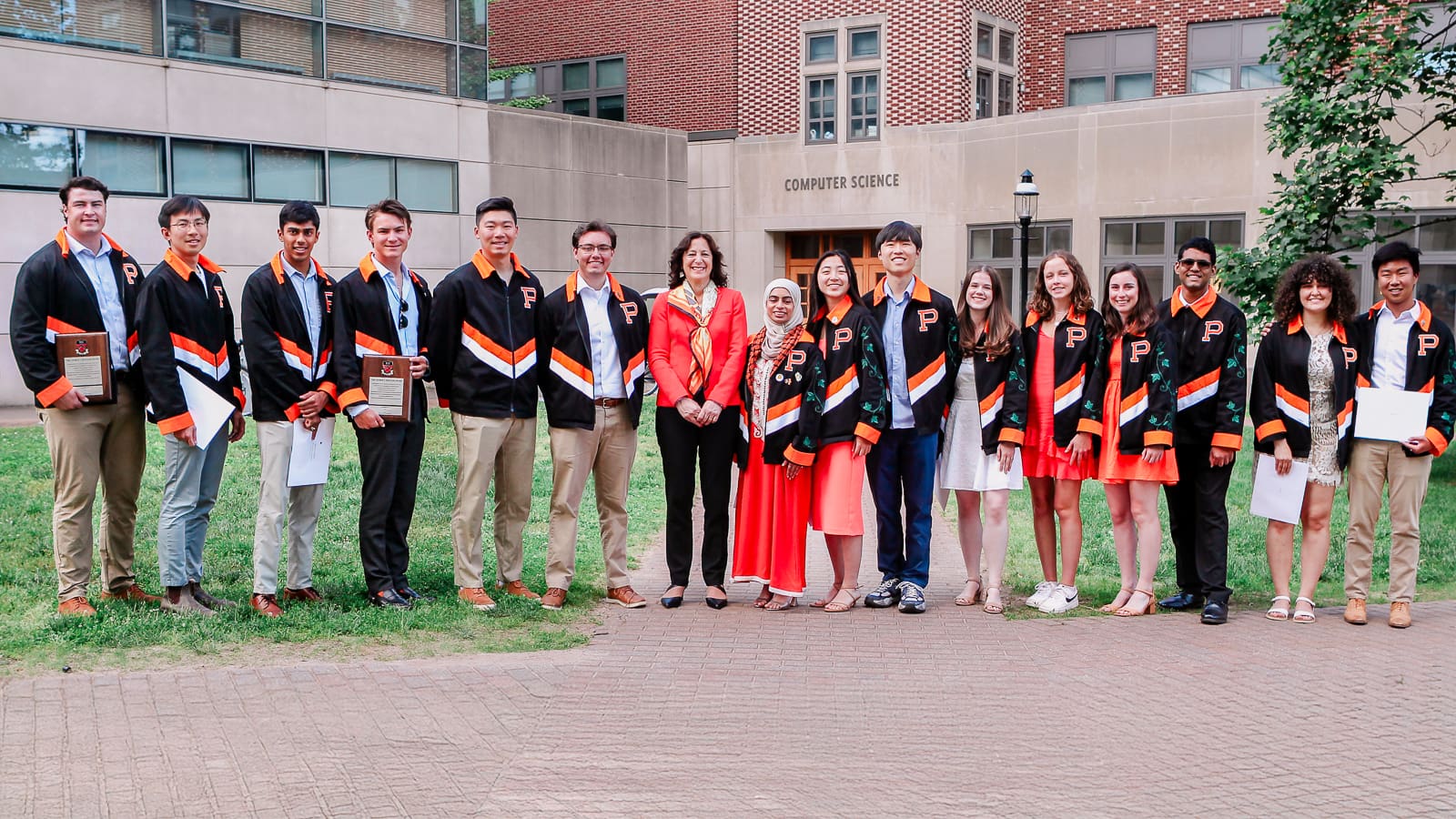
With 348 graduates receiving engineering degrees and 71 receiving Bachelor of Arts degrees in computer science, the class included 419 students, which represents 32% of the University’s Class of 2025. Members of the engineering class played intercollegiate athletics; performed in theater, dance and musical events; developed novel technologies; advanced knowledge of science and engineering; and served their communities and the world, said Goldsmith. She added that the graduates have “been wonderful friends and mentors to each other.”
She said that members of this year’s class will go on to obtain graduate and professional degrees, enter the workforce at large companies, small companies and startups; create their own companies, play professional sports, or enter military service.
“You’ve inspired all of us faculty with your passion for learning, your deep curiosity, your diverse talents and thoughtful perspectives on the world, and your desire to use your education and your broader experiences to make the world a better place,” said Goldsmith.
Finally, Goldsmith recognized Associate Dean for Undergraduate Affairs Peter Bogucki, who will retire this summer after 42 years at Princeton, including 31 years of service to the engineering school.
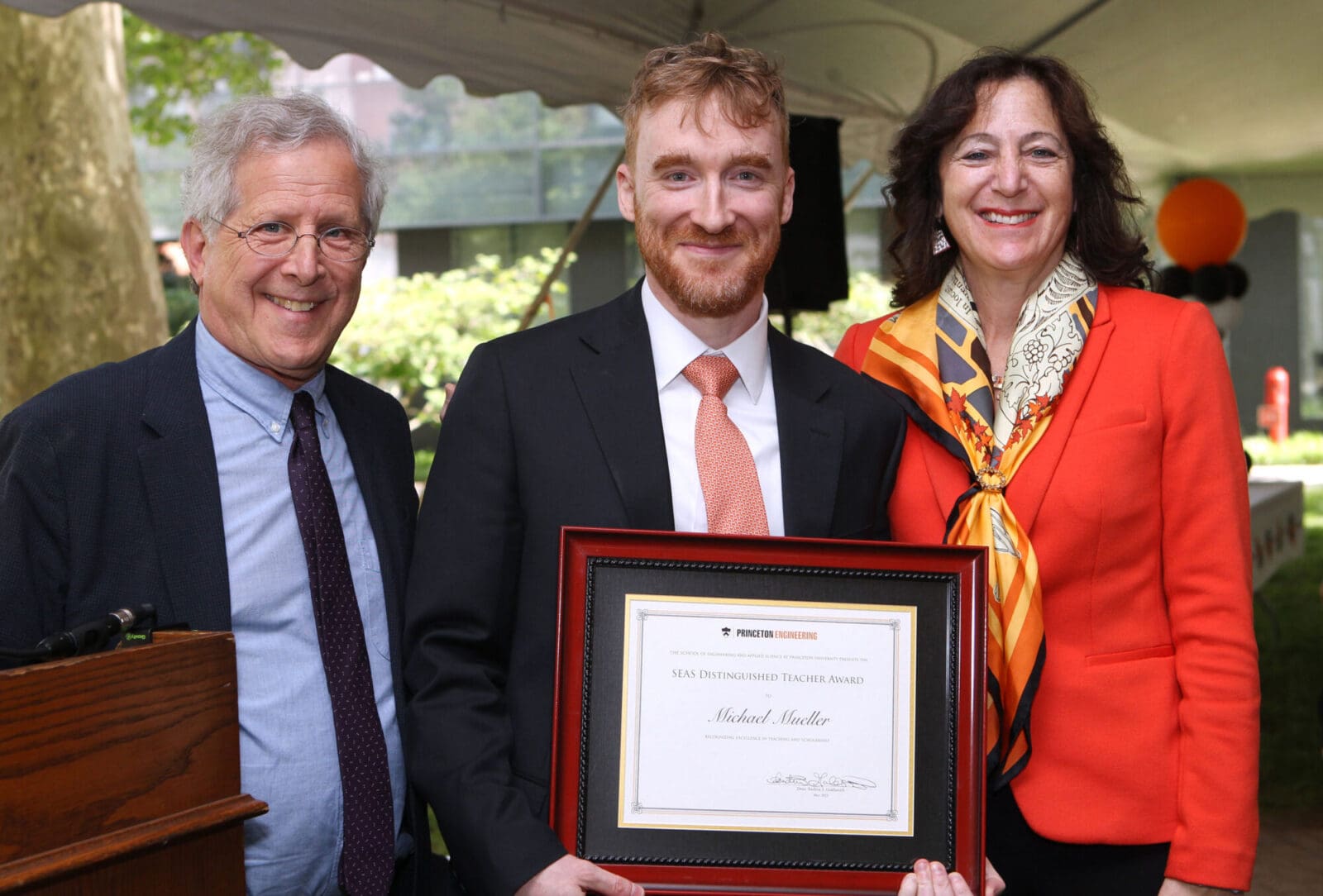
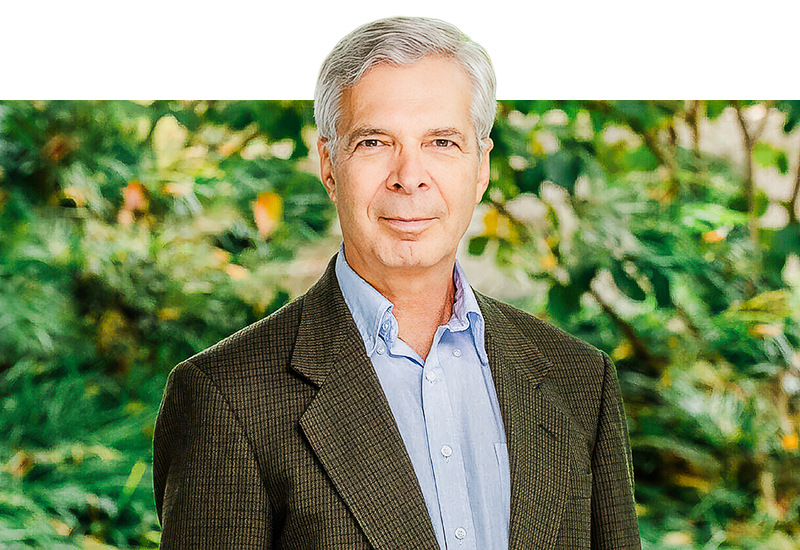
The ceremony also honored Michael Mueller with Princeton Engineering’s annual Distinguished Teaching Award, presented by vice dean of engineering Antoine Kahn. Mueller, a professor of mechanical and aerospace engineering (MAE), was cited for his clear, organized lectures and passion for teaching and mentoring.
“His youthful enthusiasm for teaching lectures and his patient guidance during office hours honestly make it an absolute thrill to be learning from him,” said one student.
Quoting former MAE department chair Howard Stone, Kahn said: “He’s helping to prepare the next generation of scholars, and I value tremendously how he gives his time, energy and ideas toward this objective. Michael’s example of leadership in research and learning is tremendously valuable to our community.”
In addition to teaching courses including “Energy Conversion and the Environment” and “Simulation and Modeling of Fluid Flows,” Mueller has served as the department’s director of graduate studies and associate chair, and for the next academic year will serve as chair of the department.
The winners of major awards at the 2025 Princeton Engineering Class Day, as presented by Associate Dean for Undergraduate Affairs Peter Bogucki, were:
THE J. RICH STEERS AWARD
Awarded for scholastic performance that demonstrates the potential for future engineering study and practice
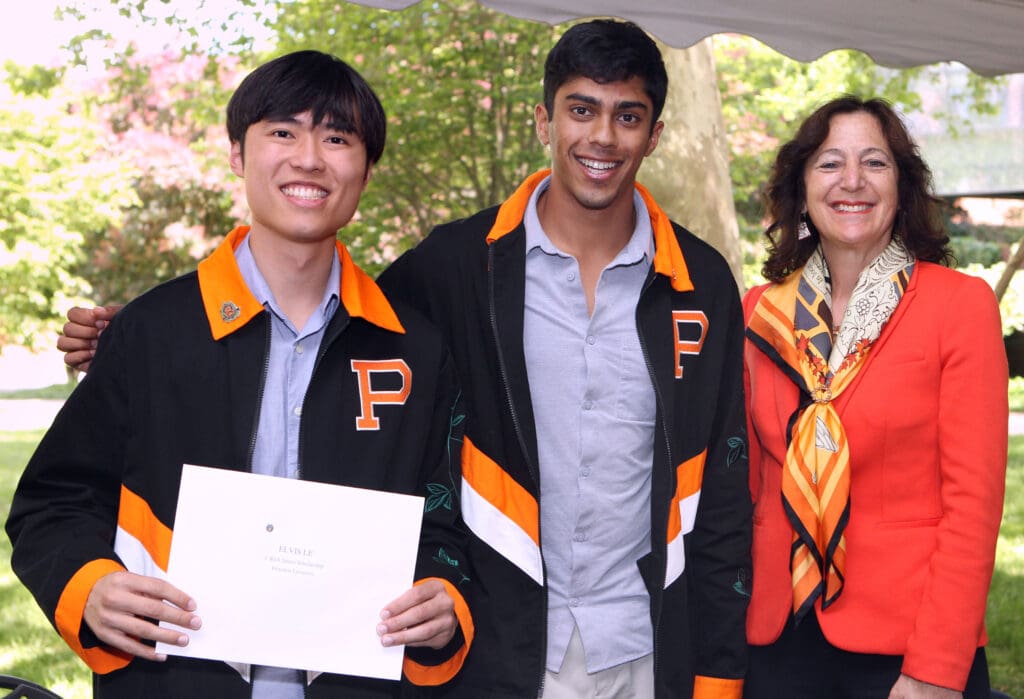
Elvis Le
Le, who majored in civil and environmental engineering, studied the structural behavior of a concrete beam with welded connections in an operational parking garage. Sensors were installed at strategic locations to measure strain under various loading configurations. He modeled, monitored and explained static and dynamic behavior of prestressed concrete beams with complex geometrical cross-sectionals under short-term loading. Next year, Le will pursue a master’s degree in structural engineering at MIT.
Deven Sukha
An operations research and financial engineering major, Sukha completed a senior thesis on the predictive value added by financial, credit and political risk indicators in emerging market equities to raise questions about how changes in such indicators may or may not already be “priced in” when controlling for other macroeconomic variables. Sukha will shortly be taking up a commission as an Army Infantry Officer.
JEFFREY O. KEPHART ’80 PRIZE IN ENGINEERING PHYSICS
Awarded to the outstanding student in the Engineering Physics program as determined by the Engineering Physics faculty
James Ding
Ding, an electrical and computer engineering major, conducted thesis research aimed at developing a transformative radar system that can see around buildings using self-accelerating Airy beams, which possess the remarkable property of self-curving as they propagate through the air. Next year Ding will pursue graduate study at the University of Toronto.
THE TAU BETA PI PRIZE
Awarded to the graduate who has significantly contributed a major part of his or her time to service to the school
Leena Memon
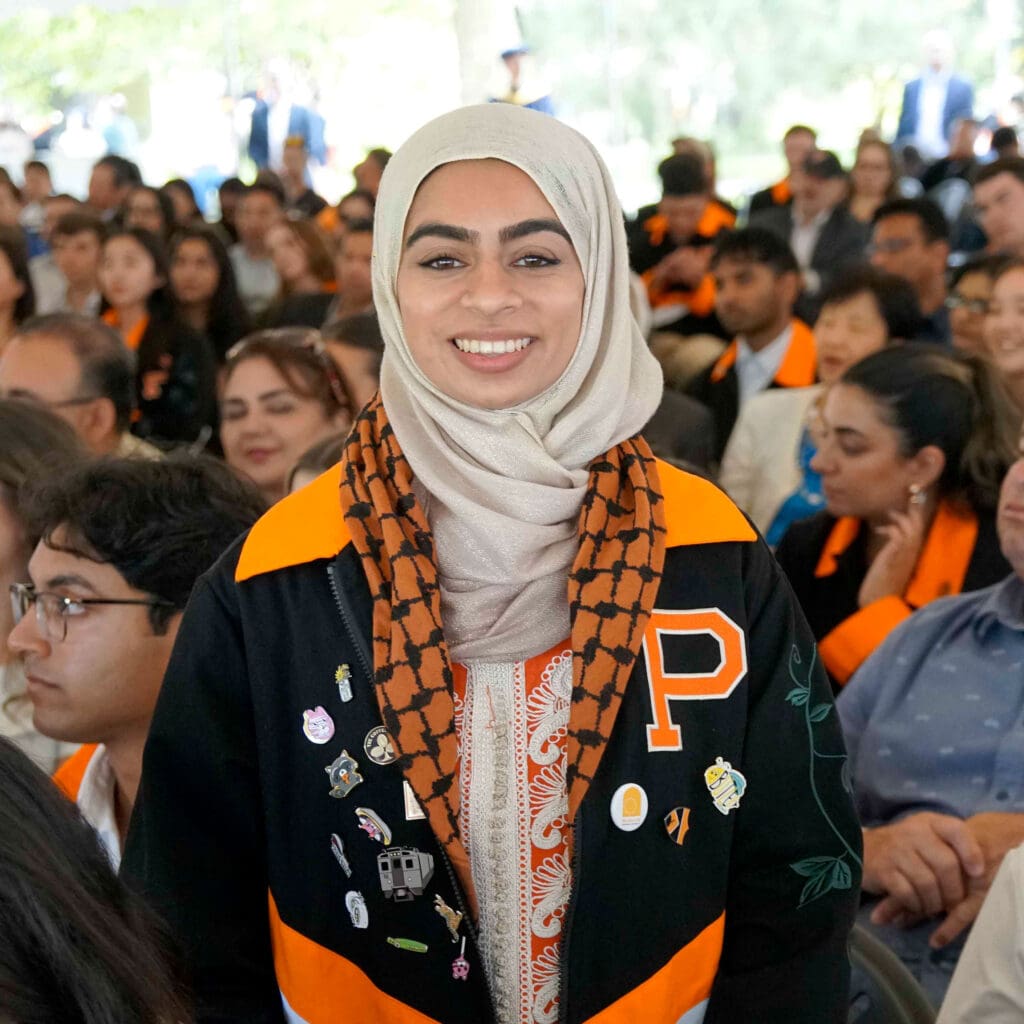
Memon, an operations research and financial engineering major, has been one of the most active students in recent memory in helping build the School of Engineering and Applied Science (SEAS) student community through her leadership and organizational abilities. She was a co-president of the Society of Women Engineers in 2023-24, organizing panels, workshops and social events. She was also vice president of the Engineering Council in 2023-24 and then president in 2024-25, overseeing the organization of the annual teaching awards ceremony, social events and mentorship programs. Outside of SEAS, she has served as a peer career adviser in the Center for Career Development and as a residential college adviser in Butler College. She also served as a course assistant in Computer Science 126.
For her thesis, Memon explored the performance of Shariah-compliant investment portfolios using quantitative optimization techniques such as mean variance optimization, multi-objective optimization, and a model of Islamic finance optimization. Next year, she will be a quantitative analyst at Goldman Sachs.
THE JOSEPH CLIFTON ELGIN PRIZE
Awarded to a senior who has done the most to advance the interests of the school in the community at large
Helena Frudit and Isabella Gomes
Frudit is from São Paolo and majored in mechanical and aerospace engineering with a minor in sustainable energy and a certificate in Latin American studies. Gomes is also from São Paulo and majored in civil and environmental engineering (CEE) with certificates in architecture and engineering and urban studies.
As leaders in Engineers Without Borders (EWB), both Frudit and Gomes extended the impact of Princeton Engineering around the globe. Gomes was the technical lead and project manager of the Kenya team that designed and implemented a water distribution system. She also served as EWB’s director of fundraising and was co-president in 2024-25 while EWB had active projects in Kenya, Ecuador and Peru. Frudit preceded Gomes in many of these same roles a year earlier, serving as co-president in 2023-24, and concluded her service to EWB this past year as director of strategy to develop a five-year strategic plan.
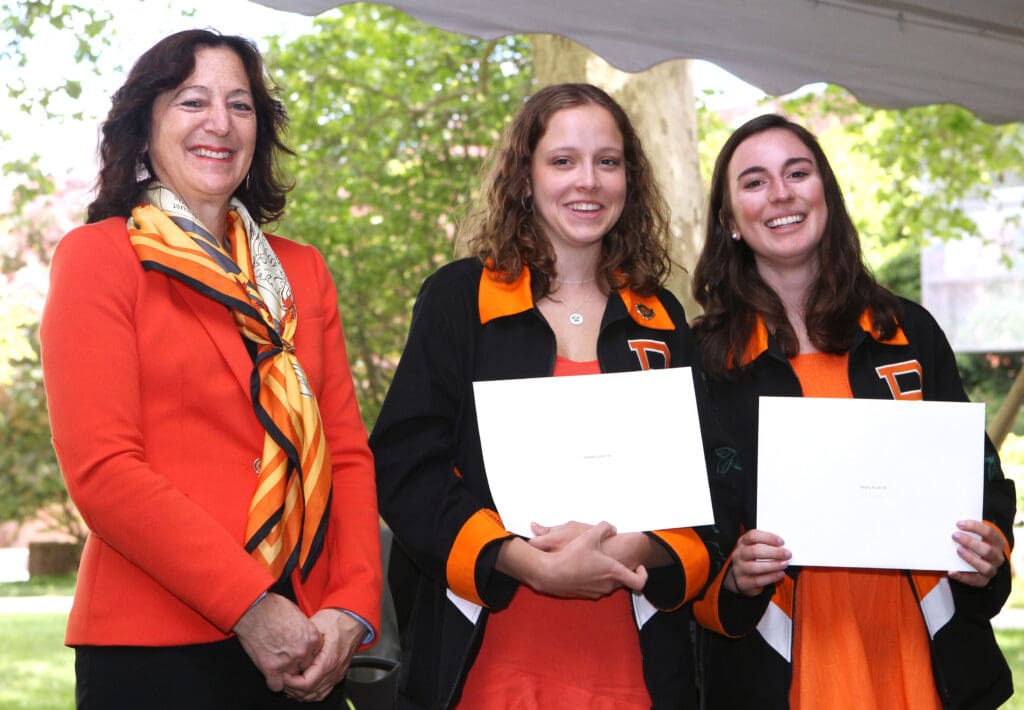
In addition to their commitments to EWB, Gomes and Frudit both compiled superb academic records. Their commitment to global service is also reflected in their thesis projects. In her MAE thesis, Frudit developed software to design the future of bioenergy in Brazil using a mixed-integer linear programming model that optimally locates bioenergy crops, conversion facilities and transportation while incorporating economic, environmental and land-use constraints within municipalities. Gomes’ CEE thesis also had a Brazilian theme. She quantified the annual embodied carbon associated with new residential and commercial construction in São Paolo and evaluated the emission implications of several decarbonization strategies. She determined that substituting lower-emission alternatives could produce significant reductions in embodied carbon.
After graduation, Gomes will become a structural engineer at Gilsanz Murray Steficek – Engineers and Architects. Frudit will be a capacity accreditation engineer at the New York Independent System Operator, which operates the electric grid and electricity markets in New York State.
THE GEORGE J. MUELLER AWARD
Recognizes a senior who has combined high scholarly achievement in the study of engineering with quality performance in intercollegiate athletics
David van Velden
Van Velden, a civil and environmental engineering major, rowed in the first boat in lightweight varsity crew since his first year. He helped the team win gold at both the Eastern Springs and the Intercollegiate Rowing Association (IRA) championships in 2023, as well as an IRA silver medal in 2024. He is a three-time IRCA All-American, including a first-team selection in 2024, as well as first-team All-Ivy. In addition to intercollegiate rowing in the United States, van Velden won national titles in his home country of the Netherlands in both quads and doubles and has represented his country in multiple international regattas.
His senior thesis investigated the extent to which abandoned oil and gas wells, also known as orphaned wells, contaminate private drinking water sources in the Appalachian basin region, and evaluated the effectiveness of large-scale groundwater modeling in assessing these risks. Next year, van Velden will work as a water engineer at Arcadis in New York City.
Thomas Matheson
Matheson, who majored in operations research and financial engineering, has been a standout on the offensive line of the varsity football team and has worked hard to get to his performance in his junior and senior seasons. Coach Bob Surace said that Matheson transformed himself into an exceptional offensive lineman who played in 30 consecutive games and started every game in his junior and senior year. He was named All-Ivy by several organizations as well as an Academic All-Ivy. He was also a leader, voted a captain by his teammates.
His senior thesis used machine learning algorithms to assess coaches’ risk appetite as revealed in their decision processes. He studied fourth-down plays in which three defined options exist: punt, go for it, or try a field goal. Coaches’ decisions can be compared to computable changes in win probabilities derived from the outcomes of several hundred thousand plays to classify coaches as being either conservative or aggressive. His results refute the view in sports analytics literature that college coaches often exhibit excessive risk aversion. Excessive aggression is not always best, and traditional intuition may still override data-driven logic on the sidelines, he found. This fall, Matheson will spend his final season of NCAA eligibility at Boston College, where he will pursue a master’s in finance.
THE CALVIN DODD MACCRACKEN SENIOR THESIS/PROJECT AWARD
Recognizes the senior thesis or project work that is most distinctive for its inventiveness and technical accomplishment
Daniel Tan
Tan, a chemical and biological engineering major, completed a thesis entitled on biomolecular condensates, which are membraneless organelles in living cells that play crucial roles in cellular function and have been implicated in diseases such as cancers and neurodegenerative diseases. Condensates formed by disordered proteins have distinct microstructures characterized by highly connected molecules called “hubs” and locally connected “cliques.” The topologies of such hubs and cliques can have significant implications for condensate properties, functions and dysfunctions. To study them, Tan developed molecular dynamics simulations alongside graph-theoretic approaches and designed a coarse-grained model to probe the generality of his findings, which revealed important insights into the properties of these networks. Next year, Tan will begin a doctoral program in computational biophysics at The Rockefeller University in New York City.
Laura Thompson
Thompson, a mechanical and aerospace engineering major, completed a thesis on rotating detonation engines (RDEs), which use a cylindrical geometry where a detonation wave continuously rotates to produce thrust in the axial direction. Since detonation is extremely fast and volatile, imperfections in the cycle cause difficulties for engine control and stability. Thompson developed sophisticated computational simulations to analyze the effect of inlet number and increasing methane composition in combination with hydrogen fuel on stability and performance parameters. She discovered that the inclusion of up to 15% methane mixed with hydrogen fuel resulted in more stable and consistent detonation waves at some expense of pure performance and efficiency. Next year, Thompson will work as a discovery program engineer in the Applied Physics Laboratory at Johns Hopkins University.
James Zhang
As libraries and archives digitize their collections, they are faced with the challenge of making them searchable and accessible. Zhang’s thesis addresses this challenge by developing “Metascribe,” which uses large vision-language models to create metadata at scale for digitizing historical documents. Metascribe takes images of documents and yields a set of pages, then processes each page with optical character recognition to produce text, then uses a vision language model to yield metadata. His system allows libraries to process documents with flexible configurations under constraints such as cost and error handling. Zhang, a computer science major, tested Metascribe on a sample of nearly 7,000 books and articles in the Princeton Prosody Archive that date from the 1500s to the early 20th century that are typographically challenging and contain a variety of notations from previous scholars. This summer, Zhang will be an ERA:AI Technical Governance Research Fellow in Cambridge, England, and then will pursue a master’s degree in global affairs at Tsinghua University.
THE LORE VON JASKOWSKY MEMORIAL PRIZE
Recognizes a student who has participated in research that has resulted in a contribution to the field, has added to the quality of University life, and intends to pursue a career in engineering or applied science
Mason Bates
After his first year at Princeton, Bates, who majored in electrical and computer engineering, began research in Cyprus, where he worked in the AI Lab of the University of Nicosia programming drone swarm behavior in digitally simulated environments. His interests then turned 180 degrees to quantum engineering, solid state physics and photonics. He spent the summer of 2023 at the Princeton Plasma Physics Lab, where he became co-author on a patent application, and then in 2024 he developed laser stabilization systems for quantum computing in Strontium Rydberg atom arrays at the Max Planck Institute for Quantum Physics near Munich. Bates then brought his interests in quantum physics to his independent work in which he combined engineering, physics and materials science in his thesis. Using an atomic force microscope, he did a systematic study of the surface morphology of gallium arsenide samples grown atomic layer by atomic layer. He found that preparation of the wafer surface before molecular beam epitaxial growth plays a more important role than hitherto assumed. Bates has also been a teaching assistant for several courses and a member of the Butler College leadership team. Next year, he will begin a Ph.D. in quantum engineering at MIT.
Aya Eyceoz
Eyceoz, who majored in chemical and biological engineering, began her research career in her sophomore year working with Assistant Professor Jonathan Conway on plant-microbe responses to environmental stress. In her junior year, she worked in Sujit Datta’s lab investigating how bacterial turbulence changes the chemotactic response of bacteria in Newtonian and viscoelastic environments. Between sophomore and junior year, she spent a summer at the University of Strathclyde in Scotland working on colloidal micromotors and photocatalytic enzymes, while this last summer she worked at Entegris synthesizing novel polymer membranes. For her senior thesis, she investigated the effects of zeolite elemental composition and pore structure on hydrogen energy yield, a reaction that is vital for the use of hydrogen as a fuel. In the fall, she will begin a Ph.D. in chemical engineering at MIT.
JAMES HAYES-EDGAR PALMER PRIZE IN ENGINEERING
Awarded to a student who has manifested excellent scholarship, a marked capacity for leadership, and promise of creative achievement in engineering
Ian Henriques
Henriques, an electrical and computer engineering (ECE) major, was recognized with the Class of 1939 Princeton Scholar Award for having the highest standing in the preceding three years of all Princeton undergraduates in the Class of 2025. His senior thesis was entitled “Real-time Disease Detection With Energy-based Models.” As common diseases become more frequent in the general population, diagnoses are becoming more time-consuming, expensive and stressful for patients. To address these problems, Henriques took inspiration from neuroscience, such as Hopfield networks, to develop new AI approaches to optimize accuracy, latency and confidence calibration of detection methods across multiple disease categories. Henriques has been president and mentor of the Robotics Club, leading the Princeton team to a first-place finish at the Harvard PacBot Robotics Competition. He has also led Princeton’s Loaves and Fishes organization, which provides community meals in Trenton each Saturday. Next year, he will remain at Princeton for a graduate degree in ECE.
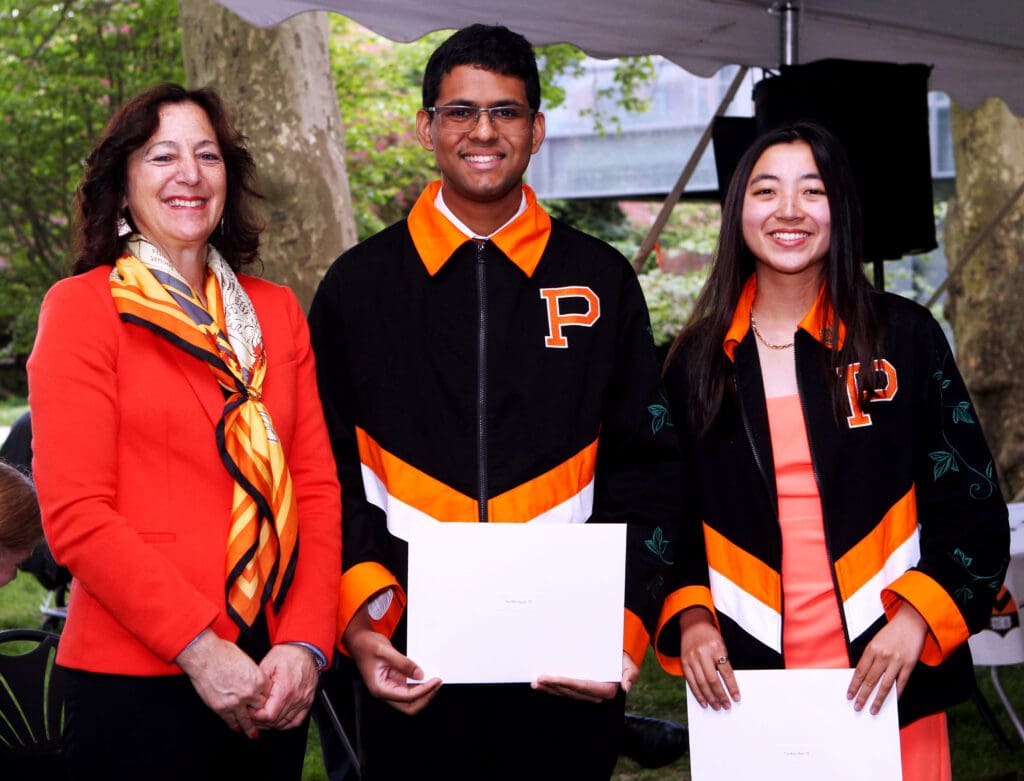
Caroline Zhao
Zhao, who majored in chemical and biological engineering, has also compiled an exceptional academic record, which was recognized with the George B. Wood Legacy Junior Prize at last fall’s Opening Exercises. Since the beginning of junior year, Zhao worked in the lab of Assistant Professor Jerelle Joseph modeling cellulose-degrading enzymes with the goal of advancing sustainable biofuel production. In her junior year, she developed simulations to characterize the binding energies of various enzyme domains with cellulose. For her senior thesis, she developed a coarse-grained model of cellulose to characterize binding interactions to support the engineering of enzymes for biofuel production. Outside the classroom, Zhao served as president and senior adviser to the Engineering Council, president of the Princeton Bridge Club, coxswain of the men’s lightweight crew team, and an undergraduate course assistant in computer science and economics courses. After graduation, she will bring her understanding of process engineering to investment in healthcare, and in the biotech and pharma sectors, as an analyst at Bain Capital.