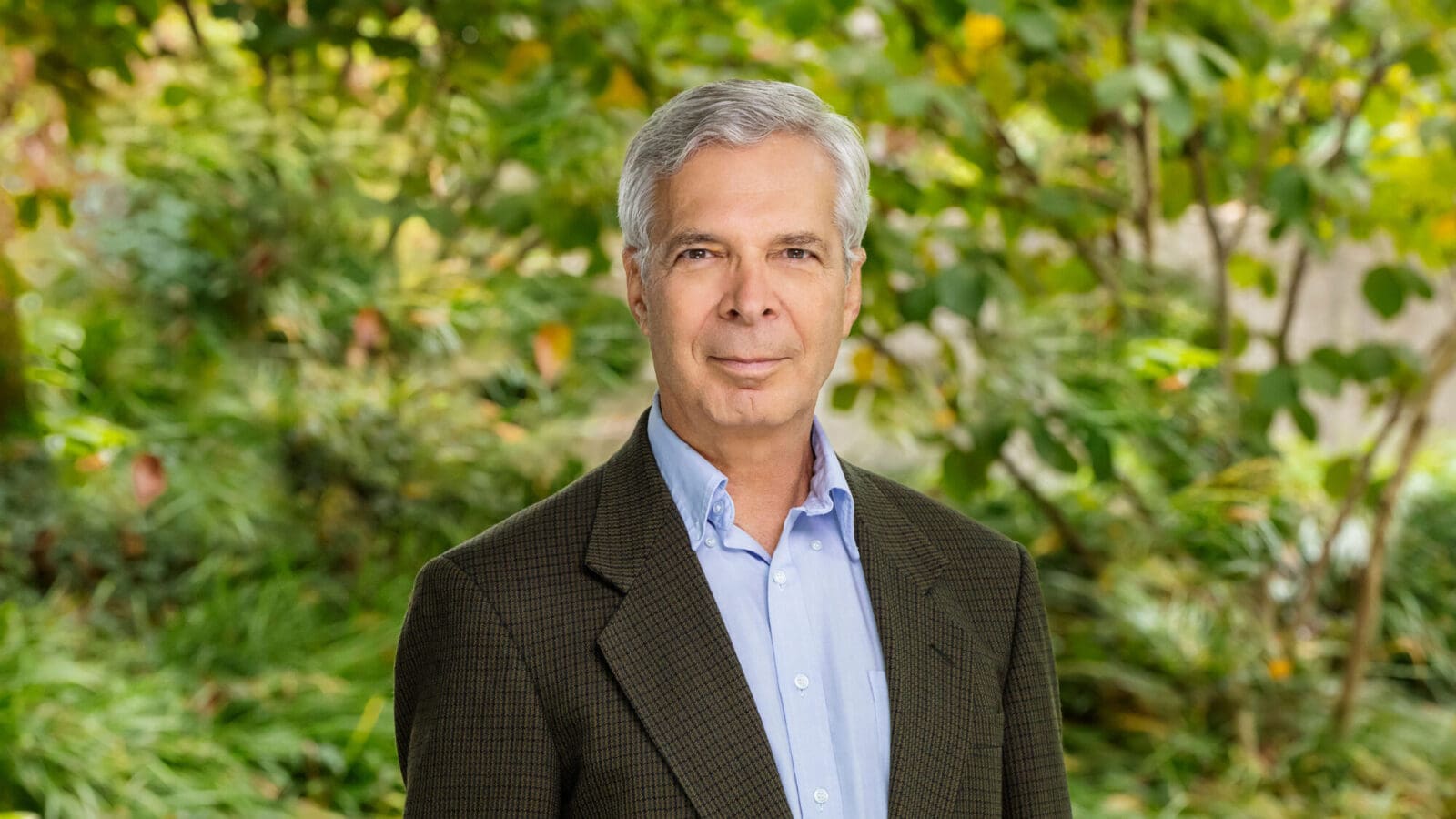
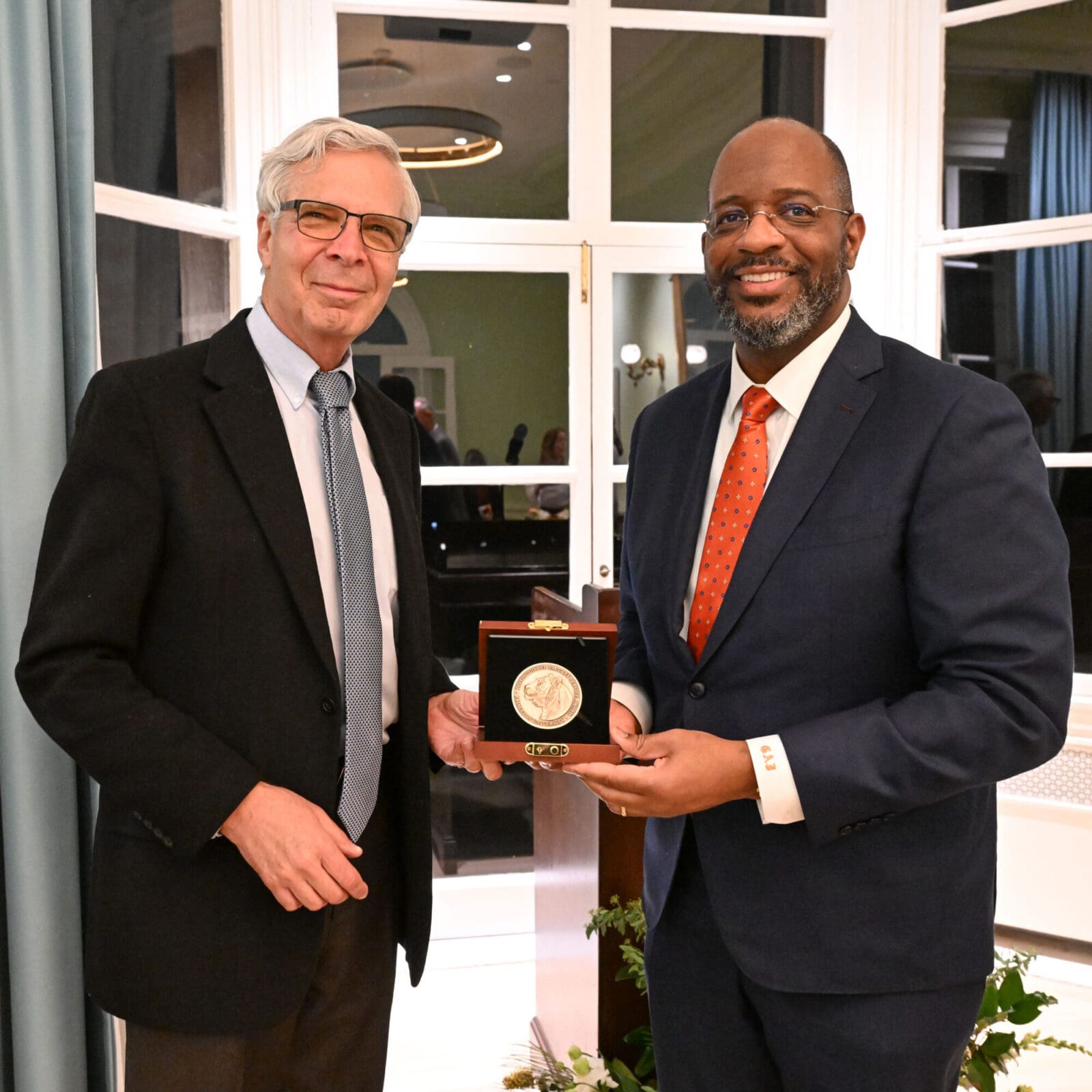
Jaffé, the William L. Knapp ’47 Professor of Civil Engineering and professor of civil and environmental engineering, received the award on Feb. 18.
The award recognizes faculty who have made exceptional contributions in service to Princeton not only within but also beyond their academic departments. It was established to better steward, recognize and honor the faculty service which is so vital to the life and success of the University.
All nominations are reviewed by a University-wide committee consisting of the dean of the faculty, the dean of the graduate school, the dean of the college, the vice dean for faculty development and inclusion, and the clerk of the faculty. Past award recipients also serve on this jury.
The honorees are recognized with a dinner at Prospect House, a medal and a monetary award.
“Peter Jaffé has been an exemplary citizen at Princeton,” said Gene A. Jarrett, dean of the faculty and the William S. Tod Professor of English. “His extensive service and leadership have strengthened our academic enterprise at the departmental level, within the School of Engineering and Applied Science, and throughout the broader University. He truly deserves the Distinguished Faculty Service Award in recognition of his exceptional contributions to our campus.”
Jaffé has played a pivotal role in shaping several academic units at the University over the course of his four decades at Princeton. His particular research interests relate to the physical, chemical and biological processes that govern the transport and transformation of pollutants in the environment and their application toward the remediation of contaminated systems.
Joining Princeton’s faculty in 1985, Jaffé was the first chair of the Department of Civil and Environmental Engineering (CEE) from 1999 to 2005, serving for two terms after the Department of Civil Engineering and Operations Research was split into the Department of Operations Research and Financial Engineering and CEE. His leadership determined the first steps in advancing this new addition to the University. He served again as acting chair of CEE from 2020-21.
“It is a real honor to have been selected for this award among the very large number of highly deserving colleagues at Princeton,” Jaffé said. “Serving on the many committees and administrative positions over the years was always rewarding. It has given me many insights into, and a much broader understanding of how the University works, and most importantly, it has allowed me to meet and interact with colleagues across academic disciplines as well as key personnel supporting the academic, research and physical plant activities. Interacting with all these colleagues has been inspiring and always reminds me how fortunate I am to be part of the Princeton University community.”
In addition to his chairmanship, Jaffé has served as CEE Right-to-Know coordinator and CEE chemical safety officer from 1990 to 2001, acting director of the Water Resources Program from 1989-90, director of Environmental Engineering and the Water Resources Program from 1993-97, CEE search officer from 2017-19 and again in 2023 until the present day. He also served on the Radiation Safety Committee from 1990-99. Jaffé contributed to the CEE undergraduate curriculum by serving on the Architecture and Engineering Program Committee from 2000-05, Geological Engineering Program Committee from 1985 to 2024, and Environmental Engineering and Water Resources Program Committee since 1985.
He contributed significantly to the creation of the High Meadows Environmental Institute (HMEI), founded in 1994 as Princeton Environmental Institute. While HMEI was in its early development stages from 1994-96, Jaffé was a member of the Executive Committee. He served on the Curriculum Committee from 1995-97; Faculty Search Committee from 1995-96, 1996-97 and 2014-15; Postdoctoral Search Committee from 2018-19, and as the HMEI Princeton University representative to New Jersey Sea Grant Consortium from 2013-15. In addition, since 2024, he has served as a co-chair of the advisory committee for Princeton’s Sustainability Action Plan.
Jaffé played a key role in the early days of the Andlinger Center for Energy and the Environment as well, stepping in as associate director for research from 2013-19, and becoming a leading mentor for the center’s faculty, which consisted solely of junior faculty at the time.
He has contributed to other academic units within the School of Engineering and Applied Sciences (SEAS), including the Princeton Materials Institute, serving on the Curriculum Committee from 1994-95 and 1995-96, and the Omenn-Darling Bioengineering Institute, serving on search committees in 2017-18, 2018-19, and 2022-23. Jaffé served on the SEAS Self Study Committee in 2013-14 and 2014-15 and SEAS’ Relationship with External Entities Committee from 2013-14 and 2014-15, as well as on the Proposal Review Committee for Innovation Funds (Project X from 2014-15, and Moore Foundation from 2017-18), and the SPIA Self Study Committee as SEAS representative from 2014-15.
“Professor Jaffé went significantly above and beyond in providing services to the University, SEAS and CEE,” said Branko Glišić, professor and chair of civil and environmental engineering. “His leadership roles in CEE and great performance and visibility in all services, including initial University committees, clearly led to his election and involvement in other important leadership roles and very important committees in SEAS and the University. His participation in CEE committees and faculty meetings, including regular faculty meetings, meetings of CEE Advisory Council, and Strategic Planning meetings, proved to be an invaluable source of wisdom and guidance when various important matters were discussed and decided.”
Glišić said Jaffé’s “generous participation in services” did not impede his teaching and research commitments. “On the contrary, he has been teaching for decades with the highest rigor and diligence the two very demanding and important undergraduate courses crucial for our ABET accreditation (Accreditation Board for Engineering and Technology), a lab course, and a design course in environmental engineering. His excellence in research was blossoming over the years, and it is not a surprise that his many scientific breakthroughs were frequently featured on the Princeton homepage and frequently recognized by many honors and awards.”
Jaffé leads the Environmental Biogeochemistry Lab where members study the fate and transport of environmental contaminants, including nutrients in aquatic environments, with a focus on their remediation in both natural settings as well as treatment systems. He is pioneering the field of PFAS biodegradation and was invited to testify on this topic at a joint hearing of the House Subcommittee on Environment and the House Subcommittee on Research and Technology.
Among his many honors and professional affiliations, Jaffé is the winner of the 2023 Dean for Research Award for Distinguished Innovation and the 2025 ASCE Fellowship. He received the Excellent International Cooperation Project Award, “Application of Feammox Process in Wastewater Treatment,” awarded by the Guangzhou Association of Industrial Environmental Protection in 2017. Jaffé is a Board-Certified Environmental Engineering Member by Eminence of the American Academy of Environmental Engineers. He was an elected fellow of the American Geophysical Union in 2012 for fundamental, quantitative work on biogeochemical reaction and transport phenomena in soils and sediments, and elected as fellow of the American Society of Civil Engineers in 2025.