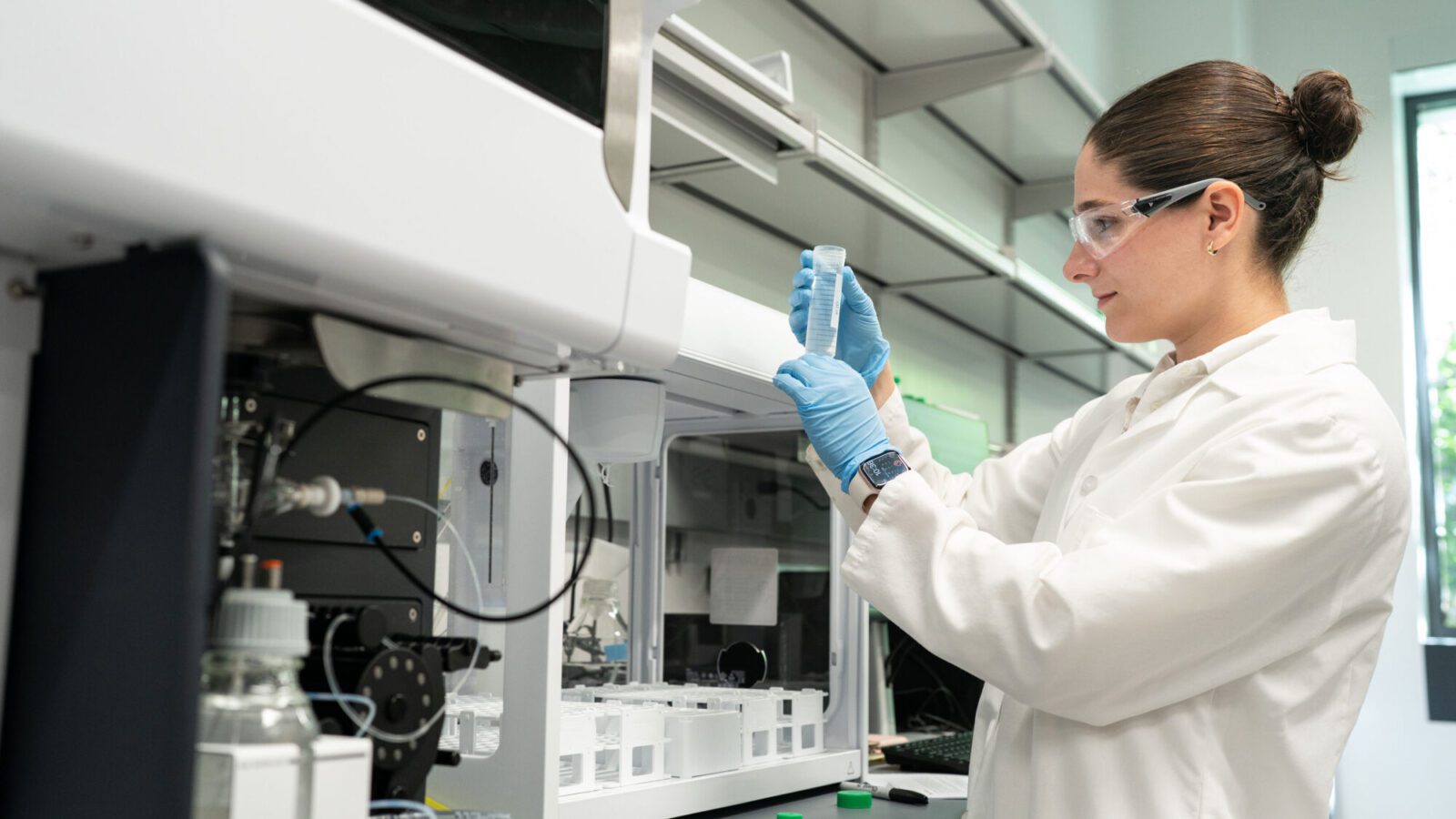
In the fall of her sophomore year, Era Thaqi took a semiconductors course that had her fabricating her own computer chip in Princeton’s clean room. “It was one of my favorite classes, but also one of the classes that challenged me the most,” she said.
Thaqi grappled with connecting the theory presented in lectures with the technical skills of the fabrication lab.
“That’s where I really utilized my professor’s and TAs’ office hours, because they’re there to help you,” said Thaqi, now a junior majoring in electrical and computer engineering (ECE). “One of the best things about our ECE community is that we have extremely dedicated faculty that want to see us succeed.”
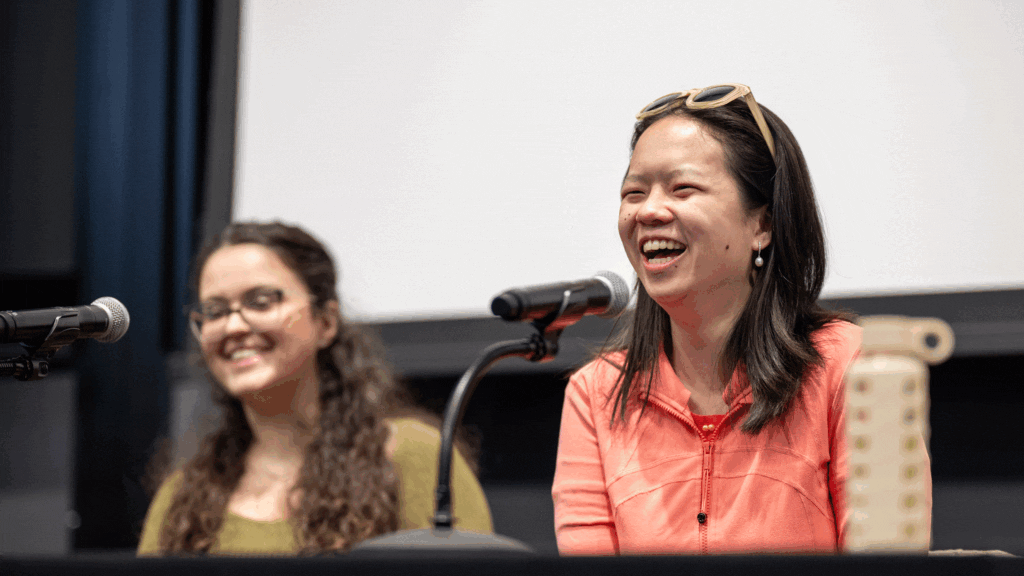
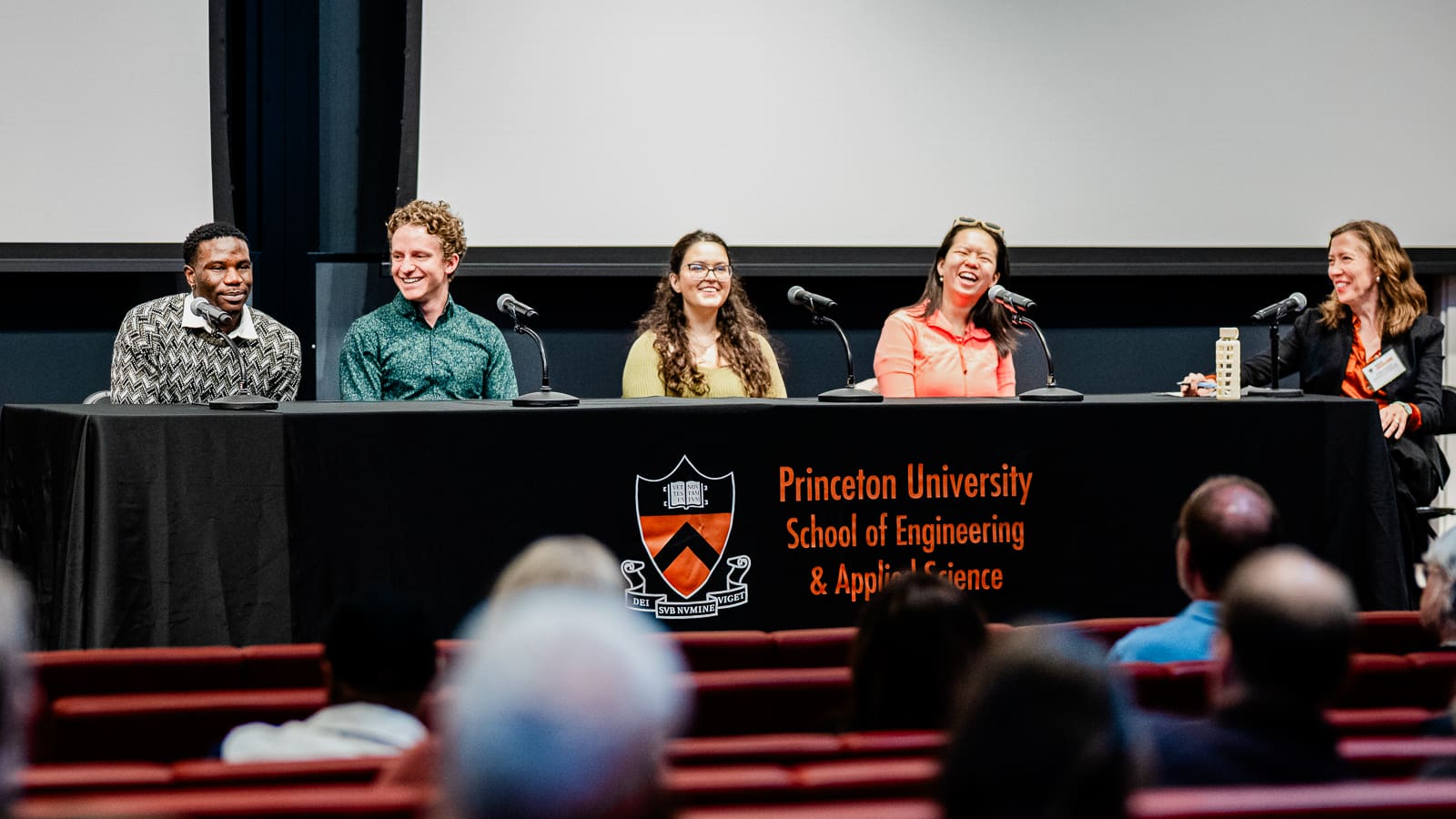
Thaqi was one of four junior and senior undergraduates at Princeton Engineering who shared lessons from their own experiences at a panel discussion on Friday, Nov. 7, as part of the University’s First-Year Family Weekend. The conversation covered topics such as selecting a major, navigating challenging courses, and finding internships.
Academic support is for everyone
Princeton is challenging, and all students use academic support — including office hours, study groups, and study hall and individualized tutoring offered by the McGraw Center for Teaching and Learning.
Peer mentors help new students gain perspective on Princeton
It can be so helpful to hear from someone who’s “been there” like a residential college adviser, peer academic adviser or BSE interactor.
It’s normal to be unsure of what major to declare
Students can explore new fields by attending fairs and open houses, checking out departmental events, and perusing the Princeton senior thesis database.
Manny Ishola, a junior majoring in mechanical and aerospace engineering, said that he struggled in introductory physics, especially since he had not taken a physics class in high school. But he began going to his professor’s office hours, where they would go over the questions that were giving him trouble.
“[My professor] made me fall in love again with physics, where I had thought it was this huge monster I couldn’t overcome,” said Ishola. “That made me realize that if I’m able to do this, I’ll be able to do any other thing” at Princeton, he said.
Cecily Swanson, the engineering school’s associate dean of undergraduate affairs, said classes at Princeton are often challenging and move quickly. The school offers help to all students, and Swanson said seeking help is common.
“Princeton really doesn’t operate on a deficiency mindset when it comes to using academic support,” said Swanson, who moderated the discussion. In fact, she said, resources like tutoring and study groups are “essential to a successful, thriving academic program.”
Structure in time for taking a break
It’s not possible or desirable to study all the time. It can be really helpful to formally block time every day for taking a break — and stick to it.
Summer after the first year is a great time to decompress and reflect
Opportunities for first-year students include global seminars, IIPs, PICS, and the LENS program. It’s also perfectly fine to just spend the summer at home.
Panelists said that help is available from sources including tutors, study groups and upper-level student mentors. Support also does not just mean academics. Students can seek advice on picking, or switching, a major, on time management and on career paths. The panelist also noted the importance of taking a break from studies, whether over the summer, in the school year or during the day.
Each panelist shared a story about a course, internship or research experience that changed their pathway through Princeton and changed their perspective on engineering, including its ties to fields like visual arts and public policy.
Joie Zhang, a senior, entered Princeton as a non-engineering student; she had broad interests and was unsure about her major. Then she took the computer science department’s introductory course, which she described as “phenomenal.” She loved how interdisciplinary the field was.
“You can see the ways in which [computer] programming can be applied in all sorts of disciplines: to create art, detect credit card fraud, et cetera. That course changed my career trajectory at Princeton,” said Zhang.
Thaqi took a first-year seminar on national science policy that showed her that a career in science or engineering “doesn’t have to be a straight and narrow line.” The experience inspired her to pursue a summer internship in her home country of Kosovo working with a government ministry for science, technology and education.
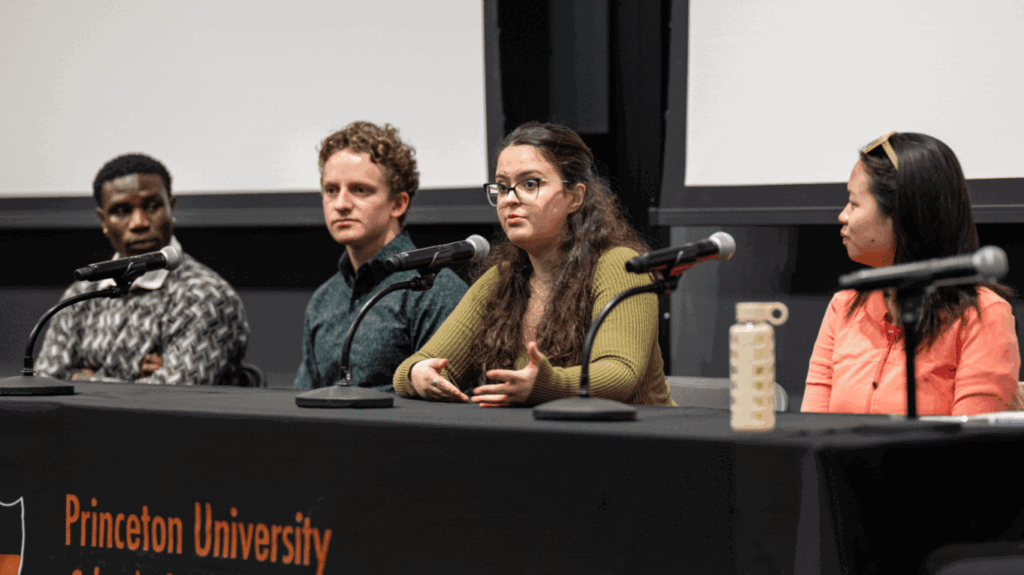
Braeden Carroll, a senior, pursued a variety of internships during his three summers as a civil and environmental engineering major. After his first year, Carroll conducted field research in the Philippines on recovery efforts from Super Typhoon Haiyan. The following summer he stayed on campus for a research project on coastal flood barriers, and this year he did a management consulting internship. Such work, he said, offers paths beyond the typical classroom.
“Each of those classes, each of those experiences, each of the people they meet is potentially a door to a different world,” Carroll said.
The Center for Career Development has advisers who specialize in STEM fields, said Swanson. She highlighted the center’s data visualization tool on alumni careers as a wonderful way to get a sense of engineering graduates’ different pathways.
First-year students should seek out conversations that help them begin to explore careers, Swanson said. “You don’t want to think you’re already limited. You want to start a conversation to allow you to see how many options there are.”
In addition to the resources described above, students and their families can find further information on the Undergraduate Affairs Office pages of Princeton Engineering’s website. Dean Swanson can also address individual questions and concerns by email.