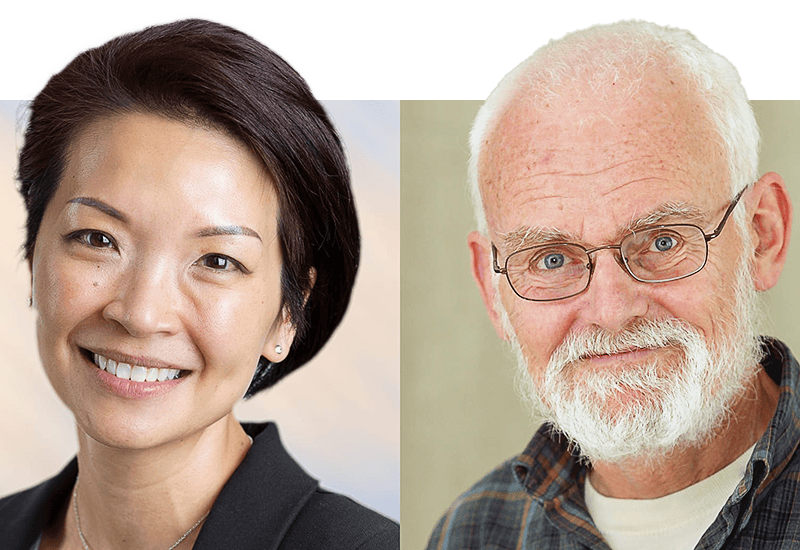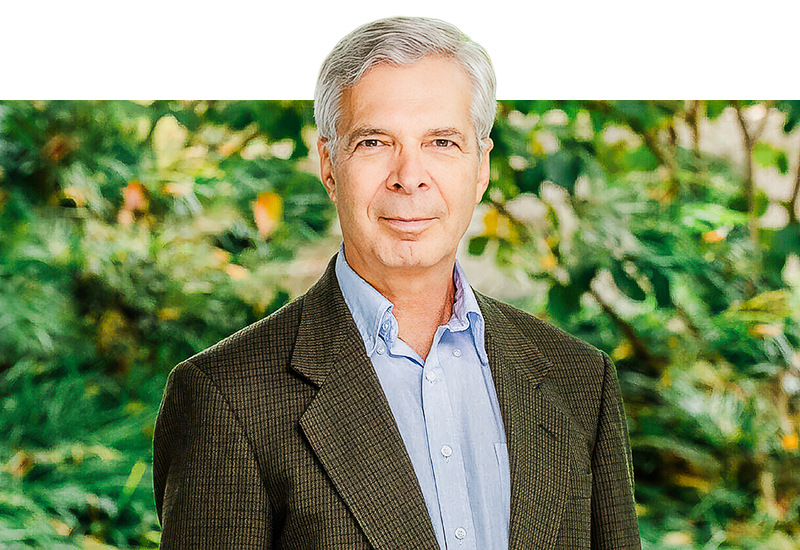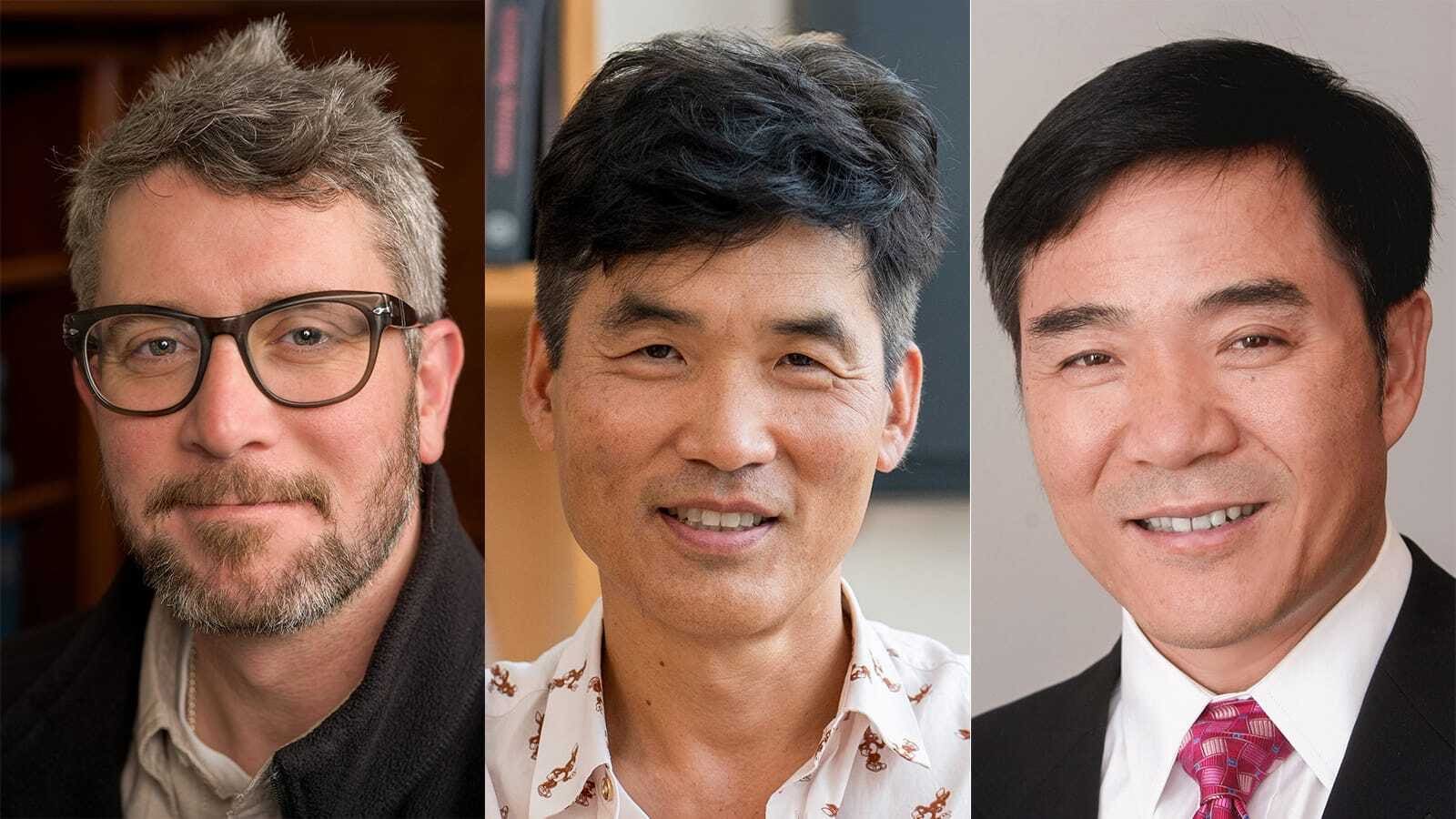
The National Academy of Sciences has elected three Princeton Engineering professors as members this year: Cliff Brangwynne, Jianqing Fan and Sebastian Seung. They are among eight Princeton faculty elected, the largest number from the University in at least a century.
These eight professors are among the 120 new members and 25 international members chosen in recognition of their distinguished and continuing achievements in original research, according to the academy’s announcement.
Membership in the academy is one of the highest honors given to a scientist or engineer in the United States. Established in 1863, the academy now has 2,705 active members and 557 international members, who are nonvoting members of the academy with citizenship outside the United States.
Brangwynne is Princeton’s June K. Wu ’92 Professor of Chemical and Biological Engineering and the director of the Omenn-Darling Bioengineering Institute.
Brangwynne’s research focuses on teasing apart the fundamental principles behind biological organization, particularly the membraneless organelles that form inside living cells. Despite having no surrounding cell walls, these tiny condensates contain RNA, proteins and complex processing bodies. His research team is also engineering entirely new kinds of intracellular organelles for biomedical applications. Brangwynne joined the Princeton faculty in 2011. He is also a Howard Hughes Medical Institute investigator and the co-director of the seven-week summer physiology course at the Marine Biological Laboratory. He holds a Ph.D. from Harvard University and a B.S. from Carnegie Mellon University.
Fan is Princeton’s Frederick L. Moore, Class of 1918, Professor in Finance and a professor of operations research and financial engineering.
Fan’s research includes statistics, financial econometrics, computational biology and artificial intelligence. One of the most highly cited data scientists in the world, he has co-authored four highly regarded books and monographs: “Local Polynomial Modelling and Its Applications” (1996), “Nonlinear Time Series: Nonparametric and Parametric Methods” (2003), “The Elements of Financial Econometrics” (2015), and “Statistical Foundations of Data Science” (2020). Fan came to Princeton in 2003. He holds a Ph.D. from the University of California-Berkeley, a master’s degree in probability and statistics from the Chinese Academy of Sciences, and a B.S. from Fudan University.
Seung is Princeton’s Anthony B. Evnin Professor in Neuroscience and a professor of computer science.
Seung, a pioneering neuroscientist and computer scientist, has been called a cartographer of the brain. He spent more than a decade building the tools to map the branches and connections between neurons in the brain. He and his collaborators have completed maps of an entire fruit fly brain and a cubic millimeter of mouse brain. Using these hyper-precise wiring diagrams, his team is making rapid strides into understanding and predicting brain function and development. His book “Connectome: How the Brain’s Wiring Makes Us Who We Are,” published in 2012, been translated into more than 25 languages. He joined the Princeton faculty in 2014. He holds a bachelor’s degree and a Ph.D. from Harvard University.
The other new members from Princeton are:
Chris Chang, the Edward and Virginia Taylor Professor of Bioorganic Chemistry.
Maria Chudnovsky, a professor of mathematics and the Program in Applied and Computational Mathematics.
Sabine Kastner, a professor of psychology and neuroscience and the scientific lead of the human neuroimaging facilities in Princeton’s Scully Center for the Neuroscience of Mind and Behavior.
Daniel Sigman, Princeton’s Dusenbury Professor of Geological and Geophysical Sciences.
Christopher Skinner, a professor of mathematics and the current chair of the Department of Mathematics.