Search results for: “♊ близнецы гороскоп на сегодня ❰гороскоп на сегодня близнецы❱♊-bit.ly/Gemini-serodnya”
-

Barton Gellman deletes his account
To kick off our second season, we’re honored to welcome Barton Gellman, Princeton Class of 1982.
-
Episode 6: Dance Me to the End
We wrap up this oral history podcast with a look at a collaboration between engineers and dancers; and, we tell a story about how a computer musician got a late night call from Stevie Wonder to talk shop, and in the process may have changed the way the music legend thought about digital voice synthesis.
-
Episode 1: Serial(ism)
This episode is the story of what happened when a Princeton composer, who was inspired to create some of the most challenging music ever written, decided it could be most reliably performed by a machine.
-

Why YouTube review videos are often really paid ads (and how you can tell the difference): Michael Swart, Princeton Class of 2019
Our guest on "Cookies" today, Michael Swart, says a lot of YouTube review videos are practically paid commercials without even telling you. And he has a way to tell the difference.
-
A.I. Platforms in Action: Understanding Azure OpenAI, AWS Bedrock, and GCP Gemini A.I.
This presentation will delve into the capabilities, integrations, and research applications of these cutting-edge platforms, providing you with the insights needed to leverage their potential for your next groundbreaking project. This workshop is for researchers and students at Princeton.
-

Those pesky privacy policies: Lorrie Cranor
Does anyone actually read privacy policies? What’s in them, and why can’t we usually understand them?
-
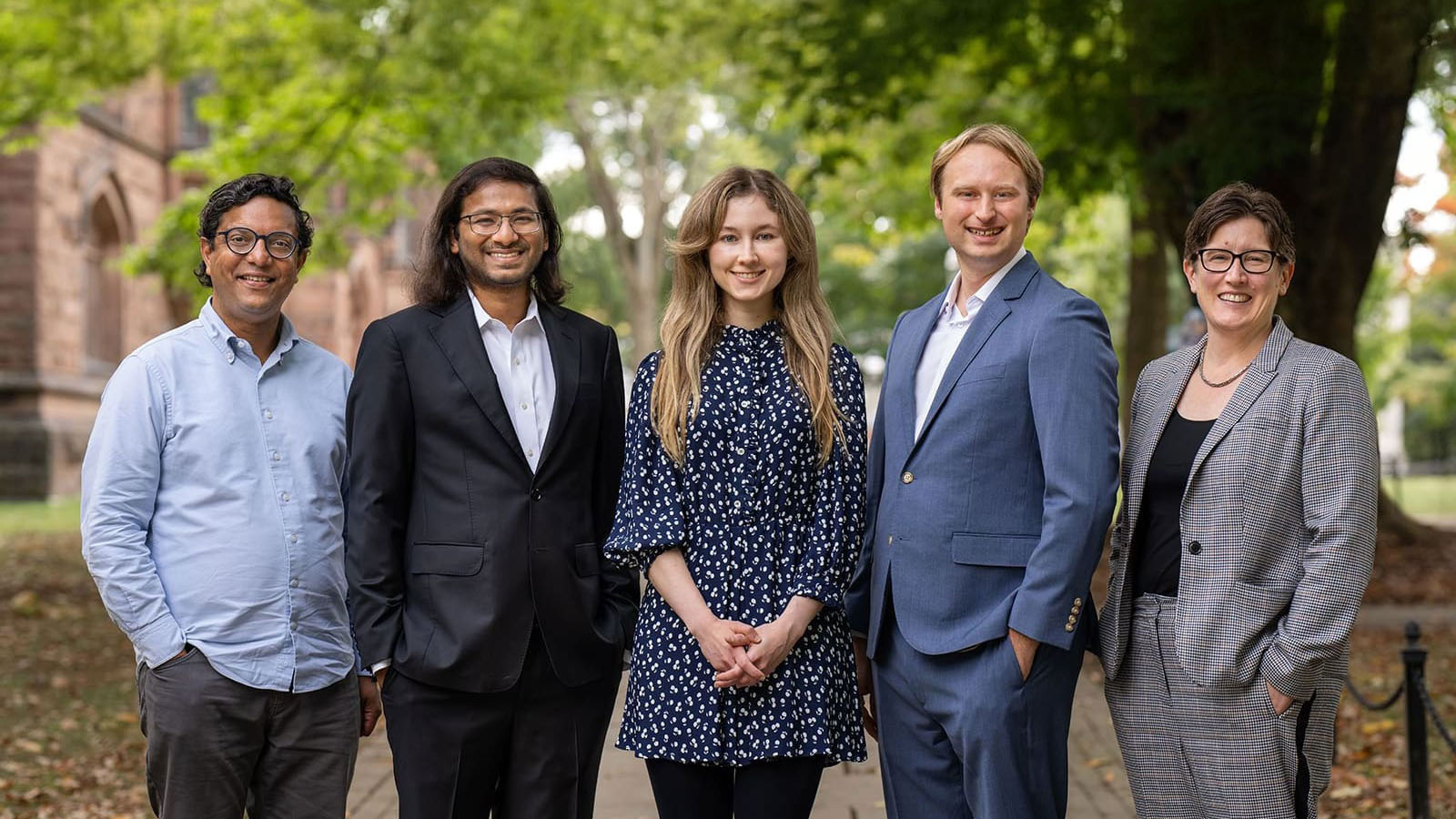
Internet researchers reach beyond academia to close major security loophole
Researchers showed that bad actors could easily sidestep protections to obtain a fraudulent certificate for a website they do not legitimately control.
-

Episode 1: How Consumer Tech Can Manipulate You (and Take Your Data)
While we’re using electronic gadgets, apps, platforms and websites, they are often using us as well, including tracking our personal data. The premiere episode of our new podcast features Arvind Narayanan, associate professor of computer science here at the Princeton University School of Engineering and Applied Science.
-
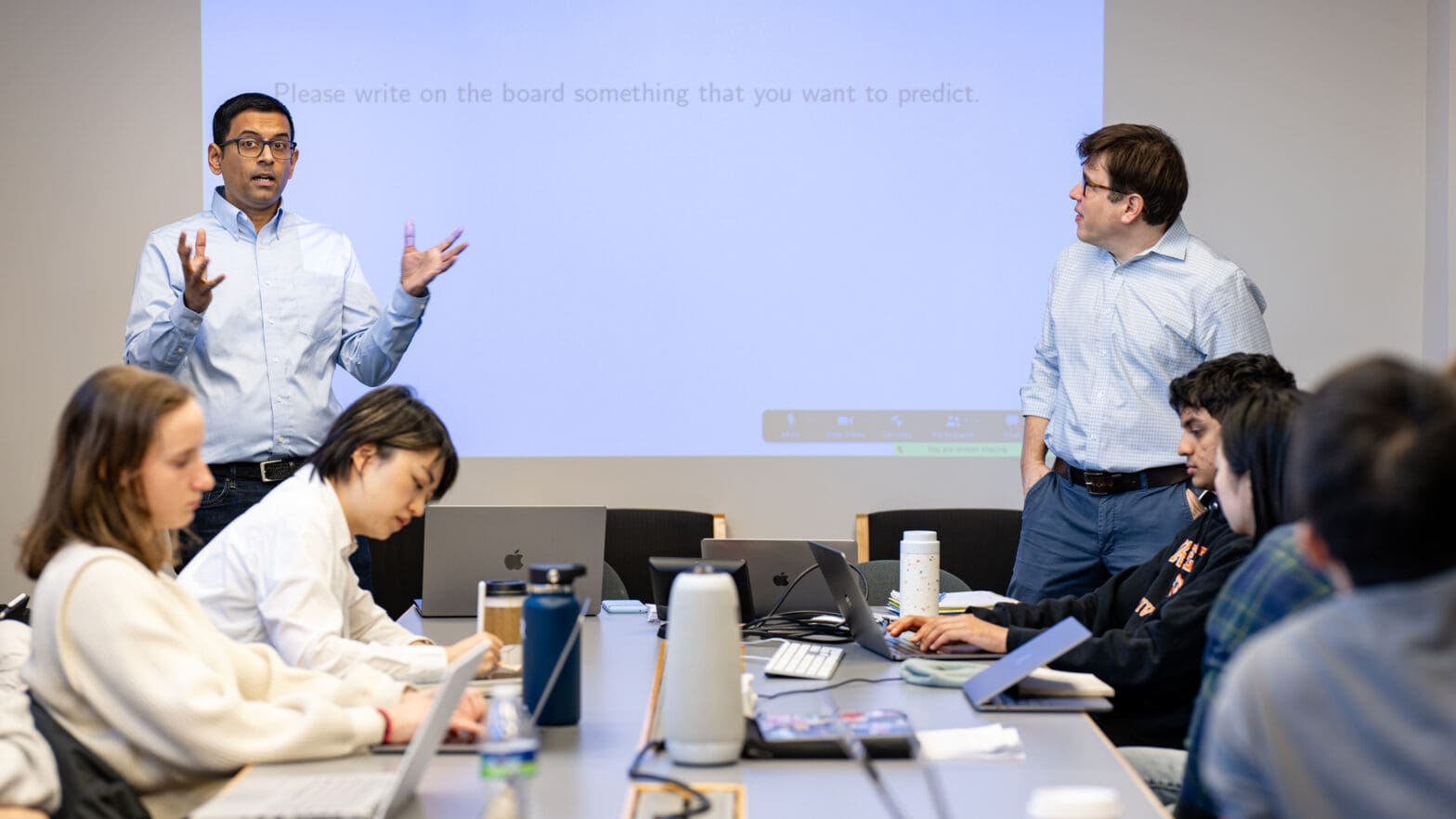
Arvind Narayanan and Matthew Salganik, professor of sociology, teach a course for graduate students on “Limits to Prediction.” The course offers tools for critical examination of artificial intelligence and other prediction methods in various areas. Photos by Sameer Khan/Fotobuddy Is AI too dangerous to release openly?
In short, we don’t think policymakers should be rushing to put AI back in the bottle, although the reasons for our recommendation are slightly different for language models versus other kinds of generative AI models.
-
Cool move: 300-ton Chinese stone carving likely transported on ice
Researchers at Princeton and in Beijing have used engineering calculations to determine how ancient workers moved an enormous block of stone to the Forbidden City where it became the palace’s iconic Large Stone Carving.