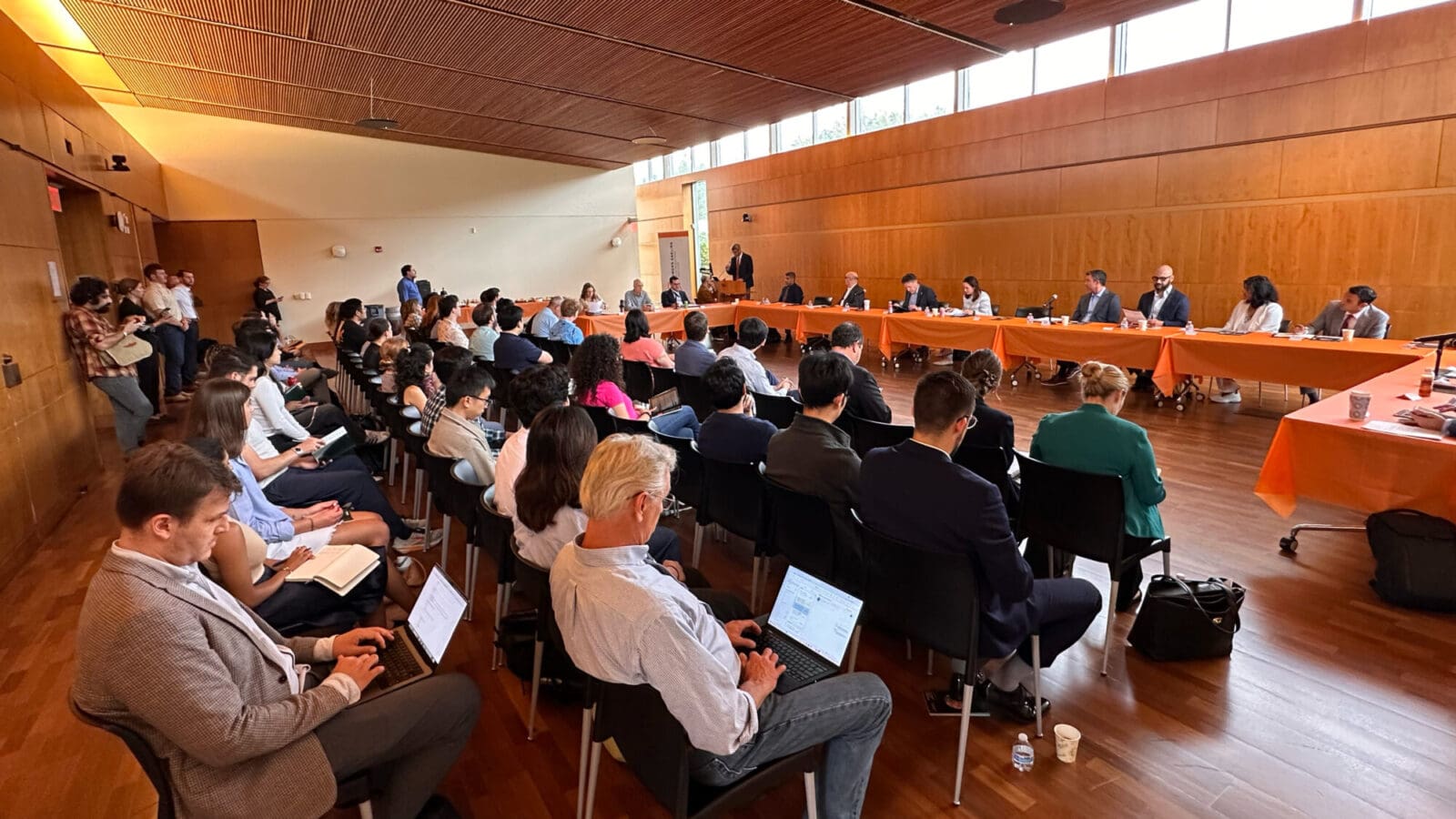
Harnessing artificial intelligence to solve problems in human health requires closer collaboration between researchers and the government, according to lawmakers and experts, who met at Princeton University on August 1.
Cliff Brangwynne, director of Princeton’s Omenn-Darling Bioengineering Institute, said the technology is speeding ahead, highlighting the need for coordination.
“The future of bioengineering technologies is not coming quickly — it’s here,” said Brangwynne, Princeton’s June K. Wu ’92 Professor of Chemical and Biological Engineering.
In roundtable discussions, U.S. Representative Herb Conaway, of New Jersey, and New Jersey state Senator Andrew Zwicker outlined steps to improve the connections between academia and government. The lawmakers suggested that early-career scientists should work directly with legislators on biotech policy updates.
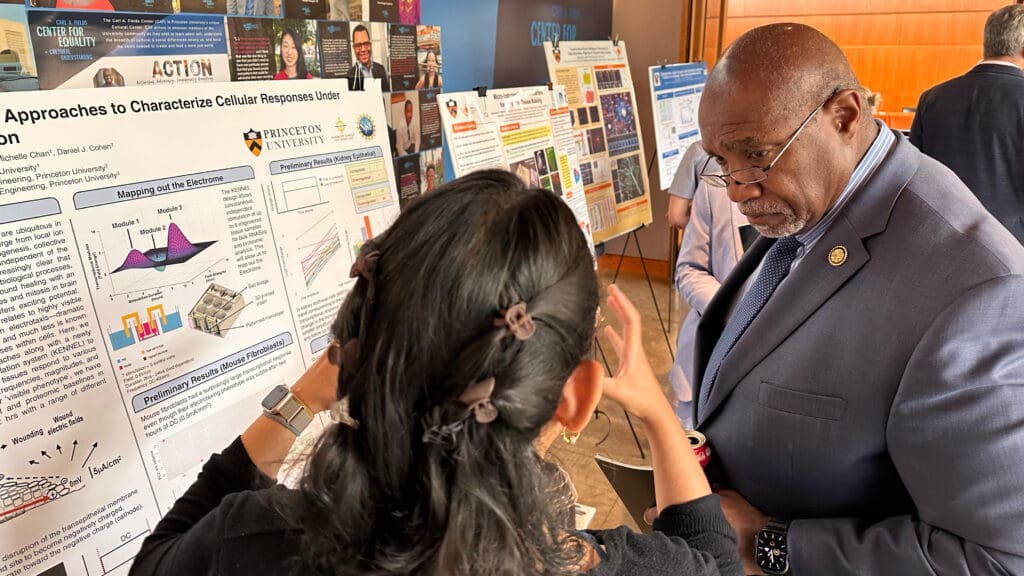
The Princeton conference was organized by the National Security Commission on Emerging Biotechnology (NSCEB), which was created by Congress to make recommendations on biotechnology and associated industries. After delivering a report to Congress in April, Commission representatives are meeting with technology leaders across the country.
“New Jersey is poised to be a national leader not only in innovation, but also in building our biomanufacturing capacity and educating the next generation of our biotechnology workforce,” Michelle Rozo, vice chair of the Commission said in a statement.
Students need a strong understanding of how to translate research into practical solutions, according to Brangwynne. Princeton requires bioengineering Ph.D. students to study innovation and entrepreneurship as part of its curriculum.
The NSCEB is a bipartisan legislative branch advisory group composed of members of the U.S. Senate and House of Representatives and experts from government, industry and academia. BioNJ and New Jersey-based Amicus Therapeutics were co-organizers of the event, along with the Omenn-Darling Bioengineering Institute and NSCEB. Sarah Glaven, visiting fellow at the Andlinger Center for Energy and the Environment at Princeton, and Paul Howard, executive director, Policy and Patient Experience Innovation at Amicus, co-moderated the discussion. The full list of participating organizations is listed in the NSCEB’s press release.