From water desalination to waste recovery, countless industrial processes rely on separating charged molecules, known as ions, from water.
Yet for many complex waste streams and environments, the conventional approaches to ion separations remain too costly and inefficient for widespread deployment, leaving potentially valuable ions to flow away.
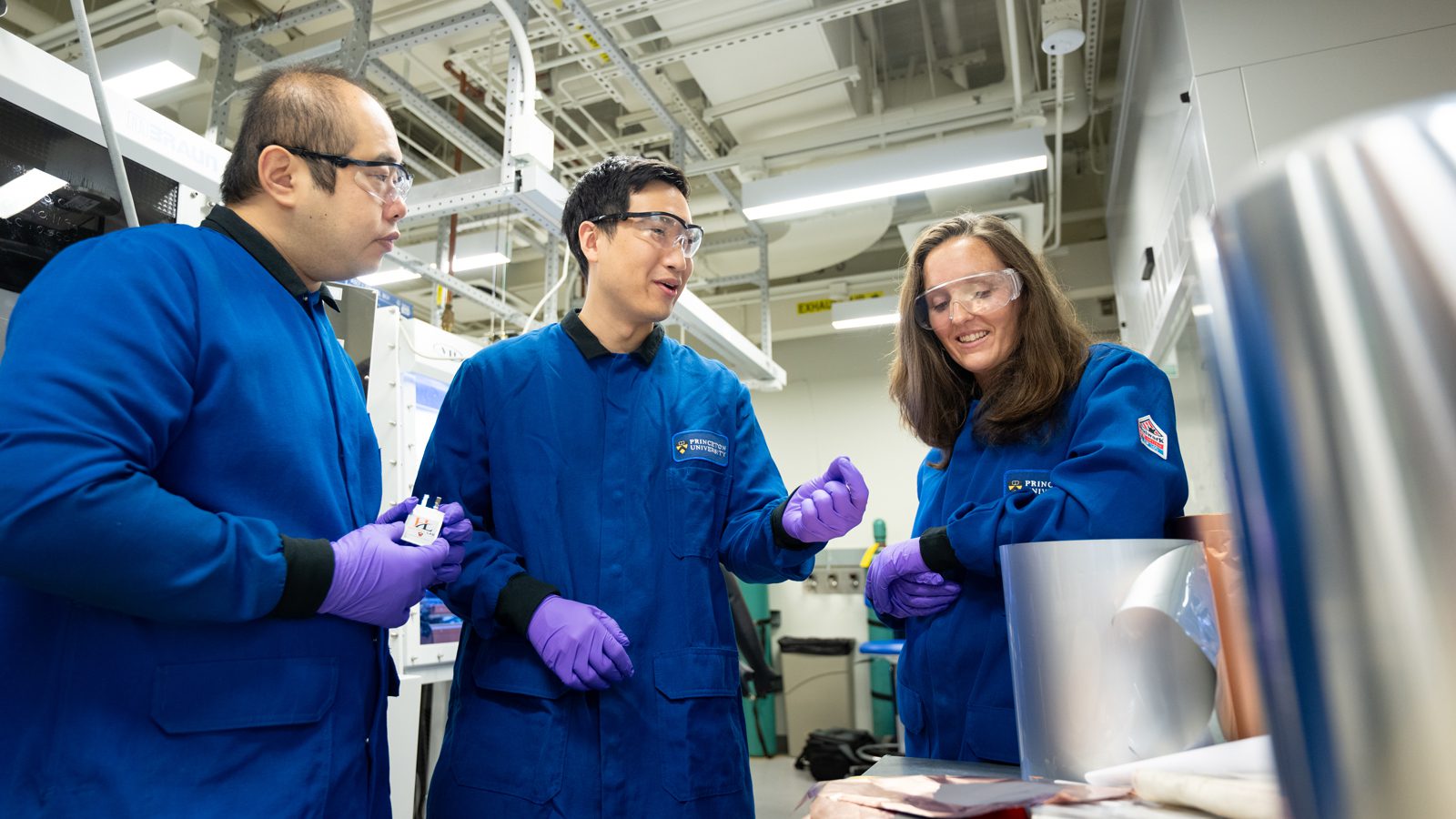
Researchers in the lab of Kelsey Hatzell, an associate professor of mechanical and aerospace engineering and the Andlinger Center for Energy and the Environment, are demonstrating how membranes made from next-generation materials called MXenes (pronounced Maxines), a class of water-loving, single-layer materials with high electrical conductivity, show promise when separating ions and other compounds from complex solutions.
In a series of papers, the researchers documented the performance of MXene membranes under solutions that mimic real-world separation environments. They also illustrated how the researchers can fine tune the membranes’ properties and performance by adjusting their structure at microscopic scales.
“MXenes are relatively new materials, and one thing that always happens with new materials is figuring out what they’re best at,” said Hatzell. “And because they are electrically conducting and hydrophilic, there are a ton of potential applications that researchers are really only beginning to explore.”
The papers result from Hatzell’s involvement with the Advanced Materials for Energy-Water Systems (AMEWS) Center, an Energy Frontier Research Center funded by the U.S. Department of Energy that seeks to understand and control interactions at water/solid interfaces. AMEWS is a partnership between researchers at Argonne National Laboratory, the University of Chicago, Northwestern University, and Princeton.
Separations slows in solutions with multiple types of ions
In one paper, researchers led by Hatzell investigated the performance of MXene membranes in solutions with more than one ion, more closely resembling the complex, multi-ion conditions under which they will eventually operate.
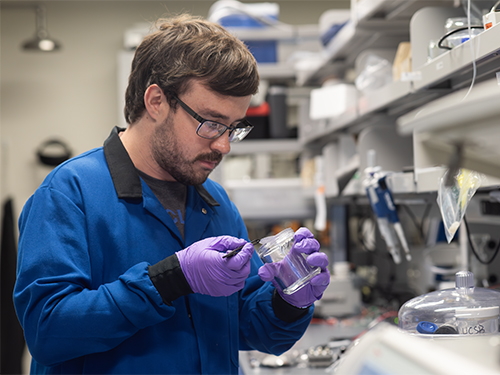
“In the real world, you’re going to be separating ions from pretty complex environments, like sea water or brine,” said Austin Booth, graduate student in chemical and biological engineering and first author of the study. “But most research has looked at separating one ion at a time, and it can be difficult to translate those results to complex ion solutions.”
The team compared how sodium, lithium, and calcium ions traveled through the tiny channels in the membrane by themselves and when they were in solutions with one another.
In nearly every case, the ions moved slower through the membranes in multi-ion solutions than they did alone, signaling that the ions in these complex solutions were in direct competition.
For example, calcium ions — which are larger and more positively charged than sodium and lithium — preferentially occupied the membranes’ channels, essentially blocking the passage of the other two, smaller ions. Similarly, when sodium and lithium ions were in the same solution, the sodium ions obstructed the passage of lithium.
“Our findings can help inform new membrane designs that are more effective at filtering one or another ion from a complex solution,” said Booth. “At the same time, [this study] also underscores the importance of measuring membranes in more realistic conditions to understand how they might perform in real-world applications.”
Small adjustments improve membranes’ performance
The researchers also altered the membranes’ structures to improve performance.
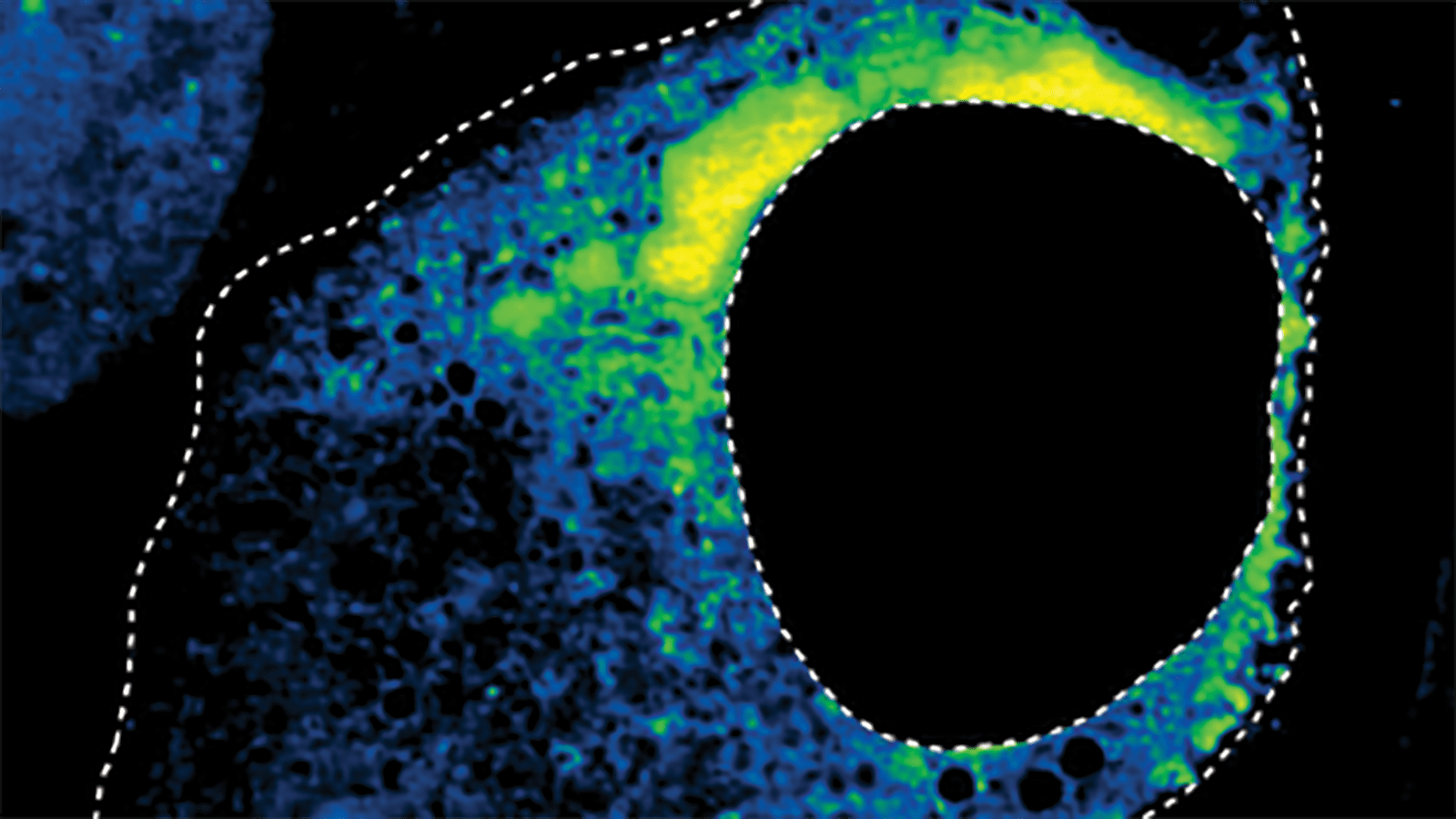
In a second paper, the team added cesium ions between the layers of the MXene membranes to change the amount of water present in the membrane. Cesium ions interfere with the weak forces that keep nearby water molecules close together, so by adding cesium, the researchers lowered the membrane’s water content. With less water, the membrane had narrowerchannels and fewer defects, ultimately yielding higher selectivity for ions such as lithium.
“We demonstrated that water isn’t this inert part of the system,” said Yaguang Zhu, a postdoctoral researcher in Hatzell’s group. “Instead, the presence and amount of water in the membrane can change its structures in ways that completely change its performance.”
Zhu said the research suggests that ions like cesium could be a powerful yet previously overlooked tool to tailor the structure of these MXene membranes for specific tasks.
“Using cesium to control the amount of water, we demonstrated that we can achieve both micron- and molecular scale control over the structure of these MXene membranes,” said Zhu. “With different levels of water content, we can clearly see a different membrane structure, nanochannel structure, and different ion permeability and selectivity.”
Techniques for the next generation of separations materials
Both studies provide insight into strategies for controlling the structure of MXene membranes, the researchers said. Their results also highlight how the micro- and mesoscale properties of membranes can have dramatic implications on their performance and ion selectivity, even though these properties are less well-studied than macro-level phenomena.
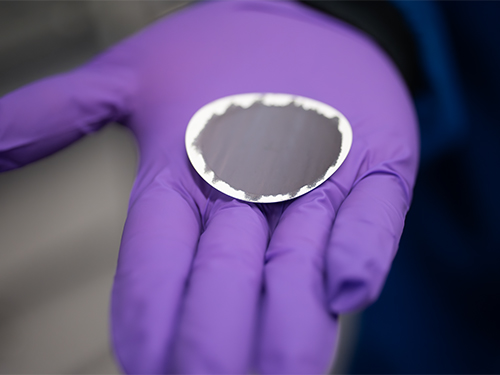
“Most of membrane science focuses on bulk properties and performance metrics, but when you want to design materials for more exotic environments or more complex waste streams, then the local microenvironment of the membrane drives a lot of the separations process,” said Hatzell. “In this way, I think the separations community can borrow many of the advanced characterization techniques that have unlocked advances in other fields, like energy storage and batteries.”
In a recent perspective, Zhu, Booth, Hatzell, and their AMEWS co-authors reviewed characterization techniques that could help answer questions about the performance and properties of membranes at different length scales. While many of those techniques might be transplanted from other fields, such as Hatzell’s own signature field of batteries, some questions will require the development of new approaches from researchers — such as those at AMEWS — to answer.
“AMEWS has been a great opportunity to have a critical review of the questions that we’re asking, and also to have access to many multidisciplinary collaborations,” Hatzell said. “We’ve been able to work with world-class researchers to answer some very important questions that will allow us all to bring the field another step forward.”
The paper, “Coordinated cation transport in Ti3C2Tx MXene membranes,” was published June 2025 in ACS Applied Materials & Interfaces. In addition to Hatzell and Booth, authors include Qinsi Xiong, Woo Cheol Jeon, and George Schatz of Northwestern University.
The paper, “Water content modulation enables selective ion transport in 2D MXene membranes,” was published July 2025 in the Proceedings of the National Academy of Sciences. In addition to Hatzell and Zhu, authors include Qinsi Xiong, Woo Cheol Jeon, and George Schatz of Northwestern University; Monika Blum of Lawrence Berkeley National Laboratory; and Fernando Camino of Brookhaven National Laboratory.
The perspective, “From molecules to modules: Advanced characterization of membrane systems,” was published September 2025 in Advanced Materials. In addition to Hatzell, Zhu, and Booth, authors include Jamila Eatman, Min A Kim, Yining Liu, and Seth Darling of the University of Chicago and Argonne National Laboratory; Bidushi Sarkar, Xiaolin Yue, Chibueze Amanchukwu, and Chong Liu of the University of Chicago; Bratin Sengupta of Northwestern University and Argonne National Laboratory; and Jeffrey Elam and Paul Fenter of Argonne National Laboratory.
The work was supported by the Advanced Materials for Energy-Water Systems Center, an Energy Frontier Research Center funded by the US Department of Energy.