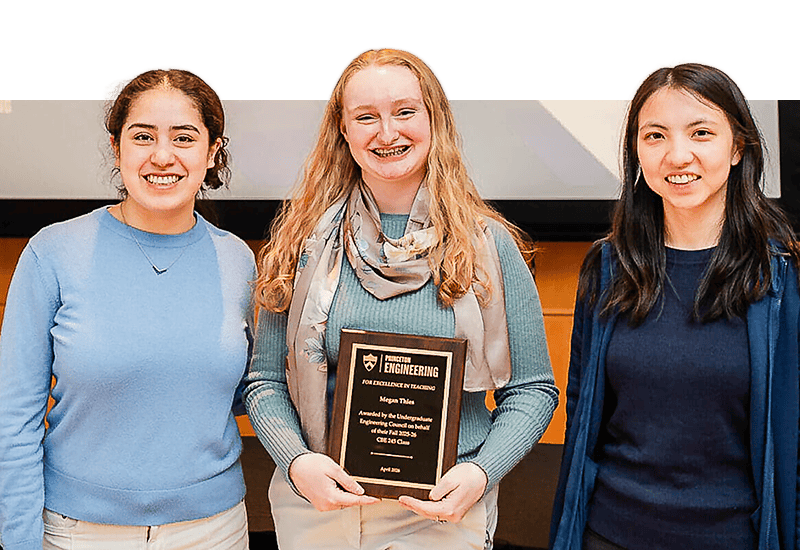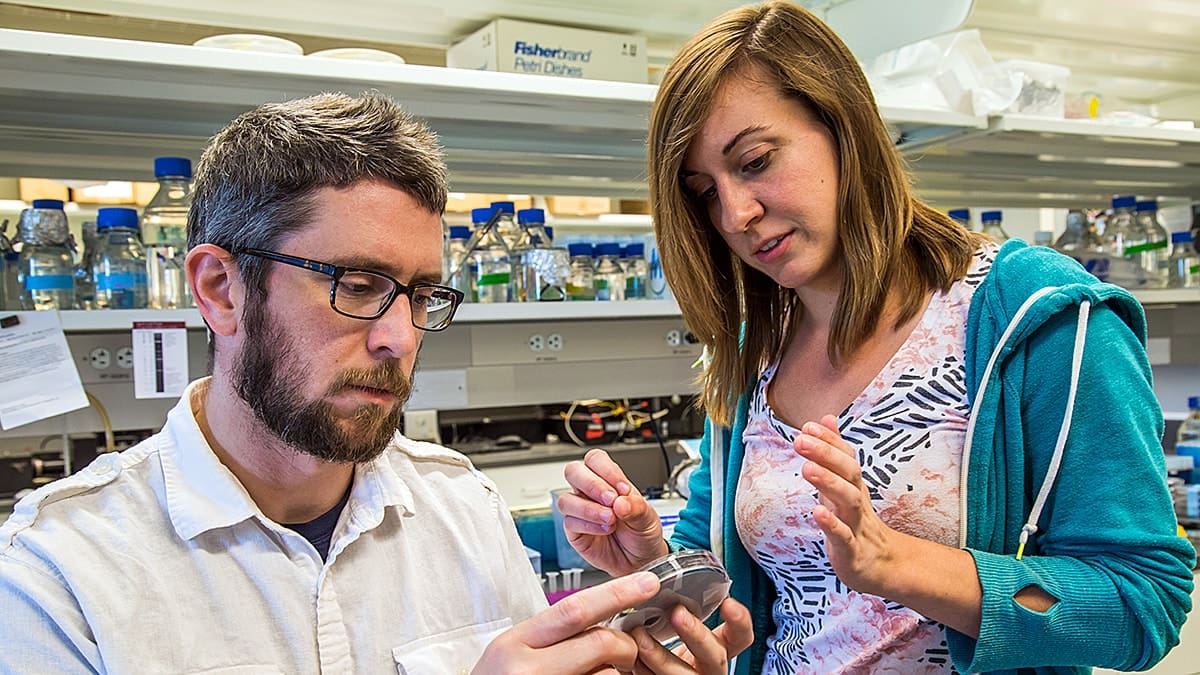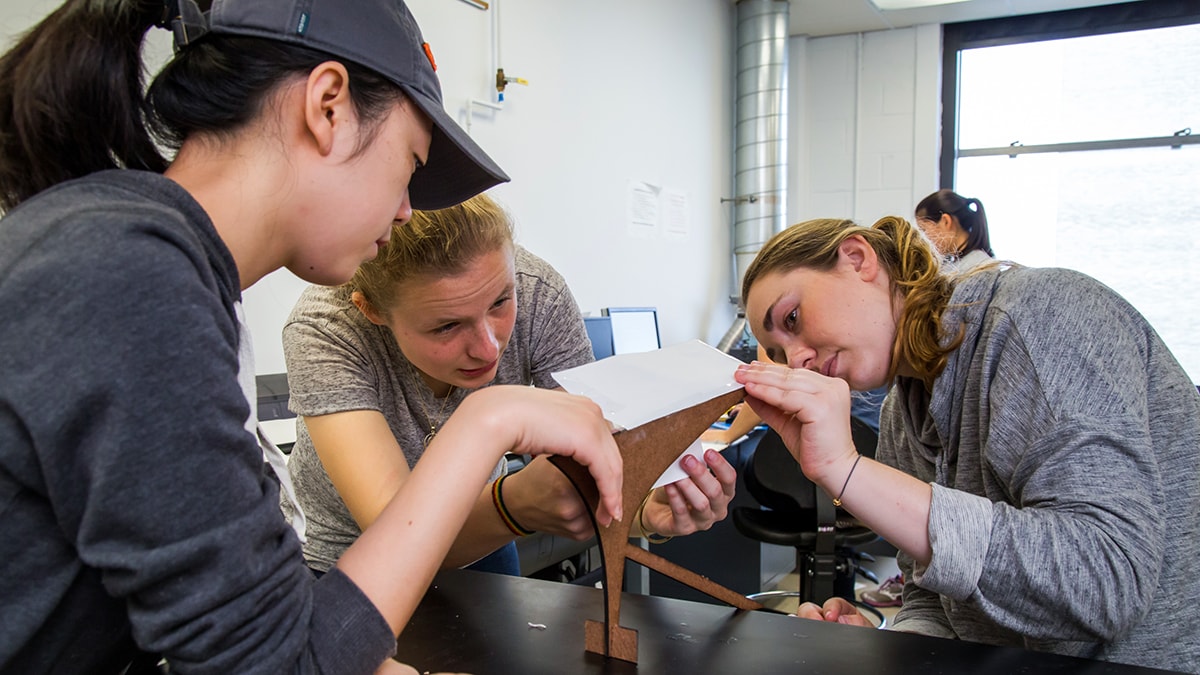
The School of Engineering and Applied Science has recognized six assistant professors for outstanding teaching and research. Each recipient of the 2026 junior faculty awards will receive $50,000 to support their work.
E. Lawrence Keyes, Jr./Emerson Electric Co. Faculty Advancement Award
Ryne Beeson
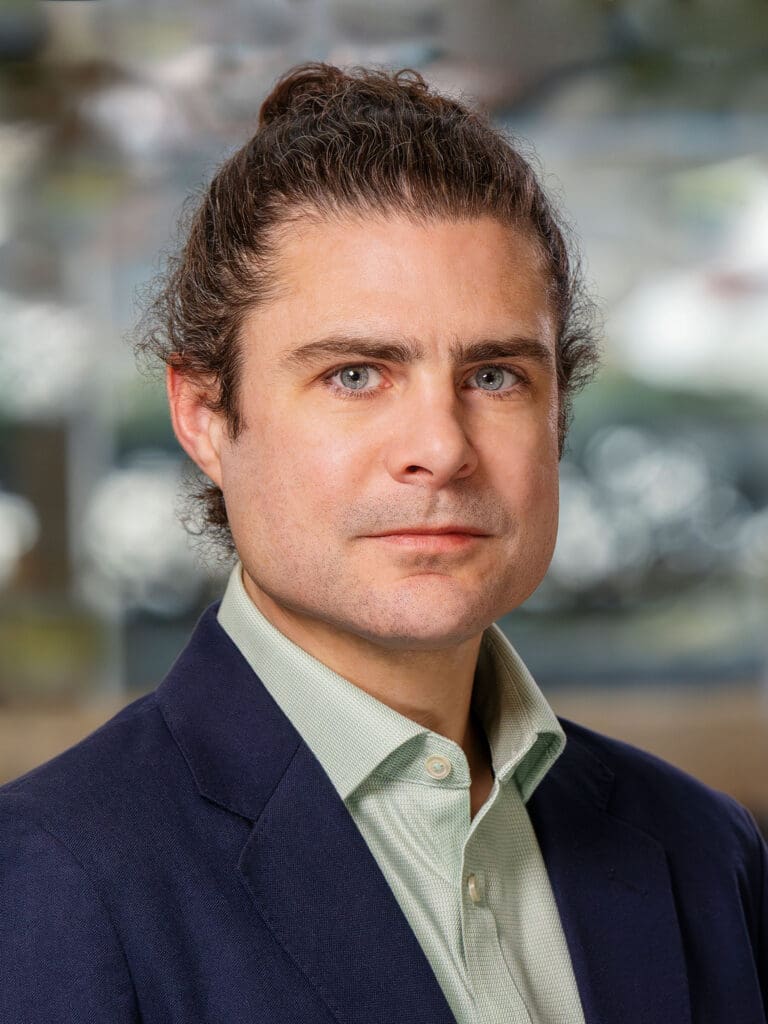
Ryne Beeson, assistant professor of mechanical and aerospace engineering, focuses on applied and computational mathematics with an emphasis on data assimilation, optimal control, and dynamical systems. He applies these techniques to spacecraft trajectory control and optimization, space situational and domain awareness, and estimation and inverse methods for earth and space science. His recent contributions include the development of robust low-thrust trajectories for long-duration space missions, and the mitigation of lunar orbital debris. Michael Mueller, acting chair of mechanical and aerospace engineering, said Beeson has recently published “a seminal paper outlining existing policies, which are very few, and the policy needs to address the dynamics of the Earth-Moon system and ensure safe travel and lunar proximity operations.” Beeson has also made important contributions in teaching, including revitalizing the department’s capstone space systems design course. He is leading the engineering school’s new Space Engineering, Technology, and Policy Cluster of Excellence. Beeson earned a Ph.D. from the University of Illinois at Urbana-Champaign. He joined Princeton in 2021.
Alex Lombardi
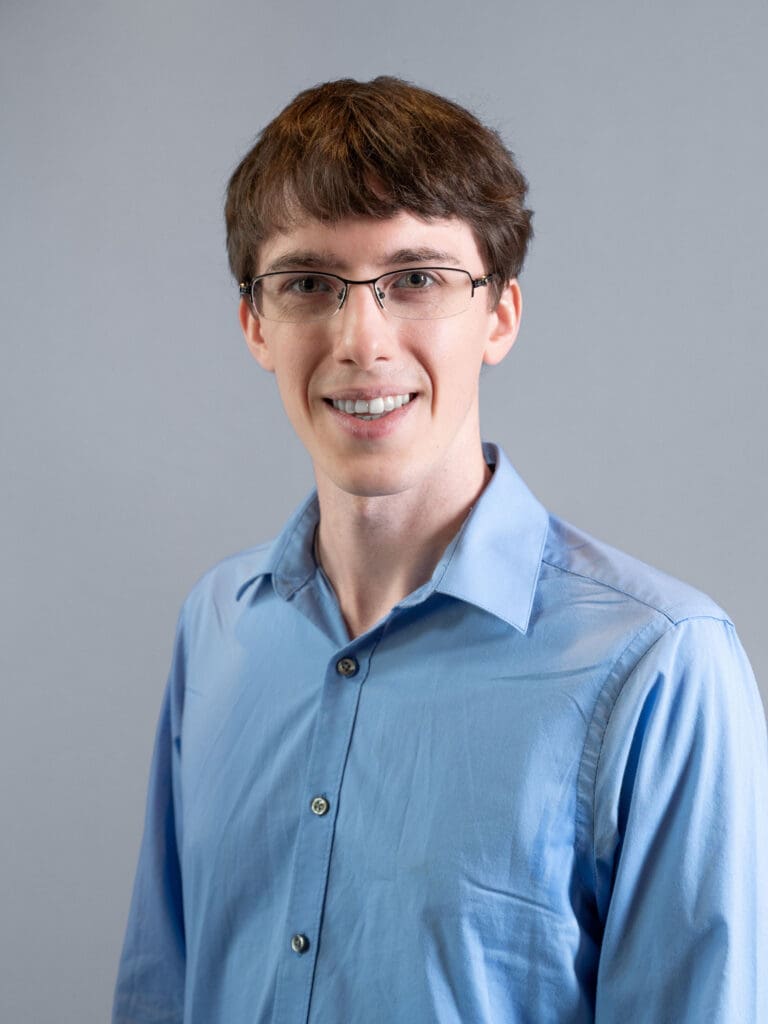
An assistant professor of computer science, Alex Lombardi focuses on the theory and foundations of classical and quantum cryptography. Cryptography and codebreaking were foundational to computer science and predate the founding of the discipline. Lombardi’s work focuses on a relatively new frontier in cryptography — how quantum computers change cryptographic capabilities. Lombardi is developing approaches to post-quantum computing to ensure security, primarily by providing proofs of identity and validity, rather than encoding messages and data. Szymon Rusinkiewicz, chair of computer science, said Lombardi “offers truly unique, complementary, and invaluable expertise in terms of his applications of theory to the important and ever-changing field of cryptography.” Lombardi is also an accomplished teacher, and a graduate seminar he led on cryptographic proof systems earned a commendation for outstanding teaching from the engineering school in fall 2025. Lombardi earned his Ph.D. from MIT and spent a year as a Simons-Berkeley postdoctoral fellow at the University of California-Berkeley. He joined Princeton in 2023.
Saien Xie
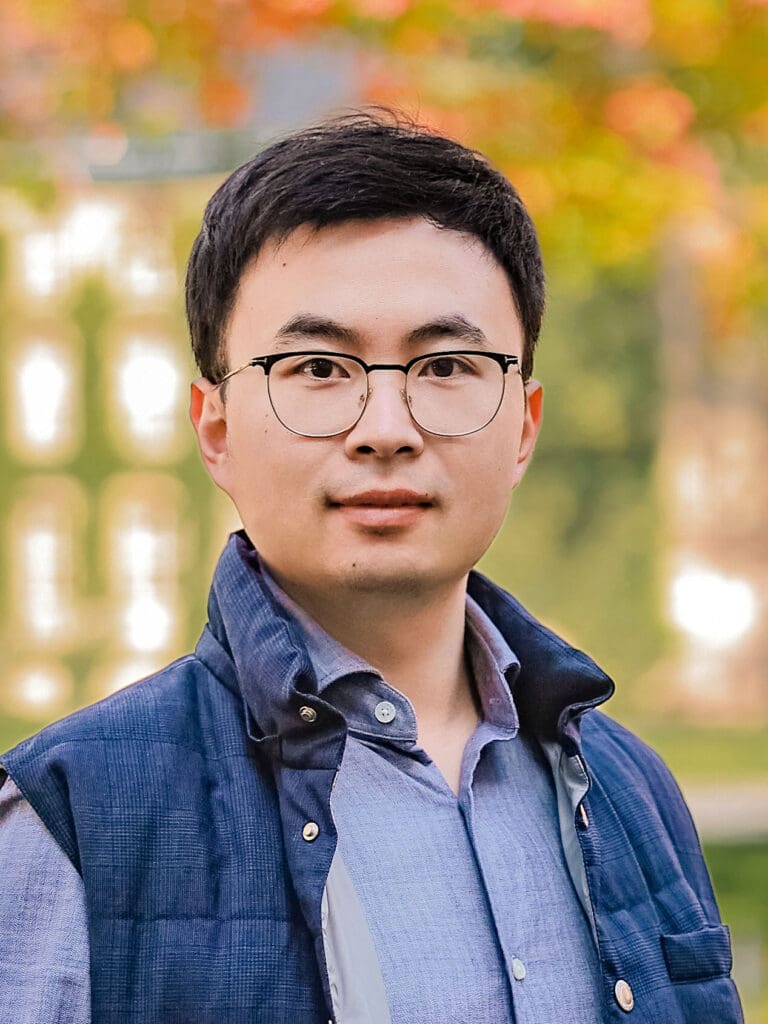
Saien Xie, assistant professor of electrical and computer engineering and the Princeton Materials Institute, focuses on the physics and materials science of extremely thin semiconductors with properties that enable advanced form and function. Since arriving in 2022, Xie “has successfully set up a world-class laboratory with great breadth, that commands the entire stack, from materials science to small subsystems,” said Claire Gmachl, chair of electrical and computer engineering. That stack includes methods for creating the materials Xie studies, the integration of those materials into advanced electronic devices, and the development of hybrid devices that have exotic functionality, such as a large-area logic device that can be programmed with light. Xie has taught two courses covering solid-state electronic devices and advanced fabrication processes, and he developed a third on solid-state materials that has become a core course for Princeton’s new materials science Ph.D. program. He won a Packard Fellowship for Science and Engineering in 2024. He earned a Ph.D. from Cornell University.
Howard B. Wentz, Jr. Junior Faculty Award
Parastoo Abtahi
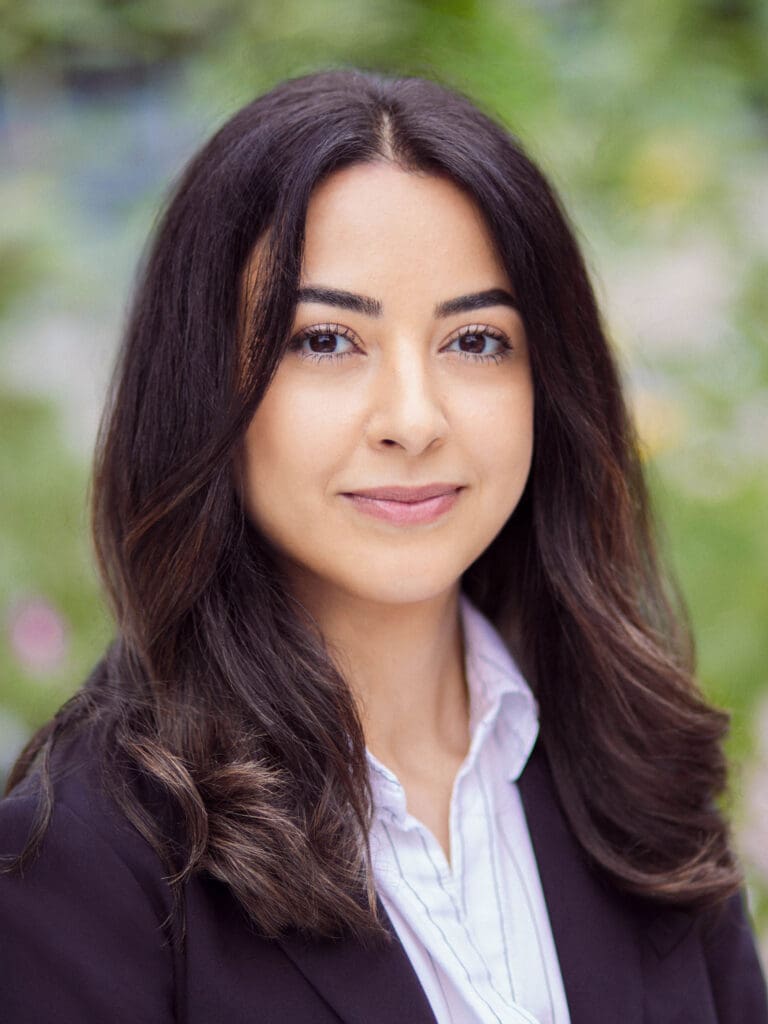
Parastoo Abtahi, assistant professor of computer science, is an expert in human-computer interaction with a specialty in augmented and virtual reality and spatial computing. Her group designs and builds devices that can extend human abilities and intelligence in the physical world. Szymon Rusinkiewicz, chair of computer science, called Abtahi a “star researcher in the field of human-computer interaction” and said her work has “created important intellectual and cultural shifts for the students in our department.” Abtahi was recognized with the 2025 ACM Conference User Interface Systems and Technology Best Paper Award. Abtahi has also made an impact as a teacher, leading several independent work seminars on augmented reality, which have been “met with great enthusiasm and have struck a chord among many Princeton undergraduates,” Rusinkiewicz said. Abtahi completed a Ph.D. at Stanford University and was a visiting research scientist at Meta Reality Labs Research in Toronto. She joined the Princeton faculty in 2023.
Jerelle Joseph
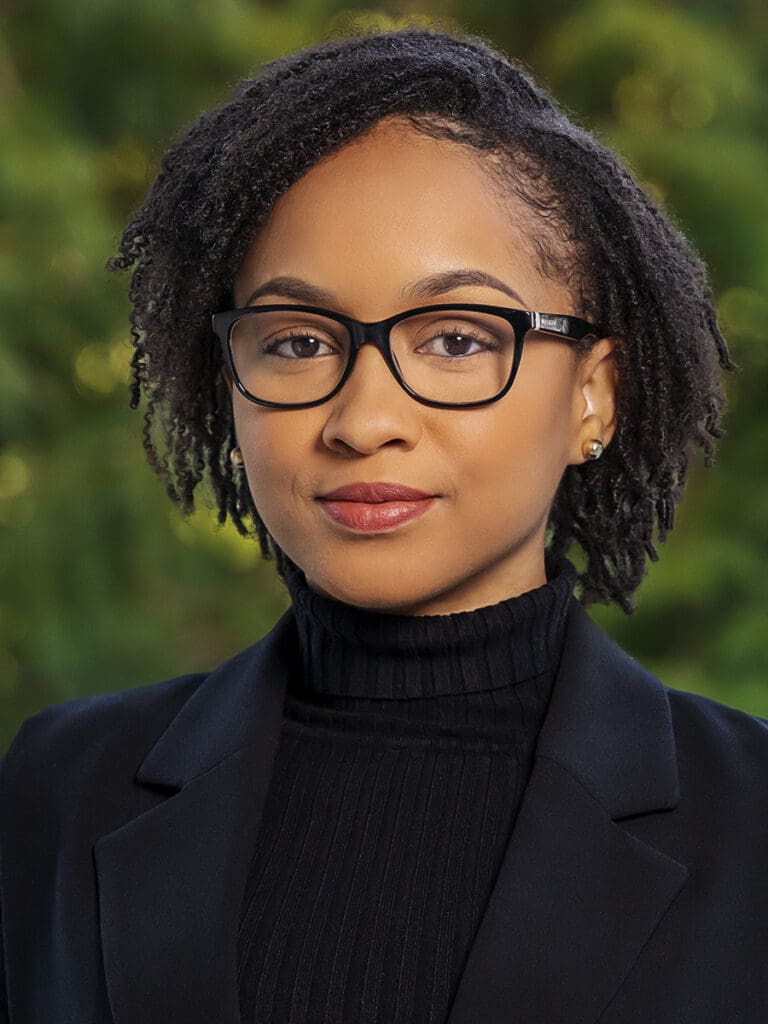
Jerelle Joseph, an assistant professor of chemical and biological engineering and the Omenn-Darling Bioengineering Institute, develops theoretical models and computer simulations to understand the organization of living cells’ interior compartments. Her research also seeks to engineer new cellular functions to address diseases and disorders, especially those linked to a class of cellular compartments without membranes separating them from their cellular environment. These compartments condense from their surroundings into droplets, like oil in water, and have been linked to gene regulation as well as a range of severe health problems. Since arriving at Princeton, Joseph and her group have uncovered key principles governing these biomolecular condensates, from their internal molecular structure to the mechanisms that degrade them over time. Christos Maravelias, chair of chemical and biological engineering, said “her service… to the University, as well as the external engineering and biophysics communities, has been stellar.” Joseph earned a Ph.D. from the University of Cambridge. She joined Princeton in 2023.
Ryan Kingsbury
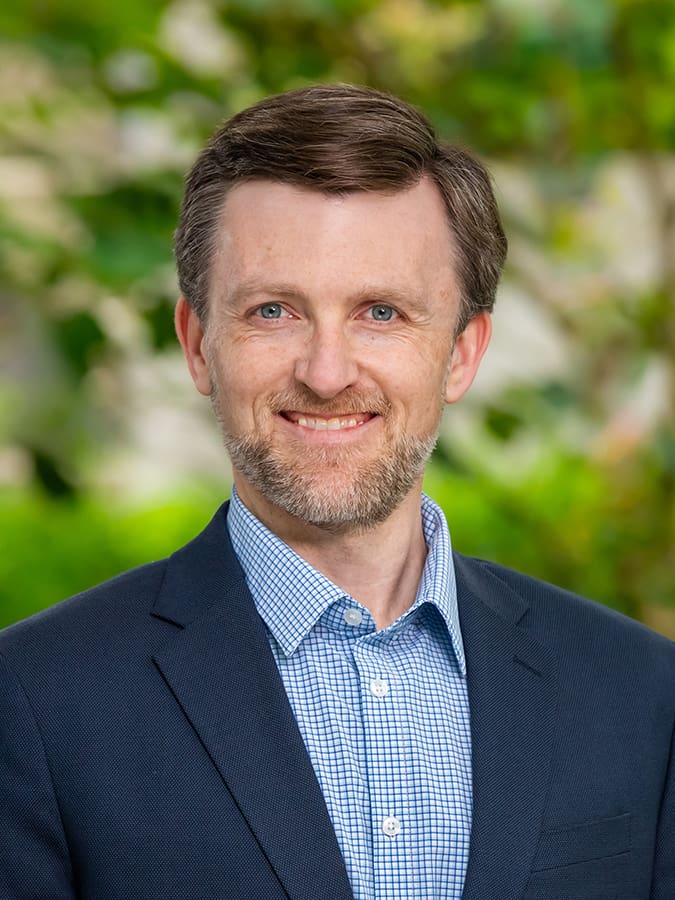
An assistant professor of civil and environmental engineering and the Andlinger Center for Energy and the Environment, Ryan Kingsbury works to develop electrochemical technology to advance the production of clean water and energy. Kingsbury’s research seeks to increase fundamental understanding at the interface of electrochemical separation, computational design and ion-selective material such as membranes and electrodes. Branko Glišić, chair of civil and environmental engineering, noted that in addition to making significant research contributions, Kingsbury has created a new undergraduate design course as well as a graduate-level class on membrane separations that has been cross-listed across the engineering school. He was recognized with a SEAS teaching award in the fall semester. Glišić calls Kingsbury “an exemplary citizen in the department.” He serves as chair of the Andlinger Center’s Early Career Leadership Forum and has been appointed by the governor to the New Jersey Water Supply Advisory Council. Kingsbury received his Ph.D. from the University of North Carolina at Chapel Hill and performed post-doctoral work at the Lawrence Berkeley National Laboratory. He joined the Princeton faculty in 2023.