Search results for: “♊ близнецы гороскоп на сегодня ❰гороскоп на сегодня близнецы❱♊-bit.ly/Gemini-serodnya”
-
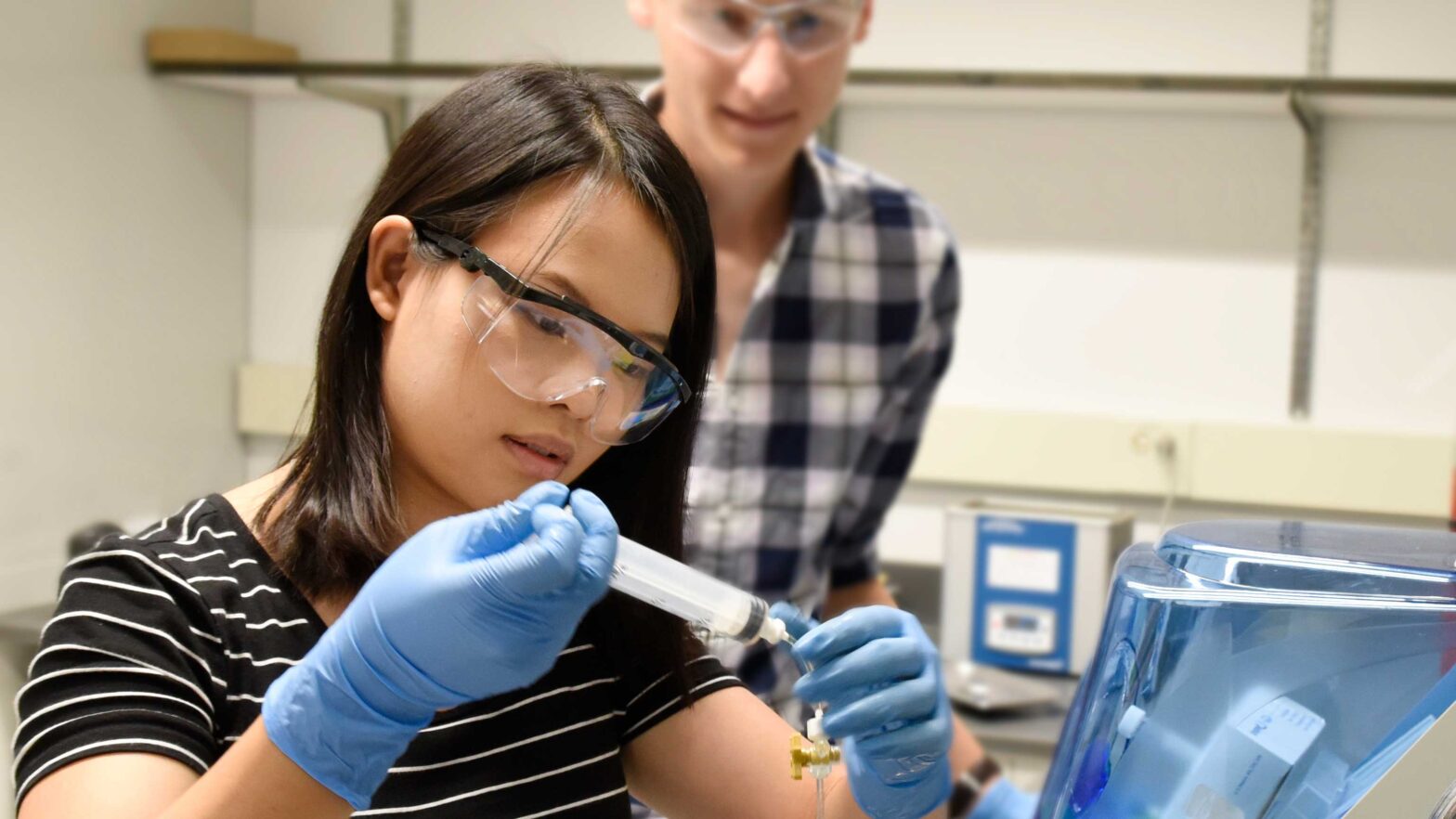
Audrey Shih investigated how specialized materials act to remove pollutants from the porous rock of groundwater aquifers. In this photo from summer 2019, Shih preps a small plastic apparatus containing material that simulates a porous rock environment. Graduate student Christopher Browne, behind, provides guidance. Shih’s 2019 summer research in Sujit Datta’s laboratory was supported by the Andlinger Center for Energy and the Environment. Photo by Bumper DeJesus Senior thesis project probes intricacies of groundwater cleanup
Audrey Shih’s thesis focused on specially formulated chain-like molecules called polymers that can help flush contaminants from hard-to-reach crevices in underground aquifers. How these polymers move through porous rocks to dislodge pollutants – and why they are more effective in some settings than in others – is not well understood.
-
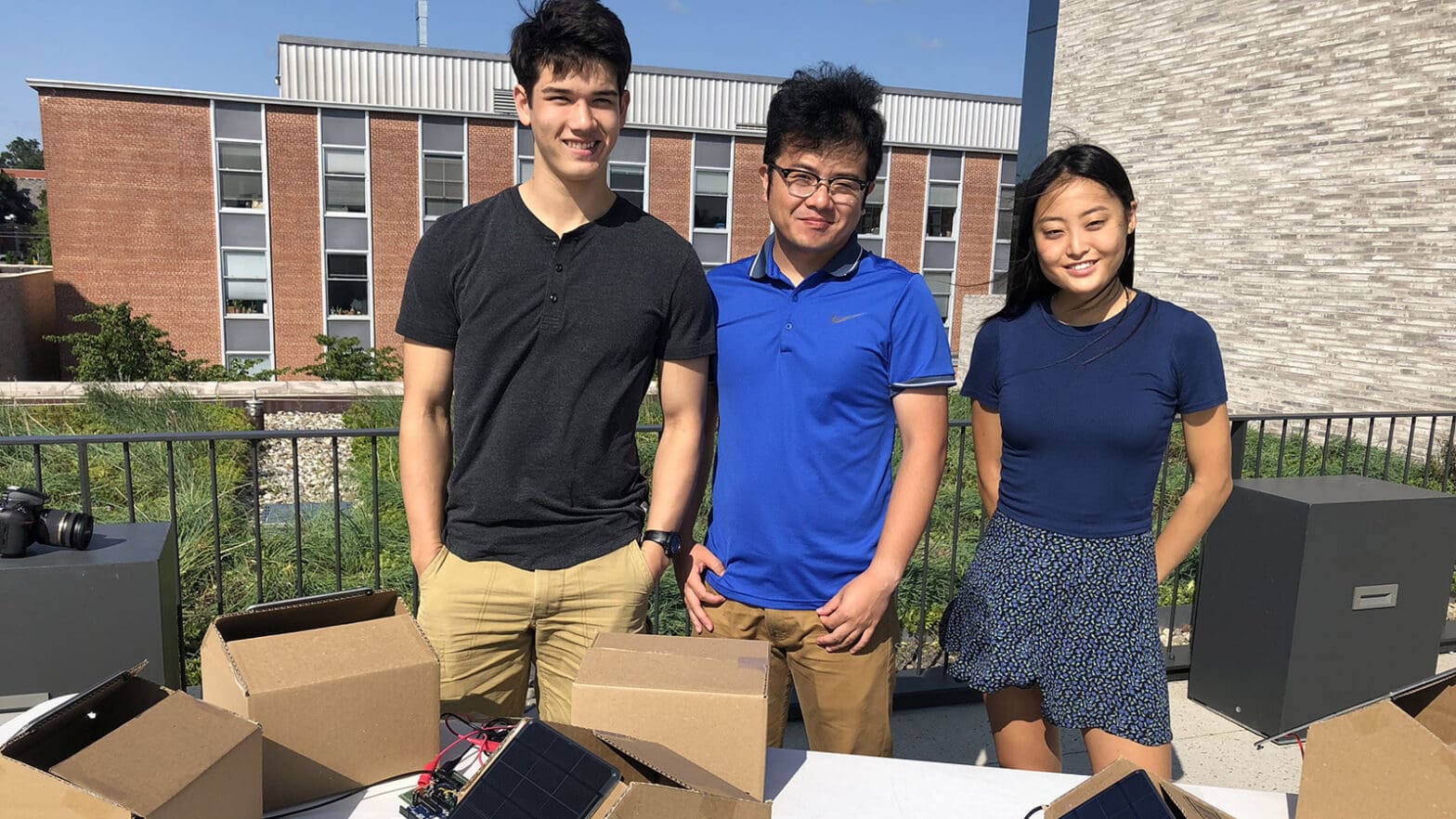
Heidi Kim (right), Class of 2021, tracked and tested the output of a photovoltaic system on the Andlinger Center rooftop as part of the center’s summer internship program. She worked with high school senior James Lucassen (left) and postdoctoral research associate Yenan Chen (center). Photo by Molly A. Seltzer Andlinger Center program yields summer exploration, new pathways
Undergraduates sponsored by the Andlinger Center for Energy and the Environment in its eight-week summer internship program worked in labs throughout the University and, for the first time, at two national environmental organizations.
-
Part Seven: Computer Science at Princeton Engineering
The story of computer science at Princeton goes back well before the founding of the discipline as a freestanding department. In this portion of #E100, we will look at the people, places and milestones that have led to the creation of the campus’ most in-demand major.
-
Laser reveals health clues in human breath
High levels of the molecule nitric oxide can alert doctors to inflammation in critical areas of the body such as the cardiovascular system. In a short video, Gerard Wysocki, an assistant professor of electrical engineering at Princeton, explains how his lab is developing a single system that measures levels of nitric oxide isotopes in breath,…
-

Microsoft President Brad Smith delivers talk Microsoft president Smith: World must ‘wake up’ to benefits and perils of artificial intelligence
Microsoft President Brad Smith on Thursday, March 1, called for standards of accountability and a "Hippocratic oath" among technologists to do no harm with the emerging tools.
-

Introducing “Composers & Computers,” a new podcast about digital music
Musicians and engineers at Princeton went looking for a machine capable of playing some of the most complex music ever written. Along the way they created some of the earliest and most consequential digital musical synthesis tools, as you’ll find in our new podcast.
-
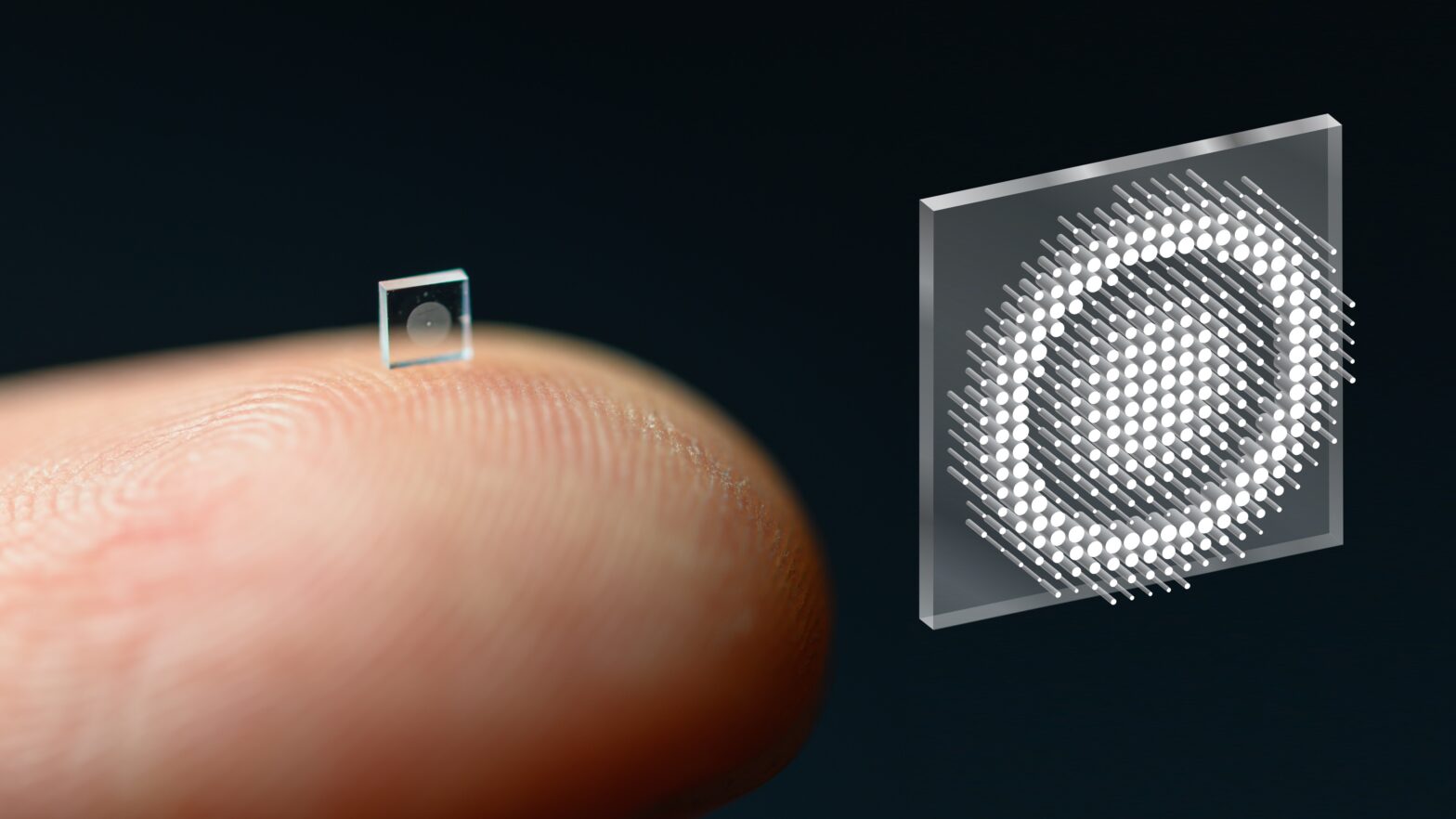
Researchers at Princeton University and the University of Washington have developed an ultracompact camera the size of a coarse grain of salt. The system relies on a technology called a metasurface, which is studded with 1.6 million cylindrical posts and can be produced much like a computer chip. Image courtesy of the researchers Researchers shrink camera to the size of a salt grain
Researchers at Princeton University and the University of Washington have developed an ultracompact camera the size of a coarse grain of salt. The new system can produce crisp, full-color images on par with a conventional compound camera lens 500,000 times larger in volume.
-
Hot find: Close objects could exchange millions of times more heat
In a recent study, a researcher at Princeton and colleagues at the Massachusetts Institute of Technology have come up with a formula that describes the maximum heat transfer in such tight scenarios. Surprisingly – and encouragingly – the formula suggests that a million times more heat transfer is possible between close objects than previously thought.
-
Princeton students share the power of engineering with high school girls
Putting into action Princeton University President Shirley M. Tilghman’s exhortation that more women must be encouraged to pursue careers in science and engineering, a team of Princeton Engineering undergraduate and graduate students recently made a field trip to New York City, sharing their enthusiasm for engineering with dozens of high school girls.
-
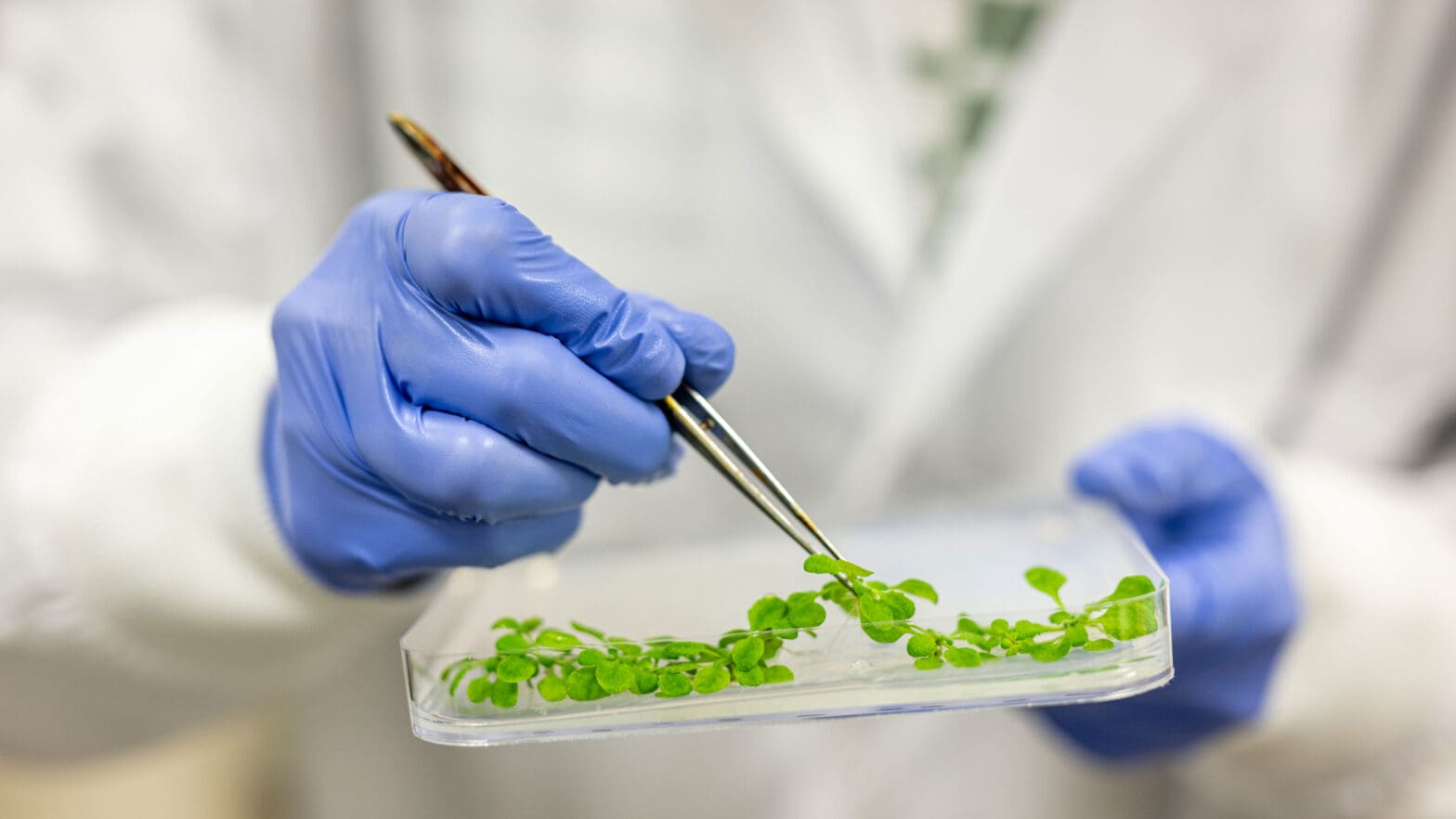
Jonathan Conway, assistant professor of chemical and biological engineering, received an innovation grant for the project “Engineering symbiotic plant-microbe interactions for sustainable agriculture.” Photo by Sameer A. Khan/Fotobuddy Since 2008, innovation funds have fostered research in AI fairness, sustainable agriculture, drug discovery and more
Princeton Engineering’s innovation grants began in 2008 with Project X, established by Lynn Shostack in memory of her husband David Gardner, a 1969 Princeton graduate. To date, the program has provided over $26 million in funding for more than 200 research projects. The grants support engineering faculty members in the pursuit of new ideas that…