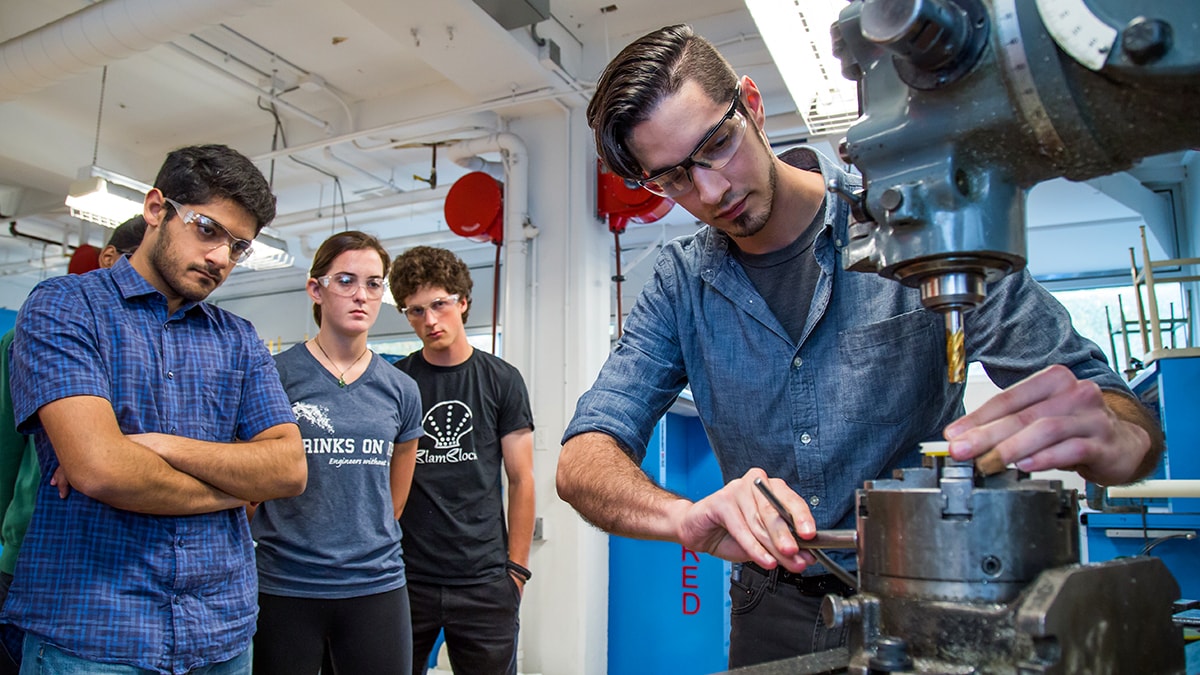
Five members of the Princeton Engineering faculty have been named to endowed professorships.
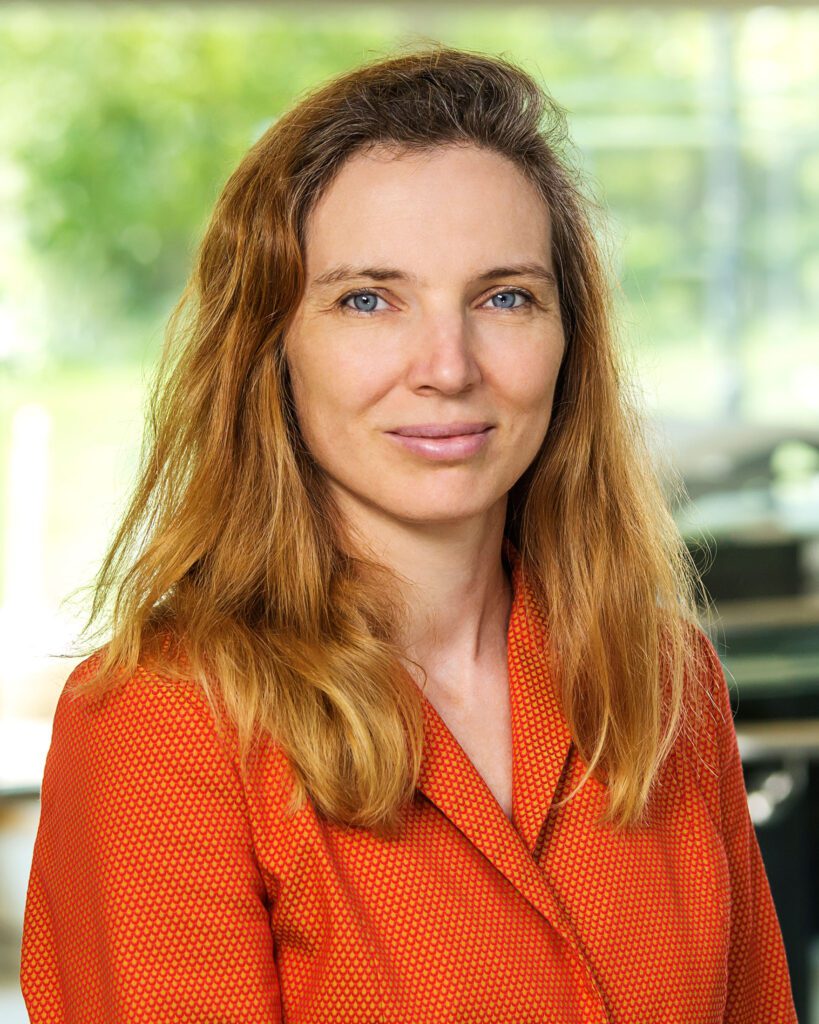
Sigrid Adriaenssens has been named the Ritter Professor of Civil and Environmental Engineering, established by a gift from Gordon P. Ritter, Class of 1986, and Amy J. Metzler Ritter S86. Adriaenssens, who received her doctorate from the University of Bath in England, joined the Princeton faculty in 2009. She directs the Program in Mechanics, Materials and Structures, and in 2025 became director of the Keller Center for Innovation in Engineering Education.
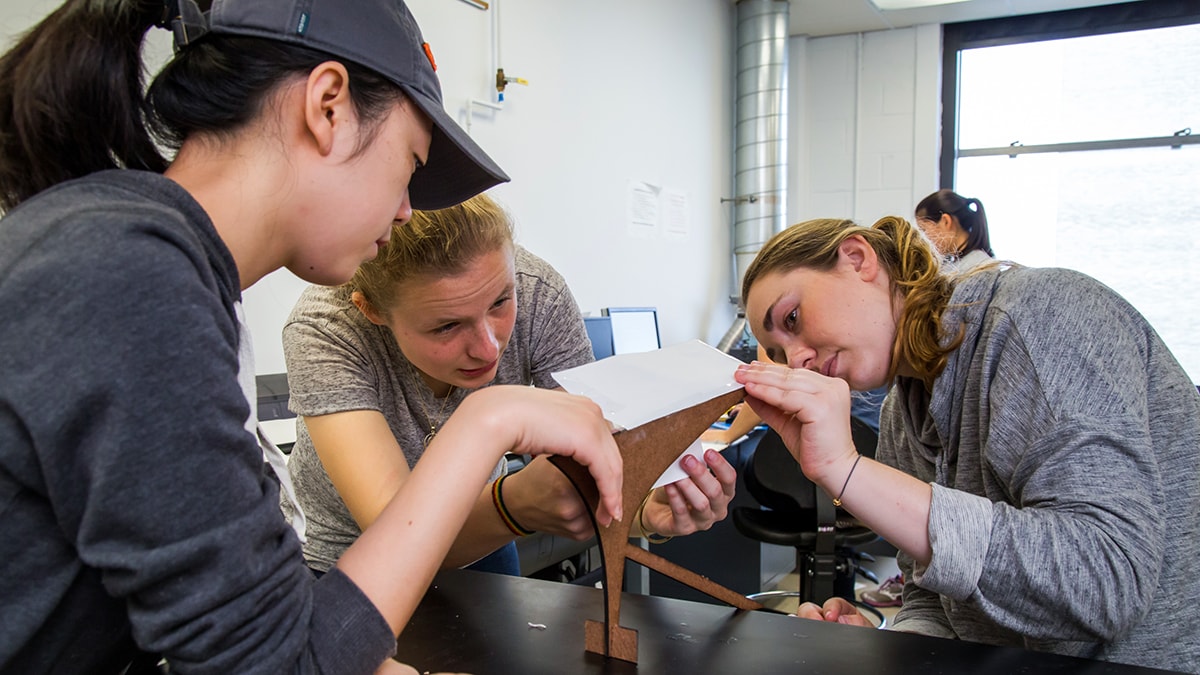
Adriaenssens’ Form Finding Lab focuses on lightweight surface systems and how they can be optimized and realized to interact with extreme structural or environmental loading. This includes research on flexible and rigid shells and plates, submerged flexible membranes and nets, and metamaterials with applications for a resilient urban environment. Applications range from adaptive shading devices to large-scale inflatable storm surge barriers and are sometimes inspired by systems that evolved in biology, art or architecture. Among other honors, she is a fellow of the Structural Engineering Institute of the American Society of Civil Engineers (ASCE) and a vice president of the International Association of Shell and Spatial Structures (IASS). She has received the ASCE George Winter Award and the Rheinstein Junior Faculty Award from the School of Engineering and Applied Science.

Michael Mueller has been named the second Donald R. Dixon ’69 and Elizabeth W. Dixon Professor of Mechanical and Aerospace Engineering. Mueller joined the Princeton faculty in 2012 after receiving his doctorate in mechanical engineering from Stanford University.
Mueller’s research focuses on computational prediction of turbulent flows related to propulsion and energy and their interaction with the environment. His work aims to accelerate the development of net-zero energy including zero-carbon fuels and carbon-neutral fuels, as well as offshore wind energy. The research relies on both physics-based models and computational algorithm development, and it extends to broader areas of computational and data sciences. Since 2020, Mueller has been jointly appointed as a faculty researcher at the National Renewable Energy Laboratory. He is a fellow of the American Society of Mechanical Engineers and an associate fellow of the American Institute of Aeronautics and Astronautics. Among other awards and recognitions for his research, he has received the Hiroshi Tsuji Early Career Researcher Award from the Combustion Institute and the Young Investigator Program Award from the Army Research Office. He has received the Princeton University Graduate Mentoring Award and the School of Engineering and Applied Science Distinguished Teacher Award.
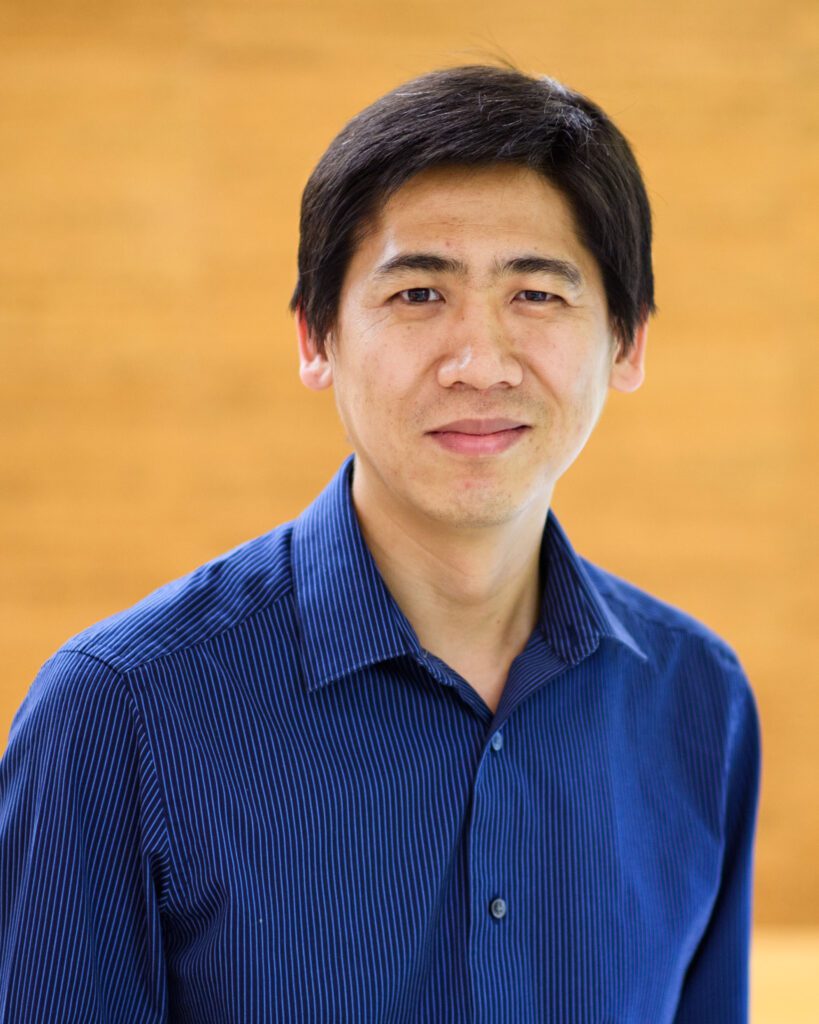
Z. Jason Ren has been named the Eugene Higgins Professor in the Department of Civil and Environmental Engineering. Eugene Higgins Professorships are supported by a trust fund established by the will of Eugene Higgins, a Columbia University graduate of the Class of 1882, who died in 1948. The fund is shared among Princeton, Columbia, Harvard and Yale universities. Ren was on the faculty of the University of Colorado-Boulder before joining Princeton in 2018. He is also a professor at Princeton’s Andlinger Center for Energy and the Environment, where he serves as associate director for research.
Ren’s Water & Energy Technologies (WET) Lab integrates electrochemistry, microbiology and data-driven methods to understand carbon and electron flows and to improve the design, operation and monitoring of complex engineering systems. In addition to academic research, Ren and his students translate innovations beyond the laboratory. Ren has co-founded two companies, including Princeton Critical Minerals, which is advancing Princeton-developed technologies for direct lithium extraction. Earlier this year, Ren was named a fellow of the American Association for the Advancement of Science. His previous honors include elections as a fellow of the Royal Society of Chemistry and of the International Water Association, as well as the Paul L. Busch Award from the Water Research Foundation, the AEESP Frontier in Research Award, and the Walter L. Huber Civil Engineering Research Prize from the American Society of Civil Engineers.

Charles Schroeder III has been named the Eugene Higgins Professor of Chemical and Biological Engineering. Schroeder joined the Princeton Engineering faculty in 2025 from the University of Illinois at Urbana-Champaign, where he was the James Economy Professor in the Department of Materials Science and held multiple leadership roles at the Beckman Institute for Advanced Science and Technology.
An expert in polymers and soft materials, Schroeder’s work has allowed scientists to study the dynamics of single molecules and molecular interactions in extraordinary detail. Schroeder and colleagues developed a method to trap single molecules such as DN, and other small particles using automated flow control. Known as the Stokes trap, the device allows scientists to study molecules in detail and explore their interactions. The Stokes trap uses gentle fluid flow, good for handling delicate biomolecules, and can be adapted with relative ease to study multiple particles and their interactions. Schroeder is a fellow of the American Physical Society, the American Association for the Advancement of Science and the Society of Rheology. His past honors include a Packard Fellowship, a Camille and Henry Dreyfus Teacher-Scholar Award, an NSF CAREER Award and selection into the National Academy of Engineering’s Frontiers of Engineering program. He is an associated faculty member in the Princeton Materials Institute.
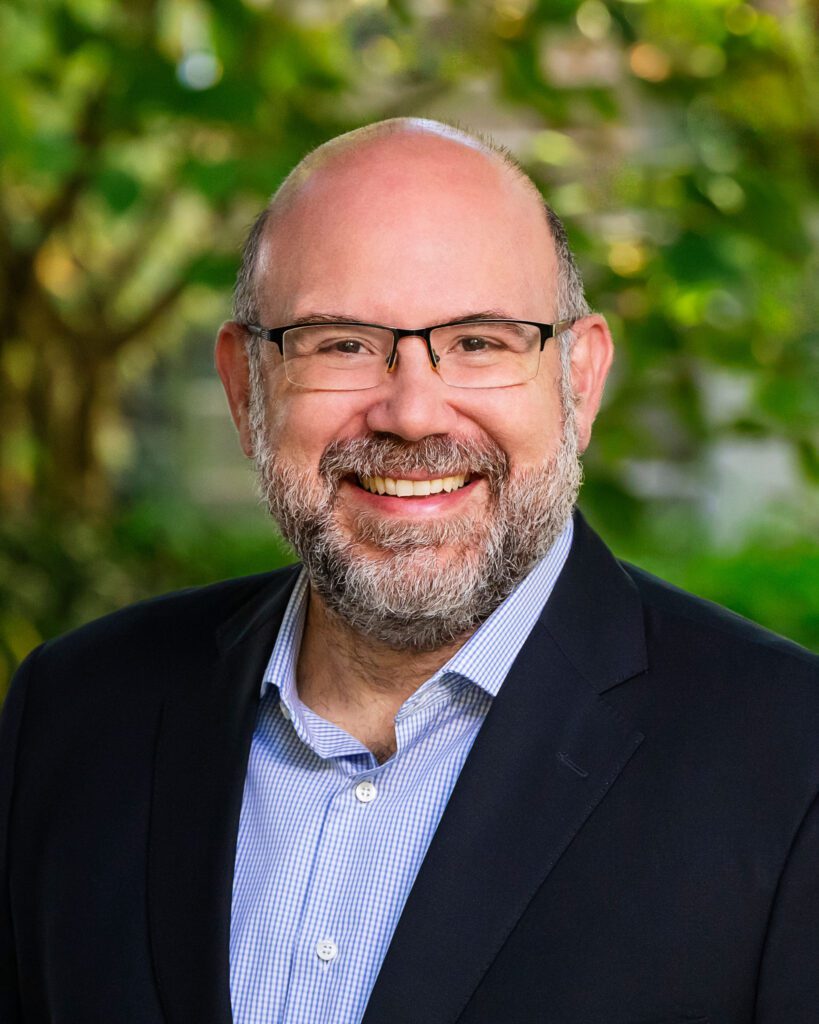
Gabriele Villarini has been named the third Theodora Shelton Pitney Professor of Environmental Studies, established by the gift of an anonymous donor in honor of Theodora Shelton Pitney. A professor in the Department of Civil and Environmental Engineering and the High Meadows Environmental Institute, Villarini joined the Princeton faculty in 2023 after 11 years on the faculty of the University of Iowa. Since 2025 has served as vice dean of the School of Engineering and Applied Science.
His research interests focus broadly on flood hydrology, extreme events, hydroclimatology, and climate predictions and projections. He has developed a process-driven flood frequency method to investigate how flooding is projected to change in a warmer climate. Some of Villarini’s recent work has investigated the effects of volcanic eruptions on global flood patterns, and the combined impacts of urbanization and climate change on rainfall from tropical cyclones. Villarini has received the Hydrological Sciences Outstanding Young Scientist Award from the European Geosciences Union and the James B. Macelwane Medal from the American Geophysical Union. He is a fellow of the American Geophysical Union, and currently serves as editor-in-chief for Advances in Water Resources.